
Algo Up 0.08% on Exploration Target Identification and Magnetic Survey Initiation
 Aime Summary
On JAN 10 2026, ALGO rose by 0.08% within 24 hours to reach $0.1333. Over the past week, the token dropped by 4.51%, but it has shown strong performance over the past month and year, with gains of 20.63% each. The price movement appears to be closely linked to the recent operational and strategic developments at Algo Grande, which operates the Adelita Project in Sonora, Mexico.
Exploration Targets Identified
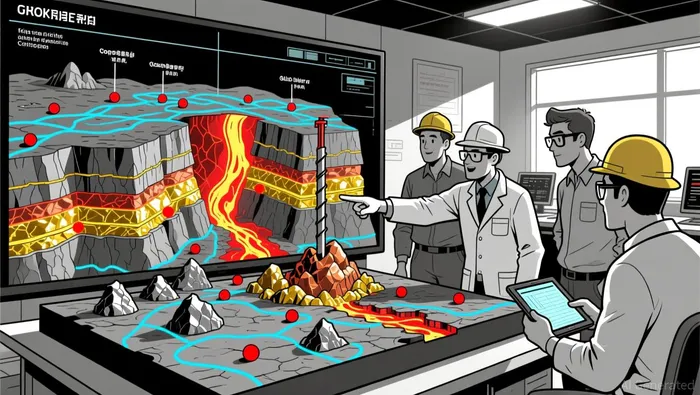
Algo Grande has identified 32 high-priority copper-gold-silver exploration targets at the Adelita Project following an integrated reprocessing of historical geophysical and geochemical data. Of these, 18 are multi-dataset targets and 14 are machine-learning-based targets. The results of the geophysical analysis confirm the presence of a district-scale, structurally controlled porphyry-skarn mineral system, with evidence of one or more porphyry intrusions at depth. This marks a significant step forward in the company's efforts to explore and develop the property, which has the potential to host a major mineral system.
High-Definition Ground Magnetic Survey Initiated
In parallel with the identification of exploration targets, Algo Grande has initiated a high-definition ground magnetic survey over the Cerro Grande skarn zone. The survey, conducted using 20-meter line spacing, aims to refine the geometry of the skarn zone, as well as structural controls and drill targeting. The survey is expected to provide high-resolution data that will support future drilling and exploration efforts.
The survey is being carried out by the University of Sonora through its Department of Geology, leveraging its expertise in applied geophysics. The data collected will be integrated into the company’s existing 3D geological and geophysical model, alongside previously reprocessed datasets, to improve the understanding of the mineral system.
Strategic Leadership Strengthened
To lead the ongoing exploration and targeting initiatives, Algo Grande has appointed João Rocha, EurGeol, as Vice President of Exploration. Mr. Rocha brings over 10 years of international experience in mineral exploration, with a focus on data-driven approaches and integrated geophysical interpretation. His role includes overseeing the reprocessing of geophysical data, AI-based target generation, and field programs at the Adelita Project.
 Mr. Rocha emphasized the significance of integrating modern technologies, such as 3D geophysical reprocessing and high-definition magnetic surveys, with field data to accelerate discoveries and reduce risk. He highlighted the potential of the Adelita Project to yield high-grade skarn zones along strike and at depth, especially when combined with geochemical data, trenching, and oriented core drilling.
Integrated Geophysical and Geochemical Interpretation
The reprocessing of historical data was carried out by GSM Geoscience and Southern Geoscience, two internationally recognized geophysical firms. The work included 3D magnetic vector inversion, 3D DCIP inversion, and magnetotelluric modeling, integrated with normalized geochemical datasets and updated structural interpretations. The results define a coherent mineral system characterized by a structurally controlled porphyry-skarn architecture, supported by geophysics, geochemistry, and drilling data.
The integrated analysis has revealed a deep, vertically extensive conductive corridor near the Cerro Grande area, interpreted as a feeder zone for mineralization. The geometry and continuity of this feature across multiple magnetotelluric lines suggest its geological significance, and it is planned to be targeted by drilling in early 2026.
Future Exploration and Drilling Plans
The identification of 32 high-priority targets, supported by geophysical and geochemical data, provides a strong foundation for further exploration and drilling. The company has already completed 1,000 meters of drilling in 2025, with plans to continue in early 2026. The field testing of these targets is expected to begin in the first months of 2026, with drilling planned if the targets prove to be of sufficient merit.
The high-priority targets include both geologically and geophysically constrained targets and those identified through machine-learning-based prospectivity analysis. These targets represent immediate opportunities for model validation and are expected to guide the company’s exploration strategy in the coming months.
Conclusion
The recent developments at Algo Grande, including the identification of high-priority exploration targets and the initiation of a high-definition ground magnetic survey, signal a strategic shift toward a more integrated and data-driven exploration approach. The appointment of João Rocha and the support from internationally recognized geophysical firms further strengthen the company’s technical capabilities and exploration outlook. As the company continues to build on these findings, the Adelita Project may emerge as a significant contributor to the global copper-gold-silver market.

Delivering real-time analysis and insights on unexpected cryptocurrency price movements to keep traders ahead of the curve.
Latest Articles
Stay ahead of the market.
Get curated U.S. market news, insights and key dates delivered to your inbox.






Comments
No comments yet