
Aldi Warns Food Prices May Rise Due to Budget Increases and Packaging Levy
ByAinvest
Monday, Sep 15, 2025 2:10 am ET2min read
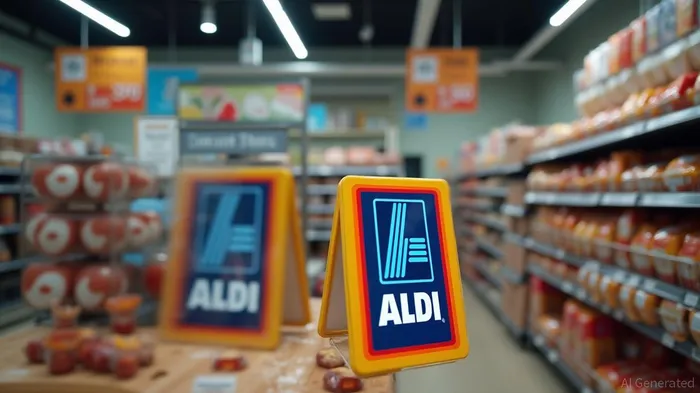
Aldi warns that food prices may rise if the UK Budget increases costs. The supermarket has spent £300m to offset rising goods costs and keep prices low. Prices for staple products such as beef mince have risen significantly due to global factors and domestic policy decisions, leading to a 4.9% UK food inflation rate in July. The Food and Drink Federation predicts food inflation could reach 5.7% by December and remain at 3.1% by 2026.
LONDON — Aldi, the popular German supermarket chain, has expressed concerns that food prices could rise further if the UK government's upcoming budget imposes additional costs on businesses. The supermarket giant has already invested £300 million to mitigate rising goods costs and maintain low prices for customers. However, the latest inflation figures and industry predictions suggest that the burden of increased costs could be passed on to consumers.The supermarket's concerns come amid a backdrop of significant global and domestic factors driving up food prices. In July, the UK food inflation rate reached 4.9%, primarily due to rising costs of staple products like beef mince. The Food and Drink Federation predicts that food inflation could reach 5.7% by December and remain at 3.1% by 2026 [1].
Aldi's warning follows a series of policy changes and budget announcements that have raised concerns among businesses and economists. Chancellor of the Exchequer Rachel Reeves' first budget, which included increases in employers' payroll contributions and the minimum wage, has been linked to a rise in inflation. The consumer price index (CPI) climbed from 2% to 3.8% in July, with some Bank of England rate-setters advocating for a slower pace of interest rate cuts to control prices .
Reeves' second budget, scheduled for November 26, is expected to address a projected £35 billion gap in the government's finances. However, businesses fear that this budget could introduce new regulatory burdens and tax hikes, further increasing their operating costs. The British Chambers of Commerce has urged Reeves to avoid additional tax increases on businesses, warning that firms have limited capacity to absorb the burden without passing costs on to consumers .
The Bank of England has also expressed concern that government policies are undercutting its efforts to bring down inflation. In its August Monetary Policy Report, the BOE noted that higher labor costs, driven by policies such as the minimum wage increase, have contributed to a sharper rise in food prices than elsewhere in Europe .
While the Monetary Policy Committee has cut rates every three months since August 2024, investors now expect rate-setters to pause their cuts until February due to sticky inflation. High inflation is not only eroding living standards but also pushing up government borrowing costs, making it harder for Reeves to balance the budget .
In response to these challenges, Reeves has begun to sound the alarm about the potential impact of higher prices on living standards and industrial unrest. She has also formed a new "budget board" to strengthen oversight of economic policy and maintain ties with business. However, retail and business groups remain concerned that government policies could exacerbate the problem, risking a repeat of last year's inflation surge .
Stay ahead of the market.
Get curated U.S. market news, insights and key dates delivered to your inbox.


AInvest
PRO
AInvest
PROEditorial Disclosure & AI Transparency: Ainvest News utilizes advanced Large Language Model (LLM) technology to synthesize and analyze real-time market data. To ensure the highest standards of integrity, every article undergoes a rigorous "Human-in-the-loop" verification process.
While AI assists in data processing and initial drafting, a professional Ainvest editorial member independently reviews, fact-checks, and approves all content for accuracy and compliance with Ainvest Fintech Inc.’s editorial standards. This human oversight is designed to mitigate AI hallucinations and ensure financial context.
Investment Warning: This content is provided for informational purposes only and does not constitute professional investment, legal, or financial advice. Markets involve inherent risks. Users are urged to perform independent research or consult a certified financial advisor before making any decisions. Ainvest Fintech Inc. disclaims all liability for actions taken based on this information. Found an error?Report an Issue




Comments
No comments yet