
Aldi Expands US Presence, Targets 200 New Stores Amid Consumer Demand for Value.
ByAinvest
Tuesday, Sep 2, 2025 4:35 pm ET2min read
COST--
Aldi's secret sauce lies in its private-label products, which account for roughly 90% of its offerings. This allows Aldi to set prices lower than national brands, attracting cost-conscious consumers. For instance, in one New Jersey location, Aldi's 12.2-ounce box of Fruit Rounds is priced at $1.68, compared to Kellogg's Froot Loops, which costs $4.48 for a 16-ounce box [1].
The company's smaller-store format also contributes to its success. Aldi stores average about 20,000 square feet, significantly smaller than the typical supermarket, which brings cost savings and better alignment with consumer behavior. This format also creates a "treasure hunt" mentality, as shoppers enjoy feeling like they're on an expedition when they shop, similar to retailers like TJX and Five Below [1].
However, Aldi's expansion is not without challenges. The company has faced legal action from food manufacturers who claim its store-brand products are dupes of their brand-name products. Additionally, Aldi's expansion could hit a speedbump in the lucrative Northeast market, which execs acknowledge is "challenging." A major test of Aldi's appeal will be a bigger-format store near Times Square in NYC, slated to open next summer [1].
In the UK, Aldi's aggressive pay strategy has positioned it as the highest-paying supermarket, raising minimum hourly wages to £13.00 nationally and £14.33 in London from September 2025. This strategy includes a £650 million investment for 1,500 stores by 2026, reducing turnover costs and outpacing incremental raises from Lidl and Tesco. Aldi's focus on employee satisfaction has mitigated the risks of labor shortages and operational disruptions, which have plagued traditional retailers [2].
The UK retail sector in 2025 is navigating a complex landscape defined by persistent inflationary pressures and a recalibration of consumer priorities. Discounters like Aldi and Lidl are leveraging AI-driven supply chains and premium own-label products to gain market share, with Lidl achieving 10.7% Q2 sales growth compared to the 4.5% market average [3].
Aldi's expansion strategy is expected to continue its rapid growth in the U.S. market, driven by its focus on value and market leadership. The company's ability to maintain margins despite rising wages and operational costs highlights its resilience and strategic positioning. As the UK supermarket sector faces a dilemma between wage competitiveness and profitability, Aldi's approach offers valuable insights for navigating inflationary pressures and evolving consumer expectations.
References:
[1] https://www.morningbrew.com/stories/2025/09/01/aldi-plots-biggest-ever-us-expansion
[2] https://www.ainvest.com/news/aldi-aggressive-pay-strategy-implications-uk-supermarket-sector-profitability-2508/
[3] https://www.ainvest.com/news/uk-retail-sector-resilience-inflationary-pressure-shifting-consumer-behavior-2509/
DG--
KR--
WMT--
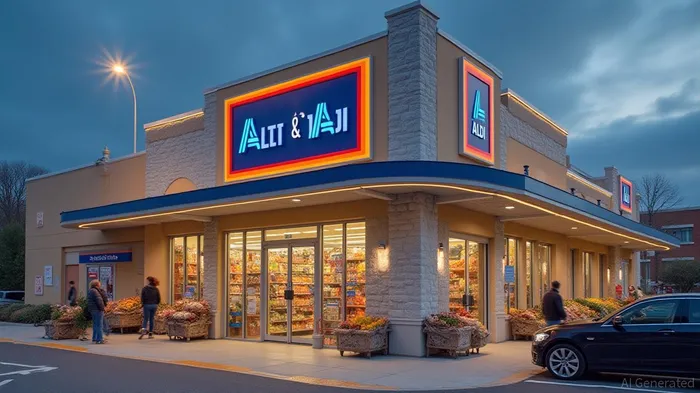
Aldi plans to expand its U.S. store count by 200, focusing on its core strategy of offering value to consumers. The German discount grocer aims to outpace competitors, including Kroger, Dollar General, Walmart, and Costco, amidst growing demand for affordable options. Aldi's expansion strategy is expected to continue its rapid growth in the U.S. market.
Aldi, the German discount grocer, is set to expand its U.S. store count by 200, aiming to outpace competitors like Kroger, Dollar General, Walmart, and Costco amidst growing demand for affordable options. This expansion is part of Aldi's core strategy to offer value to consumers, a strategy that has proven successful in other markets. By the end of 2025, Aldi plans to have around 2,600 locations in the U.S., making it the third-largest supermarket chain by number of stores [1].Aldi's secret sauce lies in its private-label products, which account for roughly 90% of its offerings. This allows Aldi to set prices lower than national brands, attracting cost-conscious consumers. For instance, in one New Jersey location, Aldi's 12.2-ounce box of Fruit Rounds is priced at $1.68, compared to Kellogg's Froot Loops, which costs $4.48 for a 16-ounce box [1].
The company's smaller-store format also contributes to its success. Aldi stores average about 20,000 square feet, significantly smaller than the typical supermarket, which brings cost savings and better alignment with consumer behavior. This format also creates a "treasure hunt" mentality, as shoppers enjoy feeling like they're on an expedition when they shop, similar to retailers like TJX and Five Below [1].
However, Aldi's expansion is not without challenges. The company has faced legal action from food manufacturers who claim its store-brand products are dupes of their brand-name products. Additionally, Aldi's expansion could hit a speedbump in the lucrative Northeast market, which execs acknowledge is "challenging." A major test of Aldi's appeal will be a bigger-format store near Times Square in NYC, slated to open next summer [1].
In the UK, Aldi's aggressive pay strategy has positioned it as the highest-paying supermarket, raising minimum hourly wages to £13.00 nationally and £14.33 in London from September 2025. This strategy includes a £650 million investment for 1,500 stores by 2026, reducing turnover costs and outpacing incremental raises from Lidl and Tesco. Aldi's focus on employee satisfaction has mitigated the risks of labor shortages and operational disruptions, which have plagued traditional retailers [2].
The UK retail sector in 2025 is navigating a complex landscape defined by persistent inflationary pressures and a recalibration of consumer priorities. Discounters like Aldi and Lidl are leveraging AI-driven supply chains and premium own-label products to gain market share, with Lidl achieving 10.7% Q2 sales growth compared to the 4.5% market average [3].
Aldi's expansion strategy is expected to continue its rapid growth in the U.S. market, driven by its focus on value and market leadership. The company's ability to maintain margins despite rising wages and operational costs highlights its resilience and strategic positioning. As the UK supermarket sector faces a dilemma between wage competitiveness and profitability, Aldi's approach offers valuable insights for navigating inflationary pressures and evolving consumer expectations.
References:
[1] https://www.morningbrew.com/stories/2025/09/01/aldi-plots-biggest-ever-us-expansion
[2] https://www.ainvest.com/news/aldi-aggressive-pay-strategy-implications-uk-supermarket-sector-profitability-2508/
[3] https://www.ainvest.com/news/uk-retail-sector-resilience-inflationary-pressure-shifting-consumer-behavior-2509/
Stay ahead of the market.
Get curated U.S. market news, insights and key dates delivered to your inbox.
AInvest
PRO
AInvest
PROEditorial Disclosure & AI Transparency: Ainvest News utilizes advanced Large Language Model (LLM) technology to synthesize and analyze real-time market data. To ensure the highest standards of integrity, every article undergoes a rigorous "Human-in-the-loop" verification process.
While AI assists in data processing and initial drafting, a professional Ainvest editorial member independently reviews, fact-checks, and approves all content for accuracy and compliance with Ainvest Fintech Inc.’s editorial standards. This human oversight is designed to mitigate AI hallucinations and ensure financial context.
Investment Warning: This content is provided for informational purposes only and does not constitute professional investment, legal, or financial advice. Markets involve inherent risks. Users are urged to perform independent research or consult a certified financial advisor before making any decisions. Ainvest Fintech Inc. disclaims all liability for actions taken based on this information. Found an error?Report an Issue




Comments
No comments yet