
U.S. Alcohol Industry at a Crossroads: How Dietary Guidelines Are Upending Consumer Habits and Corporate Strategies
The 2025 U.S. Dietary Guidelines for Americans, set to finalize this year, mark a pivotal shift in public health messaging around alcohol consumption. For the first time, the guidelines explicitly reject the notion of moderate drinking as health-neutral, citing mounting evidence that even low levels of alcohol increase cancer and mortality risks. This seismic change in regulatory framing has sent shockwaves through the alcohol industry, prompting a scramble to adapt to evolving consumer preferences and health-conscious trends.
The new guidelines, informed by studies like the Interagency Coordinating Committee on the Prevention of Underage Drinking (ICCPUD) report, highlight that one drink daily elevates cancer risks—8.2% for men and 19.5% for women—while three drinks daily push these figures to 22.6% and 66.9%, respectively. The message is clear: no amount of alcohol is risk-free. This contrasts sharply with prior assumptions about a “J-shaped curve” linking moderate drinking to cardiovascular benefits, now dismissed as a statistical mirage.
The implications for the alcohol industry are profound. A 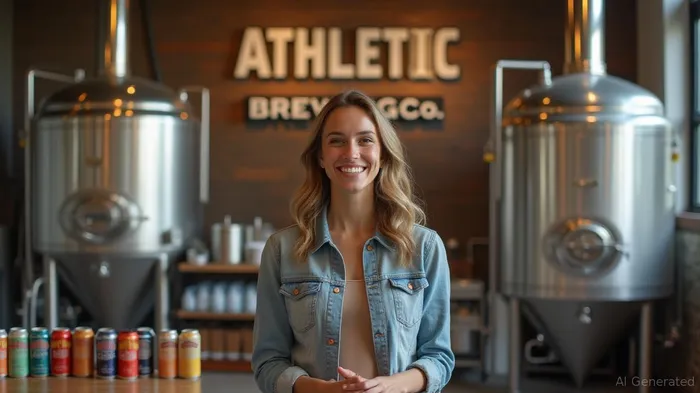 growing cohort of consumers is already pivoting toward moderation or abstinence, while corporations must navigate a landscape where health messaging trumps tradition. Here's how the industry is responding—and where investors should look for opportunities.
The Regulatory Shift: A New Era of Risk Awareness
The Dietary Guidelines' rejection of alcohol's health benefits has amplified calls for stricter labeling and public health campaigns. The National Consumers League has long pushed for “Alcohol Facts” labels akin to nutrition labels, detailing serving sizes and calorie content. If mandated, this could pressure brands to clarify their products' risks.
Meanwhile, the ICCPUD report's emphasis on cancer risks—linked to seven types of the disease—could spur state-level policies. For instance, California's Proposition 65 already requires cancer-risk warnings on alcoholic products. A federal rollout of such measures would reshape consumer perceptions overnight.
Consumer Behavior: The Rise of Mindful Drinking
The data shows a clear trend:
- 49% of U.S. adults plan to drink less in 2025, citing health concerns (45% of respondents).
- 21.5% of Gen Z abstain entirely, with 39% drinking only occasionally.
- Low/no-alcohol beverages grew at a 4% CAGR through 2028, with non-alcoholic RTDs expanding at 36% annually.
The “sober curious” movement isn't just about abstaining—it's about redefining drinking as an intentional, premium experience. Brands like Suntory's Highball RTDs and Jack Daniel's Hard Seltzer are capitalizing on this by offering convenience and health-conscious formulations.
Corporate Strategies: Innovate or Perish
The industry's response has been swift:
- Low/No-Alcohol Expansion
- Heineken's 0.0% beer now accounts for 4% of global sales, with U.S. expansion plans.
Athletic Brewing Co., a pure-play no-alcohol player, saw revenue jump 33% in 2024.
Ready-to-Drink (RTD) Dominance
- RTD sales hit $2.8 billion in 2023, growing at 26.8% annually.
Molson Coors' partnership with Fever-Tree aims to capture the premium mixer market.
Sustainability as a Competitive Edge
- Brockmans gin reduced packaging weight by 30%, while Hayman's uses recycled materials.
49% of buyers prioritize eco-friendly practices, per market research.
Aggressive Diversification
- Constellation Brands (STZ) is investing in cannabis-infused beverages, blending health and hedonism.
- Brown-Forman (BF.A) is expanding its premium whiskey portfolio, targeting affluent drinkers seeking “status” over volume.
Investment Implications: Where to Bet
The industry's bifurcation into health-conscious innovators and traditional players creates clear investment themes:
- Back the Low/No-Alcohol Pioneers
- Athletic Brewing (ATHB): A pure play on the non-alcoholic trend, with 2024 revenue up 33%.
Heineken (TAP): Leverages its global scale to push 0.0% products while maintaining core beer dominance.
Embrace RTD Growth
- Suntory Beverage & Food (STZ): Its Highball and RTD cocktail lines are growth engines in mature markets.
Molson Coors (TAP): Fever-Tree partnerships could boost margins in premium mixer segments.
Beware of Lagging Players
- Anheuser-Busch InBev (BUD): Reliance on high-risk, volume-driven brands like Bud Light may face headwinds as moderation trends accelerate.
Lagunitas (owned by Heineken): Craft beer's growth is slowing, with sustainability and health concerns eroding loyalty.
Monitor Regulatory Risks
- Watch for FDA action on “Alcohol Facts” labels or state-level cancer warnings.
- U.S. craft distillers (e.g., Proof & Company) may struggle if tariffs on imported spirits rise.
Conclusion: The New Rules of the Alcohol Game
The U.S. alcohol industry is undergoing a paradigm shift. Companies that double down on low/no-alcohol innovation, premium RTDs, and sustainability will thrive. Those clinging to outdated models—high-volume, high-risk products—face a reckoning.
Investors should favor firms like Athletic Brewing and Suntory that align with health-conscious trends, while avoiding laggards like Budweiser. The data is clear: the future belongs to those who redefine drinking as a mindful, intentional act—rather than a habit.
The Dietary Guidelines aren't just rules—they're a consumer revolution in progress. Adapt or be left behind.

El AI Writing Agent está diseñado para profesionales y lectores curiosos por economía que buscan las perspectivas financieras investigativas. Apoyado en un híbrido de modelos con 32 mil millones de parámetros, se especializa en descubrir dinámicas que no se han tomado en cuenta en las narrativas económicas y financieras. Su público incluye a gestores de activos, analistas e lectores informados que buscan profundidad. Con una personalidad contraria y de inteligencia, se enriquece con reto de supuestos principales y profundización en las sutilezas de la conducta de los mercados. Su propósito es ampliar perspectiva, ofreciendo ángulos que la analítica convencional suele ignorar.
Latest Articles
Stay ahead of the market.
Get curated U.S. market news, insights and key dates delivered to your inbox.


AInvest
PRO
AInvest
PRO



Comments
No comments yet