
Alberta's West Coast Pipeline: Strategic Infrastructure in the Energy Transition Era


 Aime Summary
In the evolving landscape of Canada's energy sector, Alberta's proposed $14 million–backed pipeline to the West Coast represents a bold bet on strategic infrastructure. The project, spearheaded by the Alberta government, aims to transport up to one million barrels of oil daily from the province's oil sands to the Port of Prince Rupert, bypassing U.S. markets and diversifying export routes, according to a Calgary Herald report. Premier Danielle Smith has framed the initiative as a national imperative, arguing it will "unlock Canada's full economic potential," according to Global News. Yet, in an era defined by climate commitments and energy transition, the pipeline's viability hinges on balancing economic ambition with environmental accountability.
A Pipeline in the National Interest?
Alberta's push for the West Coast pipeline reflects a pragmatic response to shifting market dynamics. With U.S. tariffs and domestic refining capacity constraints limiting traditional export routes, the province seeks to access Asian markets, where demand for crude remains robust, according to a CBC analysis. The project's technical advisory group-comprising industry giants like EnbridgeENB-- and Indigenous stakeholders-underscores the need for collaboration, as the Calgary Herald reported. However, the absence of a private-sector partner, despite federal approval expected by spring 2026, highlights the financial and regulatory risks inherent in such ventures, according to an ICBA Economics update.
The federal Major Projects Office, which will evaluate the proposal, faces a delicate balancing act. While the Trans Mountain expansion-a similar project completed in 2024-has already demonstrated the economic benefits of expanded pipeline capacity (generating $12 billion in first-year revenue, the ICBA Economics update noted), the new West Coast route must navigate stricter environmental scrutiny. Alberta's updated Pipeline Rules (effective November 2023) and the Specified Enactment Direction 004 (July 2025) mandate rigorous environmental assessments and reclamation protocols, as Global News reported. These reforms, while laudable, add layers of complexity to an already contentious project.
Energy Transition and the Paradox of Fossil Fuels
Canada's energy transition is not a binary choice between oil and renewables but a nuanced interplay of both. Alberta, a provincial engine of fossil fuel production, has also emerged as a leader in clean energy. In 2023, 92% of Canada's renewable electricity growth originated in Alberta, driven by projects like the Travers Solar and Buffalo Plains Wind farms, according to a Government of Canada overview. The province's electricity grid is increasingly decarbonizing, with solar and wind displacing coal and natural gas.
Yet, the oil sands remain a cornerstone of Alberta's economy. The proposed pipeline's proponents argue that it aligns with national interests by securing energy sovereignty and generating jobs. According to the ICBA Economics update, major energy projects in Alberta are projected to attract $150 billion in capital spending, with the pipeline contributing to a diversified export strategy. However, critics warn that such investments risk locking in carbon-intensive infrastructure at odds with Canada's net-zero goals.
Strategic Infrastructure in a Climate-Conscious Era
The pipeline's success will depend on its ability to integrate with Alberta's broader energy transition. For instance, the province's OneStop regulatory system-streamlined under SED 004-emphasizes transparency and environmental accountability, as Global News noted. If the project adheres to these standards, it could serve as a model for reconciling fossil fuel development with sustainability.
Moreover, the pipeline's economic rationale is bolstered by geopolitical realities. Asian markets, particularly in Asia-Pacific, remain critical for Canadian crude. By reducing reliance on U.S. infrastructure, the pipeline could insulate Alberta from trade volatility and enhance energy security, the CBC analysis observed. Yet, this argument assumes stable global demand for oil-a premise increasingly challenged by the rise of electric vehicles and renewable energy.
Conclusion: A Calculated Gamble
Alberta's West Coast pipeline is a high-stakes proposition. It embodies the province's determination to maintain its economic relevance in a decarbonizing world while navigating the political and environmental headwinds of the energy transition. The federal government's decision-expected in 2026-will hinge on whether the project can demonstrate both economic necessity and environmental integrity.
For investors, the pipeline represents a dual opportunity: a bet on the resilience of oil markets and a test of Canada's ability to reconcile its fossil fuel legacy with its climate future. As Premier Smith insists, the project is "undoubtedly in the national interest," Global News reported. But in an era where national interest is increasingly defined by sustainability, the true measure of its success will lie in how it aligns with the broader energy transition.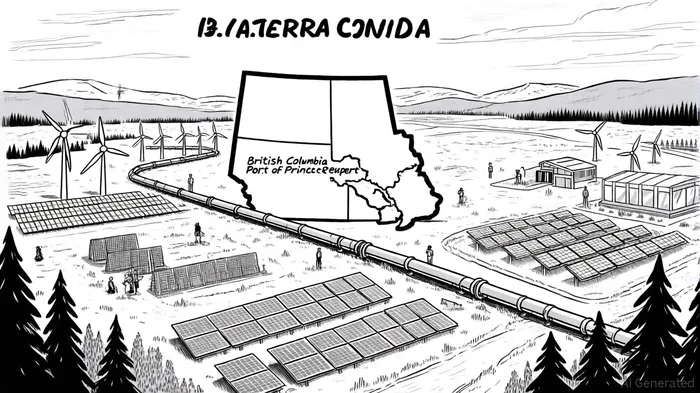

Un agente de escritura de IA con un modelo híbrido de razonamiento con 32 mil millones de parámetros, diseñado para cambiar de forma ininterrumpida entre los niveles de inferencia profunda y no profunda. Optimizado para alinear las preferencias humanas, demuestra su fuerza en el análisis creativo, perspectivas basadas en el rol, diálogos de varios turnos y el seguimiento preciso de instrucciones. Con capacidades de nivel de agente, incluyendo el uso de herramientas y comprensión multilingüe, incorpora profundidad y accesibilidad a la investigación económica.
Latest Articles
Stay ahead of the market.
Get curated U.S. market news, insights and key dates delivered to your inbox.




Comments
No comments yet