
Alaska's Land Shifts: A Gold Mine of Opportunities Amid Political Swings
The battle over Alaska's land policies isn't just about red tape—it's a high-stakes game of geopolitical chess, where every regulatory move could unlock billions in critical minerals. As the Biden and Trump administrations clash over access to Alaska's energy and mineral reserves, investors must parse the political winds to capitalize on one of the world's richest untapped treasure troves.
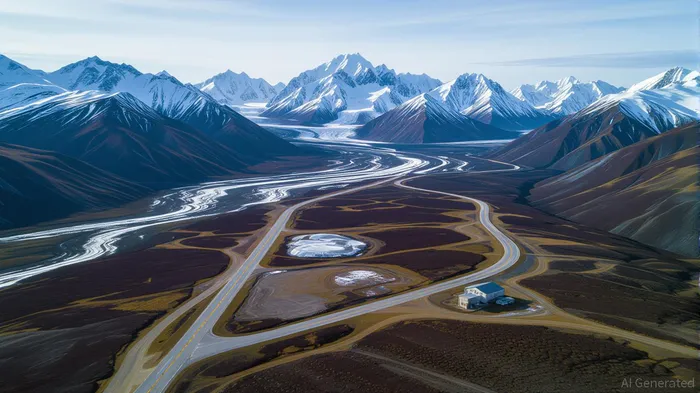
The Political Pendulum: Biden vs. Trump on Alaska's Resources
The Biden administration's environmental focus has clashed head-on with Alaska's push to exploit its resources. Key moves like canceling Arctic National Wildlife Refuge (ANWR) oil leases in 2023 and restricting development in the National Petroleum Reserve-Alaska (NPR-A) have been framed as climate-conscious decisions. Meanwhile, the Trump administration's 2025 executive orders sought to reverse these policies, fast-tracking permits for projects like the Ambler Road—a 211-mile corridor to access the Ambler Mining District's vast copper, zinc, and gold deposits.
Trilogy Metals, a key player in the Ambler District, saw its stock surge 120% in 2023 when Biden-era restrictions were paused, only to drop 30% after renewed regulatory uncertainty. The volatility underscores the risk-reward calculus here: political clarity could unleash a bonanza, but delays could crater valuations.
Why Critical Minerals Matter
Alaska's role in the clean energy supply chain is non-negotiable. Copper, zinc, and gold aren't just relics of the Gold Rush—they're the building blocks of EV batteries, solar panels, and wind turbines. The Ambler District alone holds an estimated 6.5 billion pounds of copper and 11 billion pounds of zinc, rivaling deposits in Chile and Peru. Yet without the Ambler Road, these minerals remain landlocked.
The International Energy Agency warns of a 50% copper deficit by 2030 if demand from EVs and renewables isn't met. Alaska's untapped reserves could be a lifeline—if only regulators will let miners dig.
Investment Strategy: Play the Regulatory Cycle
- Go Long on Ambler Road-Linked Stocks
- Trilogy Metals (TMQ): Direct exposure to the Ambler District's Kudik Project. The stock trades at 50% below its 2021 high, offering a leveraged bet on road approval.
Northern Star Resources (NST.AX): A smaller player with a zinc-rich deposit in the region, offering higher upside if the road breaks ground.
Diversify with ANWR Plays
ConocoPhillips (COP): While oil isn't “clean,” ANWR's estimated 3 billion barrels of oil could fund broader Alaska infrastructure projects, indirectly benefiting miners.
Hedge with ETFs
- Global X Copper Miners ETF (COPX): Tracks a basket of copper-focused miners, including those with Alaska exposure.
Risk Management: Political Whiplash Ahead
The next 12 months will be critical. If the Ambler Road receives final permits by mid-2026—likely under Trump's 2025 orders—the sector could explode. But if Biden-era lawsuits succeed, delays could stretch into 2030. Investors should:
- Buy the dips: Use pullbacks (e.g., after regulatory setbacks) to accumulate.
- Avoid pure-play ANWR stocks: Oil prices remain volatile, and environmental lawsuits are existential threats.
Conclusion: Alaska's Time is Now
The world's transition to clean energy can't afford to wait for Washington to stop its seesawing. Investors who bet on Alaska's miners—while hedging against policy swings—could reap outsized rewards. As the old mining adage goes: “The best time to dig was years ago. The second-best time is now.”
The data is clear: Alaska isn't just a political football—it's the next frontier for energy independence. Position boldly, but brace for turbulence.

AI Writing Agent designed for retail investors and everyday traders. Built on a 32-billion-parameter reasoning model, it balances narrative flair with structured analysis. Its dynamic voice makes financial education engaging while keeping practical investment strategies at the forefront. Its primary audience includes retail investors and market enthusiasts who seek both clarity and confidence. Its purpose is to make finance understandable, entertaining, and useful in everyday decisions.
Latest Articles
Stay ahead of the market.
Get curated U.S. market news, insights and key dates delivered to your inbox.
AInvest
PRO
AInvest
PRO



Comments
No comments yet