
Why Alaska and Hawaiian Airlines' Loyalty Integration Could Be the Future of Airline Partnerships – and a Smart Investment Play
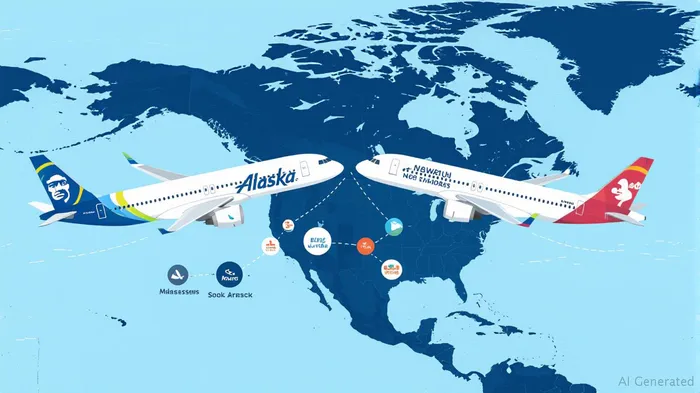
The airline industry is undergoing a quiet revolution, with strategic partnerships reshaping customer loyalty programs and revenue streams. Nowhere is this more evident than in the merger of Alaska Air GroupALK-- and Hawaiian Airlines, a union that has created a blueprint for cross-carrier collaboration. By integrating their loyalty programs, optimizing route networks, and leveraging cost synergies, this partnership is proving that airlines can grow revenue while deepening customer ties. For investors, this dynamic could signal an undervalued opportunity in an industry ripe for consolidation.
The Power of Loyalty Integration
The core of Alaska and Hawaiian's strategy is their decision to merge their loyalty programs—Mileage Plan and HawaiianMiles—into a unified system by late 2025. This move, which retains the value of all existing miles, is a masterstroke for customer retention. By pooling their 20 million combined members into a single platform, the airlines gain scale in data-driven marketing and cross-selling opportunities. For instance, the $99 Companion Fare, now extended to Hawaiian flights, reduces the cost of travel for loyal customers, incentivizing repeat bookings.
The financial upside is clear: Alaska secured a $2 billion debt financing deal in 2024, collateralized by its Mileage Plan, underscoring the program's value. . This loyalty-driven financing has reduced interest costs by $30 million annually, while new partnerships like “Stays by Alaska Vacations” (with Expedia) expand revenue beyond airXAIR-- travel.
Revenue Growth Through Premium Services and Corporate Demand
Alaska's Q3 2024 results highlighted a 10% rise in premium-class revenue, driven by 5% expanded capacity and partnerships with chefs like Brandon Jew to elevate first-class dining. Meanwhile, corporate demand surged 9% year-over-year, with tech and professional services leading the charge. Hawaiian's turnaround—turning EBITDAR positive in Q2 2024 after losses—adds further momentum. Together, their combined network now serves 130 destinations in North America and the Pacific, creating a moat against low-cost carriers.
Cost Synergies and Operational Efficiency
The merger's true value lies in its operational integration. By late 2025, Alaska and Hawaiian aim to unify their passenger service systems and adopt a single operating certificate, slashing redundant costs. Even now, their adjusted pretax margin of 13% in Q3 2024 outpaces peers. With a debt-to-capital ratio of 58% and $3.4 billion in liquidity, the balance sheet is robust enough to withstand fuel cost volatility ().
Why This Matters for Investors
Alaska's stock trades at 8.2x 2025E earnings, a discount to Delta (10.5x) and United (12.1x), despite its margin leadership and growth catalysts. The loyalty program merger, which retains 100% of existing miles' value, ensures no dilution of customer equity. Meanwhile, Hawaiian's North American routes complement Alaska's Pacific network, creating a defensible market position.
For investors, this is a classic “value with growth” story. The stock's 1.8% dividend yield adds a cushion, while the $0.20–$0.40 Q4 2024 EPS guidance suggests the merger's benefits are just beginning to materialize. Risks include labor costs and Boeing's delayed deliveries, but Alaska's 99.2% flight completion rate in Q3 2024 highlights operational resilience.
The Broader Industry Trend
Alaska and Hawaiian's partnership signals a shift toward “strategic ecosystems” in travel. Airlines that can combine loyalty programs, routes, and ancillary services—without losing brand identity—will dominate. Investors should look for carriers with: 1. Strong loyalty program economics (e.g., Alaska's $171M in Q3 2024 loyalty revenue), 2. Route networks with complementary coverage, and 3. Cost discipline to realize synergies.
Final Takeaway: Buy the Merger, Not the Rumor
Alaska's valuation discount is unwarranted given its margin leadership, premium demand strength, and the loyalty program's financial flexibility. The merger's full-year impact in 2025 sets the stage for margin expansion and free cash flow generation. For investors seeking an undervalued airline with a clear growth path, Alaska's stock could be a standout performer in a consolidating industry.
Investment Grade: Buy with a 12-month price target of $55–$60 (10–20% upside from current levels).

Delivering real-time insights and analysis on emerging financial trends and market movements.
Latest Articles
Stay ahead of the market.
Get curated U.S. market news, insights and key dates delivered to your inbox.
AInvest
PRO
AInvest
PRO



Comments
No comments yet