
The Aland Health Stake Sale: A Strategic Opportunity in Global Nutraceuticals?
 Aime Summary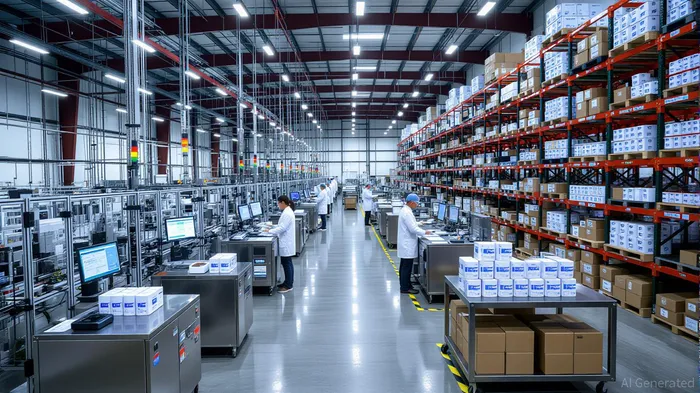
The global nutraceutical industry is at a pivotal inflection point, and Aland Health's $1.5 billion stake sale has emerged as a focal point for investors seeking to capitalize on the sector's explosive growth. With a projected EBITDA of $150 million in 2025 and a valuation multiple of 10x EBITDA, Aland's financials align with the aggressive pricing seen in recent private equity (PE) deals. But is this a classic overvaluation play, or does the company's strategic positioning in a $700+ billion market justify the premium? Let's dissect the numbers, industry tailwinds, and governance dynamics to determine whether this stake sale is a golden opportunity or a cautionary tale.
Valuation Rationale: A 10x EBITDA Play in a High-Growth Sector
Aland's $1.5 billion valuation, while ambitious, is not out of line with the sector's current appetite for scale. At 10x EBITDA, the company trades at the lower end of the valuation spectrum for high-growth nutraceuticals firms. For context, public peers like NOW Health Group (NOW) and private equity-backed consolidators like Impetus Wellness Group have commanded multiples of 12–15x EBITDA in recent deals, particularly when backed by strong EBITDA growth trajectories. Aland's $150 million EBITDA run rate, combined with its 30+ billion annual tablet production capacity and U.S. manufacturing footprint, positions it as a prime candidate for a PE firm seeking to leverage operational efficiencies and scale.
The key question is whether Aland's EBITDA can grow meaningfully post-acquisition. With the global nutraceutical market projected to expand at 6.4% CAGR through 2030, a strategic buyer could unlock value by expanding into high-margin categories like Ready-to-Drink (RTD) supplements or leveraging Aland's existing partnerships with WalmartWMT-- and CostcoCOST-- to capture more of the private-label market. A would provide clarity on its ability to outperform peers.
Industry Tailwinds: Regulatory Shifts and Consumer Demand
The nutraceutical sector is riding a wave of tailwinds that make Aland's stake sale particularly timely. First, the U.S. regulatory environment is shifting in favor of the industry. Robert F. Kennedy Jr.'s appointment as Secretary of HHS has signaled a pro-supplement stance, potentially easing enforcement of DSHEA and reducing compliance costs for manufacturers. While this could lead to short-term concerns about product quality, it also creates a more favorable climate for consolidation and innovation.
Second, global supply chain dynamics are aligning with Aland's U.S. manufacturing assets. As companies seek to reduce reliance on overseas suppliers, Aland's South Carolina facilities—acquired from GNC in 2019—offer a strategic advantage. The Biden administration's push for reshoring manufacturing further amplifies the value of these operations. A would highlight the growing importance of domestic production.
Third, consumer demand for wellness products is surging. The global market's $485.6 billion valuation in 2024 and $704.3 billion forecast by 2030 underscores the sector's resilience. Aland's ability to supply both branded and private-label products positions it to capture growth across price points.
Governance Implications: PE-Driven Operational Overhaul
Private equity buyers are expected to prioritize operational efficiency and vertical integration in their bid for Aland. The company's current governance structure, with founder Chang Liang holding 60% of the shares, suggests a potential transition from founder-led to PE-driven management. This shift could unlock value through:
1. Data-Driven Optimization: PE firms are likely to invest in analytics to streamline production, reduce waste, and improve inventory turnover.
2. Vertical Integration: Acquiring raw material suppliers or RTD bottlers could reduce costs and enhance margins.
3. Exit Strategy Readiness: A PE buyer would aim to restructure Aland's balance sheet and build a scalable platform for a 2028–2030 exit.
However, governance risks remain. The fragmented ownership structure (with Affinity Equity Partners, Goldman SachsGS-- Growth Equity, and Henderson Investment Corp. as key stakeholders) could lead to protracted negotiations or conflicting priorities. Investors should monitor whether the stake sale includes provisions for minority shareholder protections or operational continuity.
Investment Considerations: A Buy, But With Caution
Aland's stake sale represents a compelling opportunity for strategic buyers and PE firms, but retail investors must tread carefully. The company's valuation is justified by its market position and growth potential, but execution risks—such as regulatory shifts or supply chain disruptions—could temper returns.
For those with a long-term horizon, the key is to assess the winning bidder's track record in the sector. Firms with experience in nutraceutical consolidation (e.g., 4x4 Capital or AEA Investors) are more likely to drive value creation than generalist PE groups. A would provide insight into the likelihood of success.
In the short term, the S&P 500 Health Care Sector (XLV) offers a proxy for broader market sentiment. If XLV continues its upward trajectory, it could signal increased appetite for nutraceutical investments. Conversely, a pullback in XLV might indicate caution.
Final Takeaway
Aland Health's stake sale is more than a transaction—it's a barometer for the nutraceutical industry's evolution. With a 10x EBITDA valuation, a favorable regulatory environment, and a $700+ billion market ahead, the company is well-positioned to thrive under the right ownership. However, investors must weigh the potential for operational upside against the risks of governance complexity and regulatory uncertainty. For those willing to take the plunge, this could be the next big play in a sector that's only just begun to scale.

Stay ahead of the market.
Get curated U.S. market news, insights and key dates delivered to your inbox.


AInvest
PRO
AInvest
PRO



Comments
No comments yet