
Alameda Corridor Faces Capacity Crisis as Rail Traffic Remains Deeply Depressed—What’s the On-Ramp for Utilization?


 Aime Summary
The specific catalyst is clear: a successful annual emergency response drill conducted on March 22, 2026. This was not a real incident but a planned exercise simulating large-scale fire, hazardous materials, and rescue scenarios within the corridor's unique environment. The drill involved a multi-agency response from seven fire departments and the railroads Union PacificUNP-- and BNSF, training on the 10-mile-long trench that is the corridor's centerpiece.
The event's scale and timing highlight the corridor's critical role. The Alameda Corridor is a vital artery, moving about 70% of the American West Coast containerized traffic. This drill, held on a Sunday morning to minimize disruptions, was a routine safety check for a system that handles immense volume. Yet, its very existence underscores a persistent risk: the corridor was built to be a high-capacity freight expressway, but it has not fully replaced trucking for all port traffic. The drill, therefore, is a signal of both importance and underutilization-a reminder that the system is ready for emergencies, even if its full potential remains unrealized.
Financial Mechanics: Fees, Utilization, and the Risk of Idle Capacity
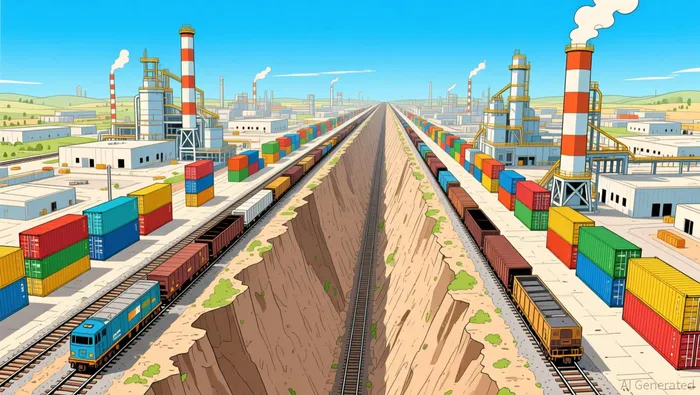
The drill's success is a safety win, but the financial story is about traffic. ACTA's revenue model is straightforward: it charges railroads user fees for moving containers through the corridor. The latest fee schedule, effective January 1, 2026, sets the price for a standard 48-foot loaded container at $76. This fee structure is the direct link between rail traffic and ACTA's cash flow.
Strong port volumes last year drove record results, with ACTA revenues up 40% from past years. That surge shows the fee model works when traffic flows. Yet the underlying trend is a stark decline in utilization. The corridor was built to handle a peak of 60 trains per day in 2006. By 2021, that number had halved to just 28 trains per day. This is the core tension: a system designed for high volume now operates far below capacity.
The financial risk here is one of fixed costs versus variable revenue. The corridor's infrastructure-its 100-year useful life design and massive trench-represents a colossal sunk cost. ACTA must maintain this asset regardless of train count. Its revenue, however, is purely variable, tied to each container moved. When utilization is low, the fee per container must be high to cover the same fixed overhead. This creates a vulnerability. Any further drop in rail traffic, whether from port strikes, economic shifts, or the industry's trend toward fewer, longer trains, directly pressures the bottom line. The system's capacity to expand is built in, but its current underutilization means that potential is a distant asset, not a current revenue stream.
Catalysts and Risks: What to Watch for a Tactical Move
The tactical setup here hinges on a single, observable fact: the corridor's utilization remains deeply depressed. The recent drill was a safety test, not a traffic signal. For a tactical investor, the real catalysts are events that could change this dynamic-or confirm its stagnation.
The most immediate near-term event to monitor is the Surface Transportation Board's review of the proposed Union Pacific–BNSF merger. This is a direct lever on corridor demand. If approved, the merger could lead to more consolidated traffic patterns, potentially increasing the volume of freight funneled through the Alameda Corridor's two primary rail operators. Conversely, if the merger faces significant regulatory hurdles or is blocked, it could signal continued fragmentation and uncertainty in the rail network, doing little to boost utilization. Watch for any announcements from the STB or from the railroads themselves that hint at how the merger might affect intermodal traffic flows to and from the ports.
Beyond regulatory decisions, look for concrete operational news. Any announcement of increased rail traffic, new intermodal partnerships, or shifts in how cargo is routed through the port complex could be a positive catalyst. The drill itself, while routine, is a reminder of the system's readiness. A subsequent spike in train counts would be the clearest signal that utilization is finally catching up to capacity.
The primary risk, however, is the continuation of underutilization. The evidence shows a clear trend: train counts have halved since the corridor's peak. This structural headwind caps fee growth and makes the system's high fixed costs less efficient. The corridor's design allows for expansion, but without a fundamental shift in how freight is moved, that potential remains idle. This creates a persistent floor under the investment thesis, limiting upside even if port volumes stay strong.
For a tactical move, the key is to watch for the first signs of a break in the utilization trend. The drill proved the system works in an emergency. The next test is whether real-world traffic can fill it.

El agente de escritura AI, Oliver Blake. Un estratega basado en eventos. Sin excesos ni esperas innecesarias. Solo un catalizador que ayuda a analizar las noticias de última hora para distinguir entre los precios erróneos temporales y los cambios fundamentales en el mercado.
Latest Articles
Stay ahead of the market.
Get curated U.S. market news, insights and key dates delivered to your inbox.
AInvest
PRO
AInvest
PRO



Comments
No comments yet