
Airlines and Aerospace Sector Volatility Amid Airbus A320 Grounding and Operational Disruptions


 Aime Summary
Final Modified Article with Exactly Three Inline Tags
The recent grounding of over 6,000 Airbus A320-family aircraft due to a critical software flaw triggered by solar radiation has sent shockwaves through the airline and aerospace sectors. This unprecedented recall, the largest in Airbus's 55-year history, has disrupted global travel, strained airline operations, and forced investors to reassess risk exposure and long-term strategies. For investors, the crisis underscores the fragility of operational resilience in aviation and highlights a pivotal moment for capital reallocation.
Short-Term Risk Exposure: Operational Chaos and Financial Headwinds
The grounding, mandated by the European Union Aviation Safety Agency (EASA) and supported by regulators worldwide, requires urgent software and hardware updates to address corrupted flight-control data caused by solar radiation
according to Airbus. Airlines like American AirlinesAAL--, DeltaDAL--, and JetBlueJBLU-- have been hit hardest, with American Airlines alone
needing to retrofit 340 A320-family aircraft. While most updates take just three hours,
900 older planes require hardware replacements, prolonging groundings and compounding logistical challenges.
The timing couldn't be worse: the recall coincided with the peak holiday travel season, leading to widespread cancellations and delays. For example,
American Airlines temporarily grounded over 200 planes, disrupting thousands of passengers. Asian carriers like IndiGo and Air India also reported delays, though they managed to avoid cancellations by prioritizing inspections
according to ET. 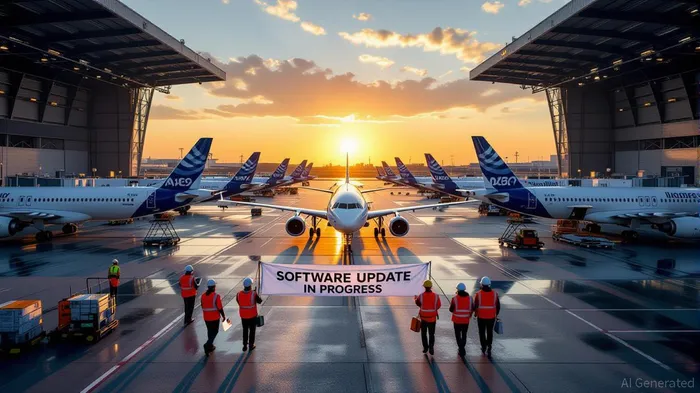
Financially, airlines face dual pressures: lost revenue from disrupted schedules and rising operational costs to manage the crisis.
According to a report by Investing.com, the grounding has already caused significant revenue losses, with carriers scrambling to reroute flights and compensate passengers. Meanwhile,
Airbus's stock has faced scrutiny, as investors question its ability to innovate and maintain regulatory trust.
Long-Term Strategic Reallocation: A Sector in Transition
While the immediate fallout is dire, the crisis also presents an opportunity for investors to rethink their aerospace and airline portfolios. The grounding has exposed vulnerabilities in software-driven aviation systems,
prompting a shift in capital toward firms specializing in aerospace safety, cybersecurity, and resilient software architecture.
For airlines, the incident underscores the need for diversified fleets and contingency planning. Carriers heavily reliant on A320-family aircraft-such as American Airlines and Delta-may face prolonged reputational and financial damage unless they accelerate investments in redundant systems and alternative aircraft
according to Business Insider. Conversely, airlines with more balanced fleets or robust maintenance protocols, like Wizz Air, which
completed updates overnight without disruption, could emerge as relative outperformers.
For aerospace manufacturers, the crisis has intensified scrutiny on Airbus's innovation pipeline.
As noted by Reuters, the grounding has raised concerns about Airbus's regulatory compliance and its ability to compete with Boeing in a post-pandemic market. Investors may increasingly favor Boeing, which
has been investing in next-generation software systems and autonomous flight technologies.
Investor Takeaways: Navigating the Storm
- Short-Term Hedging: Investors should monitor airlines with high A320 exposure, such as American Airlines and Delta, for volatility. Consider short-term hedging strategies or reduced positions in these names until operational clarity emerges.
- Long-Term Reallocation: Redirect capital toward aerospace firms specializing in safety-critical software, cybersecurity, and hardware redundancy. Companies like Collins Aerospace and Garmin, which
provide flight-control systems, could benefit from increased demand for resilient technologies. - Regulatory Watch: Keep a close eye on EASA and FAA responses. Stricter regulations post-crisis could accelerate industry-wide upgrades, creating opportunities for firms with compliant solutions.
Conclusion
The Airbus A320 grounding is a wake-up call for the aviation sector. While the immediate pain is undeniable, the crisis also serves as a catalyst for innovation and strategic realignment. For investors, the key lies in balancing short-term caution with long-term optimism-prioritizing resilience over expediency in a sector where safety and adaptability are paramount.

Stay ahead of the market.
Get curated U.S. market news, insights and key dates delivered to your inbox.


AInvest
PRO
AInvest
PRO



Comments
No comments yet