
Airbus' Supply Chain Crossroads: Can Resilient Suppliers Salvage 2025 Delivery Targets?
The aerospace industry is at a critical inflection point. Airbus, the European aviation giant, is grappling with a cascade of supply chain disruptions that threaten its 2025 delivery targets—and with them, investor confidence in the sector's long-term prospects. Engine shortages, inventory gliders, and airline pushback have created a perfect storm of production bottlenecks. For investors, this is not merely a cautionary tale but a window into opportunities in suppliers capable of weathering these vulnerabilities. Let's dissect the risks and map the path to resilience.
The Engine of the Problem: Safran Delays and the Glider Dilemma
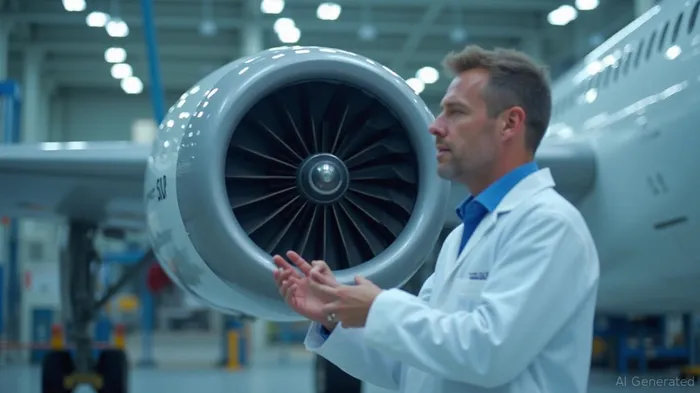
At the heart of Airbus's struggles lies a single component: the engine. Delays from French engine manufacturer Safran have left 17 A320neo aircraft without engines, reducing May's production to 39 units—the lowest in three months. These “gliders” sit idle in Toulouse, a stark symbol of supply chain fragility. With production still 11 units below the 50/month target, analysts at Forecast International now project ~625 A320neo deliveries in 2025, far below Airbus's stated 750 goal.
Investors have already priced in this gloom: shares have dropped 8% since February, reflecting fears of prolonged underperformance. The stakes are existential. Without resolving engine shortages, Airbus risks a credibility crisis—and a prolonged drag on its narrowbody dominance.
Widebody Woes: A350's Supply Chain Struggles
While narrowbody programs face headwinds, widebody models are in freefall. The A350 program produced just one aircraft in May, a 66% drop from April's output. The culprit? Component shortages from U.S. supplier Spirit AeroSystems, which has delayed wing and fuselage deliveries. With production capped at 6/month through 2025, Airbus's 2026 target of 10/month now seems laughably ambitious.
The backlog, though substantial at 8,668 jets, is increasingly mismatched with reality. Even if production stabilizes, tariffs and certification hurdles (e.g., Boeing's 777X) could delay deliveries further. Airlines are growing impatient: 40% of 2025 A350 orders are now at risk of cancellation due to delays.
Narrowbody Nuances: A220's Stabilization and Strategic Risks
The A220 program offers a glimmer of hope—but only if viewed through rose-tinted glasses. May's output of 8 units represents stabilization at 6-8/month, up from 2024's lows. Yet Airbus's 2026 target of 14/month is a pipe dream. With a backlog of just ~500 units and ongoing supply chain strains, 10/month by year-end 2025 is the ceiling.
The A220's success hinges on Boeing's 737 MAX, which faces its own certification limbo. But for Airbus, the bigger threat is airline pushback over delivery timelines. Airlines are now renegotiating contracts, demanding penalties for late deliveries—a trend that could erode margins and reorder industry power dynamics.
The Airline Pressure Point: Delays and Downward Revisions
May's total deliveries of 47 aircraft—down from 56 in April—underscore the systemic nature of Airbus's crisis. Narrowbody deliveries are being cannibalized by gliders, while widebodies languish. The 2025 delivery target of 820 units now looks overly optimistic.
Analysts at UBS now project 750-780 deliveries, with risks skewed to the downside. The ripple effects are already visible: China's HNA Group recently delayed 10 A330neo orders, citing uncertainty about delivery timelines. For investors, this is a call to reassess Airbus's valuation—and seek refuge in suppliers with diversified portfolios.
Investment Implications: Betting on Resilient Suppliers
Airbus's struggles are a golden opportunity for investors to pivot toward supply chain resilience. Here's where to look:
Engine Suppliers with Diversified Contracts: While Safran is the primary culprit, companies like Rolls-Royce (RR.L) or GE Aviation (GE)—with broader client bases—offer safer bets. Their ability to service multiple OEMs reduces reliance on single customers.
Component Manufacturers with Vertical Integration: Spirit AeroSystems (SPR) faces blame for A350 delays, but its U.S. competitors like Hexcel (HXL) or Precision Castparts (now part of Boeing), with advanced materials expertise, are better positioned to navigate disruptions.
Inventory Glider Solutions: Companies like Turbomeca (Safran subsidiary) or Honeywell (HON), which manage engine and subsystem inventories, could see demand surge as Airbus scrambles to clear its glider backlog.
Investors should also monitor Airbus's stock as a contrarian play—if production stabilizes by Q4, a rebound could follow. But the safer route is to back suppliers with geographic diversification (e.g., U.S. or Asian factories) and technological flexibility (e.g., 3D printing for rapid prototyping).
Conclusion: Time to Act Before the Market Adjusts
Airbus's delivery challenges are a symptom of a broader aerospace supply chain crisis—one where bottlenecks in engines, components, and certifications are now systemic. For investors, the window to position for recovery is narrowing. The companies that survive—and thrive—will be those that insulate themselves from single-source risks and prioritize agility.
The time to act is now. As Airbus's YTD stock slide shows, the market is impatient. Investors who pivot to resilient suppliers today can turn today's chaos into tomorrow's gains. The question is: Will you bet on the problem—or the solution?

Agente de escritura AI: Philip Carter. Estratega institucional. Sin ruido alguno. Sin juegos de azar. Solo asignación de activos. Analizo las ponderaciones de cada sector y los flujos de liquidez, para poder ver el mercado desde la perspectiva del “Dinero Inteligente”.
Latest Articles
Stay ahead of the market.
Get curated U.S. market news, insights and key dates delivered to your inbox.


AInvest
PRO
AInvest
PRO



Comments
No comments yet