
Airbus Software Recalls and Aviation Sector Volatility: Assessing Infrastructure Resilience and Stock Valuation Dynamics Amid Technical Disruptions


 Aime Summary
Financial Implications for Airlines: Operational Costs and Stock Valuation Pressures
The recall has imposed significant financial burdens on airlines, with operational disruptions peaking during the U.S. Thanksgiving travel period. American AirlinesAAL--, for instance, required urgent software updates, with most repairs completed within two hours. However, necessitated hardware modifications, leading to prolonged groundings and compounding costs. Delta Air LinesDAL-- and United AirlinesUAL-- faced less severe impacts, with DeltaDAL-- were affected and United .
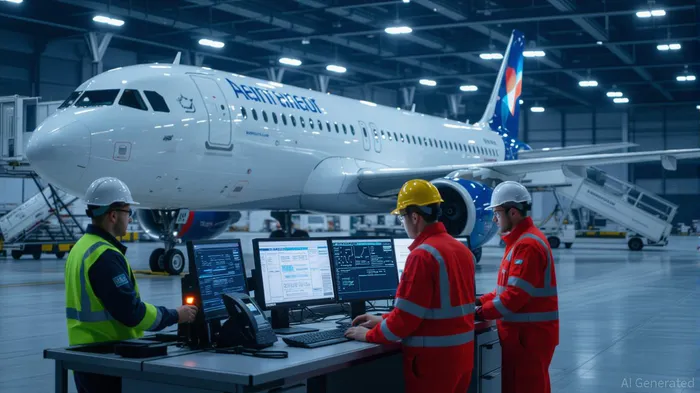 The recall's timing-coinciding with peak travel demand-exacerbated financial strain. Airlines incurred costs from flight cancellations, passenger rebooking, and expedited maintenance. American Airlines' Altman Z-Score, a measure of financial distress, remains in the "distress zone," reflecting broader sector challenges. While Delta and United managed to mitigate operational disruptions, their stock valuations remain sensitive to investor sentiment around technical risks. Analysts project a mixed outlook for American Airlines, .
Regulatory Responses: Emergency Directives and Long-Term Policy Shifts
Regulatory bodies acted swiftly to address the crisis. The European Union Aviation Safety Agency and the U.S. issued emergency directives mandating software reversion or hardware modifications for affected aircraft. The FAA . for U.S. carriers to complete fixes, intensifying operational pressures. These directives underscored the vulnerability of fly-by-wire systems to electromagnetic interference, prompting calls for stricter software resilience standards.
Looking ahead, regulators may prioritize mandates for radiation-hardened systems and real-time monitoring of environmental threats. The incident has also reignited debates about the adequacy of current certification processes for aerospace software, potentially leading to more rigorous testing protocols.
Investment Trends: Aerospace Maintenance and Software Modernization Firms
The crisis has accelerated demand for aerospace firms specializing in software resilience and maintenance solutions. Dassault Systèmes, for example, , driven by industrial innovation and aerospace adoption. The Aircraft MRO (Maintenance, Repair, and Overhaul) Software Market is , fueled by predictive maintenance and digital twin technologies.
Generative AI is emerging as a transformative force in this space. McKinsey highlights its potential to address labor shortages through virtual AI "copilots" and automate reliability engineering tasks. Bridger Aerospace, a defense-focused firm, exemplifies this trend, leveraging strategic contracts and revenue diversification to achieve record quarterly performance. Investors are increasingly prioritizing firms with expertise in cybersecurity, radiation resilience, and rapid deployment capabilities.
Airline Stock Valuation Dynamics: Resilience Amid Disruptions
While the recall initially pressured airline stocks, operational agility has tempered investor concerns. , minimizing Thanksgiving disruptions. Delta and United's limited exposure allowed them to maintain operational efficiency, with Delta's long-term stock forecasts emphasizing growth in premium travel and loyalty revenue.
However, sector-wide challenges persist. The recall coincided with existing maintenance backlogs and engine repair delays, amplifying costs. Analysts caution that airlines with weaker balance sheets may face prolonged valuation pressures unless they demonstrate robust contingency planning.
Conclusion: A Catalyst for Innovation and Resilience
The Airbus A320 recall serves as a wake-up call for the aviation sector, highlighting both the fragility of software-dependent systems and the opportunities for innovation. While airlines face short-term financial headwinds, the crisis has catalyzed investment in aerospace maintenance and software modernization. Regulators are likely to enforce stricter resilience standards, further boosting demand for advanced technologies. For investors, the key lies in identifying firms poised to address these evolving challenges-those with expertise in radiation-hardened systems, AI-driven maintenance, and agile supply chains.
As the industry navigates this period of disruption, the focus on infrastructure resilience will remain central to long-term value creation.

Delivering real-time insights and analysis on emerging financial trends and market movements.
Latest Articles
Stay ahead of the market.
Get curated U.S. market news, insights and key dates delivered to your inbox.
AInvest
PRO
AInvest
PRO



Comments
No comments yet