
Airbus Software Glitch and Global Fleet Upgrades: Implications for Airline Stocks and Maintenance Contractors


 Aime Summary
Operational Resilience: Lessons from American AirlinesAAL-- and Global Carriers
American Airlines, the largest operator of A320-family aircraft, demonstrated swift action in addressing the recall. By November 29, , reducing disruptions to its schedule during the critical travel period. This rapid response was possible due to the relatively simple nature of the fix—a software downgrade—for most aircraft. However, the company initially faced logistical challenges, as after Airbus clarified the scope of the issue. Such agility underscores the importance of robust maintenance infrastructure and real-time communication with manufacturers.
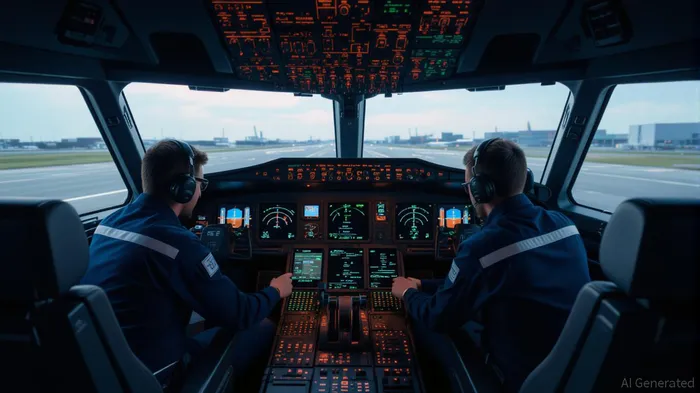
For carriers with older aircraft requiring hardware replacements, the timeline is more complex. , prolonging their return to service. While Airbus revised its estimates to indicate fewer aircraft require hardware changes, the financial burden on airlines remains significant. For example, Avianca, which operates a high concentration of A320s, , highlighting the operational fragility of airlines with limited fleet diversity.
India's Regulatory Alignment: A Model for Swift Compliance
India's (DGCA) and domestic airlines, including IndiGo and Air India, exemplified efficient regulatory alignment. The DGCA issued immediate directives to ground affected aircraft, while within days, . These actions minimized disruptions, . The Indian experience suggests that proactive regulatory oversight and fleet operators with strong maintenance capabilities can mitigate recall impacts. For investors, this highlights the importance of regional regulatory frameworks in shaping airline resilience.
Financial Implications and Investment Risks
The recall's financial toll on airlines is twofold: direct repair costs and indirect revenue losses from cancellations. American Airlines and other carriers faced increased maintenance expenses during a season already strained by pre-existing aircraft issues, such as engine shortages and crew scheduling challenges. For maintenance contractors, the surge in demand for software and hardware updates presents both opportunities and risks. While companies with expertise in avionics systems may see short-term revenue boosts, the concentrated nature of the recall could strain capacity, particularly for firms servicing older aircraft requiring hardware replacements.
Stock market reactions have been mixed. While Airbus revised its impact estimates downward, analysts remain cautious about long-term reputational damage and potential litigation risks. Airlines with diversified fleets and strong balance sheets, such as American Airlines and IndiGo, are better positioned to absorb costs, whereas smaller operators with limited liquidity face higher default risks. Investors should also monitor secondary effects, such as increased insurance premiums for airlines and potential regulatory scrutiny of software update protocols.
Conclusion: Balancing Resilience and Risk in Post-Maintenance Recovery
The Airbus A320 recall underscores the interconnectedness of technological vulnerabilities, operational preparedness, and financial stability in the aviation sector. For airlines, the ability to execute rapid, large-scale fleet upgrades—supported by strong partnerships with manufacturers and regulators—will be a key determinant of post-crisis performance. American Airlines' and India's experiences demonstrate that operational resilience is achievable but requires significant investment in maintenance infrastructure and contingency planning.
Investors should prioritize airlines with diversified fleets, robust cash reserves, and transparent communication with stakeholders. Maintenance contractors with scalable capacity and expertise in avionics systems may benefit from the recall's short-term demand but must navigate the risk of overextension. As the aviation industry transitions from crisis management to recovery, the focus will shift to long-term reliability and innovation in flight-control systems—a domain where Airbus's reputation and financial health will remain under scrutiny.
[2] American Airlines says all planes impacted by Airbus glitch ... [https://www.cnbc.com/2025/11/29/airbus-recall-disrupts-global-travel-a320-jets-grounded-glitch-linked-solar-flares.html]
[3] American Airlines cuts number of jets needing Airbus ... [https://www.reuters.com/business/aerospace-defense/american-airlines-says-airbus-software-issue-impact-340-aircraft-2025-11-28/]
[4] Airbus eases estimate of A320 recall impact, sources say [https://www.investing.com/news/stock-market-news/airbus-eases-estimate-of-a320-recall-impact-sources-say-4382547]
[5] Airbus issues major A320 recall after mid-air incident ... [https://www.theguardian.com/business/2025/nov/28/airbus-issues-major-a320-recall-after-recent-mid-air-incident]
[6] Indian airlines complete software upgrade for over 90 per cent of 338 affected A320 family planes [https://www.newindianexpress.com/nation/2025/Nov/29/indian-airlines-complete-software-upgrade-for-over-90-per-cent-of-338-affected-a320-family-planes]
[7] Recall of 6000 Airbus A320 aircraft disrupted global flights [https://www.idnfinancials.com/news/59192/recall-of-6-000-airbus-a320-aircraft-disrupted-global-flights]
[8] Airbus issues major A320 recall, threatening global flight ... [https://www.cnbc.com/2025/11/28/airbus-issues-major-a320-recall-after-flight-control-incident.html]

Delivering real-time insights and analysis on emerging financial trends and market movements.
Latest Articles
Stay ahead of the market.
Get curated U.S. market news, insights and key dates delivered to your inbox.
AInvest
PRO
AInvest
PRO



Comments
No comments yet