
Airbus Software Glitch and Aviation Sector Implications: Assessing Risk Resilience in Aerospace Stocks


 Aime Summary
Regulatory and Operational Fallout
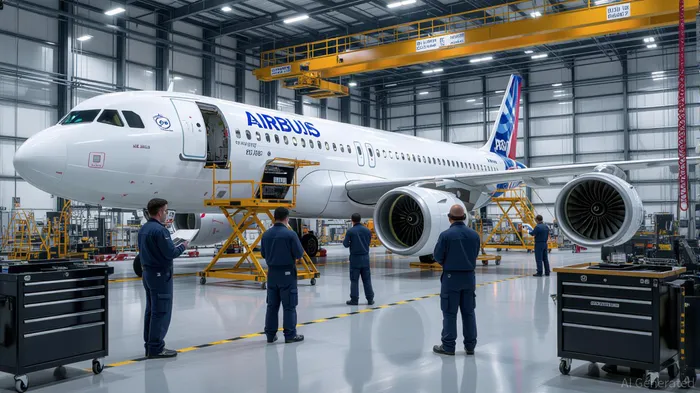
The European Union Aviation Safety Agency (EASA) and the U.S. Federal Aviation Administration (FAA) issued emergency directives mandating immediate repairs, with airlines like American AirlinesAAL-- and IndiGo reporting progress on software updates. However, the recall has disrupted global travel, with cancellations from carriers such as Avianca and Finnair. Airbus's stock (EADSY) has fallen as investors grapple with concerns over safety protocols. The timing-during peak holiday travel-has compounded challenges, though Airbus has revised estimates downward, suggesting fewer aircraft require hardware changes.
Financial Implications for Airbus and Boeing
While Airbus faces direct scrutiny, Boeing's stock (BA) has shown relative stability, buoyed by its distinct product portfolio and recent operational improvements. Analysts note Boeing's Q4 2025 earnings forecasts, , as signs of long-term resilience. However, Boeing's legal challenges remain a drag, . For Airbus, the recall underscores vulnerabilities in software-driven systems, a concern that could ripple into its competitive positioning against Boeing.
Airline Resilience: Lufthansa vs. United Airlines
The recall's operational impact varies starkly among airlines. Lufthansa, which temporarily grounded A320s for repairs, . In contrast, United Airlines reported record Q3 revenue , . These divergent outcomes underscore the importance of fleet diversification and financial flexibility in mitigating sector-specific shocks.
Investment Outlook and Risk Assessment
For aerospace stocks, the Airbus crisis serves as a stress test for risk resilience. Airbus's stock volatility reflects investor skepticism about its ability to manage complex technical issues, while Boeing's stability hinges on its capacity to navigate regulatory and legal headwinds. Airlines with diversified fleets and robust liquidity-like United-appear better positioned to weather disruptions, whereas peers reliant on A320s (e.g., Lufthansa) face near-term operational and reputational risks.
In the broader market, the recall highlights systemic vulnerabilities in modern aviation's reliance on software systems. Investors should monitor regulatory responses, repair timelines, and how competitors like Boeing adapt to maintain market share. For now, a cautious approach to Airbus and a watchful eye on Boeing's legal and operational progress seem prudent, while airlines with strong balance sheets and diversified operations offer relative safety.

Delivering real-time insights and analysis on emerging financial trends and market movements.
Latest Articles
Stay ahead of the market.
Get curated U.S. market news, insights and key dates delivered to your inbox.
AInvest
PRO
AInvest
PRO



Comments
No comments yet