
Airbus Secures $20 Billion in Plane Orders Amid Delivery Crisis.
ByAinvest
Monday, Aug 4, 2025 8:49 am ET1min read
SPR--
Despite the robust order intake, Airbus has struggled to increase production levels, leading to a backlog of unengined airframes and delivery delays. The company's A320neo program, for instance, has seen a 20% drop in deliveries, while the A350 program has faced production delays [1]. These issues are not isolated to Airbus but reflect broader industry challenges, including supply chain vulnerabilities, geopolitical tensions, and the urgent need for digital reinvention [1].
The aerospace industry's supply chain is a complex web of interdependencies, with tier-2 and tier-3 suppliers often operating with razor-thin margins. Labor shortages, geopolitical tensions, and the lingering effects of the pandemic have created a volatile environment, exacerbating production delays [1]. For example, Pratt & Whitney's recent strike disrupted GTF engine deliveries, cascading into Airbus's production delays [1].
Airbus's struggles are not solely due to production issues. The company has also faced challenges in ramping up production capacity. The delayed integration of Spirit AeroSystems' wing production and global shipping delays have further compounded these issues [1]. Shipping costs from China to Europe have spiked fivefold due to Red Sea reroutings and Central American droughts, exacerbating material shortages [1].
The Paris Airshow success, while promising, does not mitigate the immediate challenges Airbus faces. The company's 2025 delivery targets now appear optimistic, with analysts predicting a 10–15% shortfall. However, Airbus's pivot to a second A320 assembly line in Tianjin and its A330neo production ramp-up signal long-term strategic clarity [1].
Investors should remain cautious but optimistic. The aerospace industry's restructuring phase, though painful, is creating fertile ground for innovation. Companies that leverage AI, digital twins, and resilient supplier ecosystems will emerge stronger, while those clinging to legacy systems risk obsolescence [1]. The question for investors is not whether the aerospace sector will recover—it's who will lead the charge.
References:
[1] https://www.ainvest.com/news/aircraft-peril-airbus-engine-shortages-reveal-systemic-risks-investment-opportunities-aerospace-restructuring-2508/
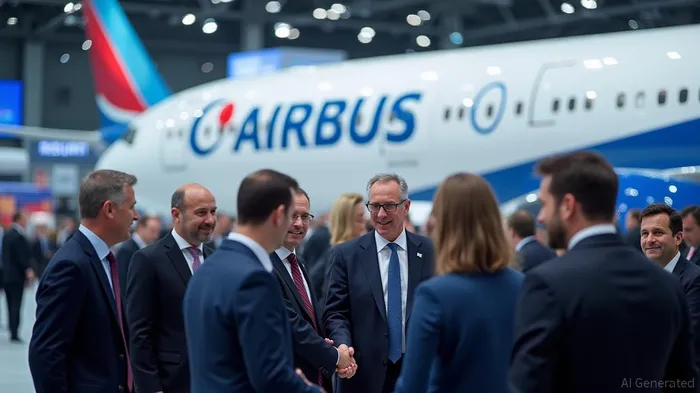
Airbus has secured almost $20 billion in airplane orders at the Paris Airshow, but its delivery crisis looms due to its inability to increase production levels. The company faces challenges in ramping up production to meet demand, despite strong order intake.
Airbus has secured nearly $20 billion in airplane orders at the Paris Airshow, a testament to the strong demand for its aircraft. However, the company faces significant challenges in ramping up production to meet this demand, highlighting an ongoing delivery crisis [1].Despite the robust order intake, Airbus has struggled to increase production levels, leading to a backlog of unengined airframes and delivery delays. The company's A320neo program, for instance, has seen a 20% drop in deliveries, while the A350 program has faced production delays [1]. These issues are not isolated to Airbus but reflect broader industry challenges, including supply chain vulnerabilities, geopolitical tensions, and the urgent need for digital reinvention [1].
The aerospace industry's supply chain is a complex web of interdependencies, with tier-2 and tier-3 suppliers often operating with razor-thin margins. Labor shortages, geopolitical tensions, and the lingering effects of the pandemic have created a volatile environment, exacerbating production delays [1]. For example, Pratt & Whitney's recent strike disrupted GTF engine deliveries, cascading into Airbus's production delays [1].
Airbus's struggles are not solely due to production issues. The company has also faced challenges in ramping up production capacity. The delayed integration of Spirit AeroSystems' wing production and global shipping delays have further compounded these issues [1]. Shipping costs from China to Europe have spiked fivefold due to Red Sea reroutings and Central American droughts, exacerbating material shortages [1].
The Paris Airshow success, while promising, does not mitigate the immediate challenges Airbus faces. The company's 2025 delivery targets now appear optimistic, with analysts predicting a 10–15% shortfall. However, Airbus's pivot to a second A320 assembly line in Tianjin and its A330neo production ramp-up signal long-term strategic clarity [1].
Investors should remain cautious but optimistic. The aerospace industry's restructuring phase, though painful, is creating fertile ground for innovation. Companies that leverage AI, digital twins, and resilient supplier ecosystems will emerge stronger, while those clinging to legacy systems risk obsolescence [1]. The question for investors is not whether the aerospace sector will recover—it's who will lead the charge.
References:
[1] https://www.ainvest.com/news/aircraft-peril-airbus-engine-shortages-reveal-systemic-risks-investment-opportunities-aerospace-restructuring-2508/
Stay ahead of the market.
Get curated U.S. market news, insights and key dates delivered to your inbox.
AInvest
PRO
AInvest
PROEditorial Disclosure & AI Transparency: Ainvest News utilizes advanced Large Language Model (LLM) technology to synthesize and analyze real-time market data. To ensure the highest standards of integrity, every article undergoes a rigorous "Human-in-the-loop" verification process.
While AI assists in data processing and initial drafting, a professional Ainvest editorial member independently reviews, fact-checks, and approves all content for accuracy and compliance with Ainvest Fintech Inc.’s editorial standards. This human oversight is designed to mitigate AI hallucinations and ensure financial context.
Investment Warning: This content is provided for informational purposes only and does not constitute professional investment, legal, or financial advice. Markets involve inherent risks. Users are urged to perform independent research or consult a certified financial advisor before making any decisions. Ainvest Fintech Inc. disclaims all liability for actions taken based on this information. Found an error?Report an Issue




Comments
No comments yet