
Airbus Safety Recall and Its Implications for the Global Aviation Sector


 Aime Summary
Operational Disruptions and Regulatory Responses
The recall was precipitated by a JetBlueJBLU-- flight's uncommanded altitude drop in October 2025, attributed to software corruption from solar radiation interference. The incident prompted immediate regulatory action: the U.S. Federal Aviation Administration (FAA) mandated a 10% reduction in U.S. flight capacity, while India's Directorate General of Civil Aviation (DGCA) ordered a complete halt of A320 operations until modifications were completed. These measures have caused widespread flight cancellations and delays, with airlines like Avianca grounding 70% of its fleet and closing ticket sales through December 8.
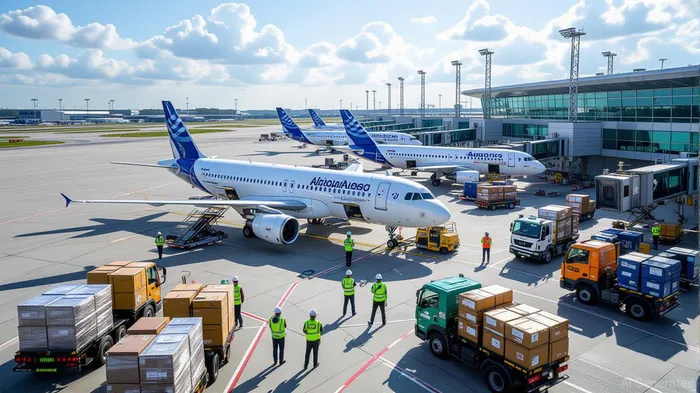
The recall's scale-equivalent to 11,300 A320-family aircraft in operation-has strained airline operations. American AirlinesAAL--, for instance, reported that 340 of its 480 A320s require updates, with repairs taking up to two hours per aircraft. However, some planes may need hardware modifications, prolonging groundings for weeks. Such disruptions have eroded passenger confidence and forced airlines to raise ticket prices to offset revenue losses.
Supply Chain Resilience: Airbus vs. Boeing
The recall underscores the critical role of supply chain resilience in mitigating operational shocks. Airbus's response contrasts sharply with Boeing's handling of the 737 MAX crisis (2019–2021). While Boeing's overreliance on single-source suppliers, such as Spirit AeroSystems for fuselage production, exacerbated its 20-month grounding, Airbus has adopted a decentralized model, distributing final assembly across regions and diversifying supplier partnerships. This strategy enabled Airbus to maintain production momentum during the A320 recall, delivering 12,155 aircraft in 2025 and narrowing its delivery gap with BoeingBA--.
In contrast, Boeing's 733 MAX crisis revealed systemic flaws, including inadequate communication with suppliers and regulatory misalignment. Smaller suppliers faced liquidity crises due to delayed payments and halted production, a scenario Airbus has avoided by prioritizing supplier flexibility and financial preparedness. These divergent approaches highlight the importance of diversified sourcing and proactive risk management in aviation supply chains.
Stock Market Implications and Investor Sentiment
The recall has sent shockwaves through airline stocks and ETFs. Major carriers like United AirlinesUAL-- (UAL), Delta Air LinesDAL-- (DAL), and American Airlines (AAL) have seen stock prices plummet following the FAA's capacity cuts and operational uncertainties. Air India, while managing to update 42 of its 113 affected aircraft, faces potential delays that could further pressure its valuation. The ripple effects extend to airline ETFs, with the U.S. Global Jets ETF (JETS) and leveraged ETNs like JETU reflecting heightened volatility.
Historically, such crises have led to short-term volatility but long-term adjustments. For example, Boeing's 737 MAX crisis initially depressed its stock but eventually stabilized as the company implemented stricter quality controls and regulatory reforms as reported by financial analysts. Investors must weigh immediate risks-such as revenue declines and operational costs-against long-term opportunities in airlines with robust contingency plans and diversified fleets.
Strategic Positioning for Investors
Navigating this volatility requires a dual focus on risk mitigation and upside potential. Investors should:
1. Diversify Exposure: Avoid overconcentration in single airlines or regions. ETFs like JETS offer broad sector exposure while hedging against individual stock risks.
2. Prioritize Resilient Airlines: Favor carriers with diversified fleets and strong liquidity, such as those investing in next-generation aircraft or alternative propulsion technologies.
3. Monitor Regulatory Developments: Regulatory actions, such as the FAA's emergency directives, can drive market sentiment. Airlines that swiftly comply with mandates may recover faster.
4. Hedge Against Volatility: Use options or short-term bonds to offset potential losses in a sector prone to sudden shocks.
Conclusion
The Airbus A320 recall has laid bare the fragility of modern aviation systems, yet it also offers a blueprint for resilience. By learning from Boeing's missteps and leveraging diversified supply chains, Airbus has demonstrated how proactive risk management can stabilize operations during crises. For investors, the key lies in balancing caution with optimism-recognizing the sector's inherent volatility while capitalizing on long-term structural improvements in safety and supply chain innovation.

Delivering real-time insights and analysis on emerging financial trends and market movements.
Latest Articles
Stay ahead of the market.
Get curated U.S. market news, insights and key dates delivered to your inbox.




Comments
No comments yet