
Airbus Safety Crisis: Implications for Aerospace Investors


 Aime Summary
Operational Risk: A Test of Crisis Management
The recall, triggered by a JetBlueJBLU-- flight incident in October 2025, revealed a critical flaw in the A320's flight-control software: intense solar radiation could corrupt data, potentially causing uncommanded pitch events according to Airbus. Airbus issued an emergency directive requiring airlines to perform software rollbacks or hardware modifications. While most repairs were completed within hours, some older aircraft required weeks of downtime due to hardware replacements.
The logistical challenges were compounded by timing. The recall coincided with the U.S. Thanksgiving travel peak, forcing airlines like American AirlinesAAL-- to ground 340 aircraft, initially threatening operational delays. However, emphasized the company's "around-the-clock" response, with teams prioritizing safety and transparency. By early December, over 98% of affected aircraft had received updates, minimizing long-term disruptions.
This crisis highlights the growing operational risks inherent in modern aviation. As aircraft rely more heavily on software, vulnerabilities to environmental factors-such as solar radiation-pose systemic threats. For investors, the incident underscores the importance of evaluating a manufacturer's ability to manage complex, large-scale recalls without compromising customer trust. 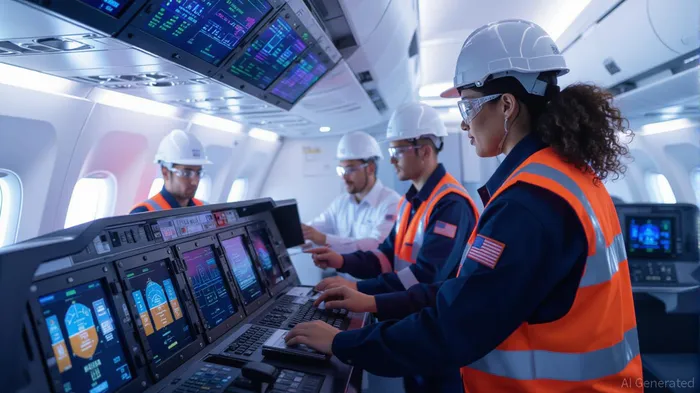
Financial Impact: Short-Term Volatility, Long-Term Resilience
Airbus's stock initially reacted poorly to the recall, with the scale of the crisis. However, in 2025, reflecting strong market confidence in its expanding order book and aerospace projects. Analysts noted that the recall's financial impact was mitigated by several factors:
1. Retrofit Efficiency: , .
2. Proactive Communication: Airbus's transparent approach, including real-time updates to airlines and regulators, helped stabilize investor sentiment.
3. Cost Containment: , .
Despite these mitigants, the recall exposed vulnerabilities in Airbus's supply chain and maintenance infrastructure. For instance, a shortage of data loaders delayed repairs for some airlines. While no official financial report quantifies the retrofit expenses or compensation costs, the incident serves as a reminder that operational disruptions can erode margins, particularly during peak travel seasons.
Investor Sentiment: A Mixed Bag of Concerns and Confidence
Historical data on aerospace safety crises reveals a pattern of sharp stock volatility following major incidents. Research indicates that the scale of a disaster-particularly in terms of fatalities-strongly influences investor reactions. In Airbus's case, the absence of injuries or fatalities in the JetBlue incident likely tempered the market's response.
Comparisons to the BoeingBA-- 737 Max crisis further contextualize Airbus's handling of the A320 recall. Unlike Boeing's delayed and opaque response, Airbus adopted a proactive stance, working closely with regulators like the European Union Aviation Safety Agency (EASA) and the U.S. Federal Aviation Administration (FAA) to expedite fixes. This transparency bolstered investor confidence, with Bloomberg analysts noting that the company's "swift action" minimized reputational damage.
However, the recall also raised concerns about Airbus's software reliability. The fact that a solar radiation event-a natural phenomenon-exposed a critical flaw suggests that even leading aerospace firms are not immune to unforeseen risks. For investors, this reinforces the need to monitor a company's investment in software resilience and cybersecurity.
Conclusion: Navigating the New Normal in Aerospace
The 2025 A320 recall is a pivotal case study for aerospace investors. While the incident introduced short-term operational and financial challenges, Airbus's swift response and transparent communication mitigated long-term damage to shareholder value. .
For investors, the key takeaway is that operational risk in aviation manufacturing is no longer confined to mechanical failures. As aircraft become increasingly software-dependent, vulnerabilities to environmental and cyber threats will demand greater scrutiny. Airbus's proactive approach in this crisis offers a blueprint for managing such risks, but it also serves as a cautionary tale: in an industry where safety is paramount, even minor oversights can have outsized consequences.
As the aerospace sector evolves, investors must weigh not only a company's financial health but also its capacity to innovate in software integrity and crisis management. The A320 recall, while a setback, ultimately reaffirms that transparency, agility, and a commitment to safety remain the cornerstones of long-term value creation in aviation manufacturing.

Ofrecer información y análisis de primera mano acerca de las tendencias financieras emergentes y los movimientos de mercado.
Latest Articles
Stay ahead of the market.
Get curated U.S. market news, insights and key dates delivered to your inbox.
AInvest
PRO
AInvest
PRO



Comments
No comments yet