
Airbus's Global Maintenance Crisis: Implications for Aviation Stocks and Aerospace Investors


 Aime Summary
The Crisis Unveiled: A Solar-Driven Software Vulnerability
The root cause of the crisis lies in Airbus's Elevator and Aileron Computer (ELAC) system, which became susceptible to data corruption from intense solar radiation. A JetBlueJBLU-- flight on October 30, 2025, experienced an uncommanded pitch-down event, prompting an emergency landing in Tampa, Florida. Investigations revealed that solar flares could overwhelm flight control software, leading to uncontrolled elevator movements according to reports. In response, the European Union Aviation Safety Agency (EASA) issued an emergency directive requiring immediate software or hardware modifications for 6,000 A320 and A320neo aircraft as regulations require. While most repairs can be completed in two hours via software updates, approximately 1,000 older aircraft require hardware replacements, extending downtime and compounding operational risks according to industry analysis.
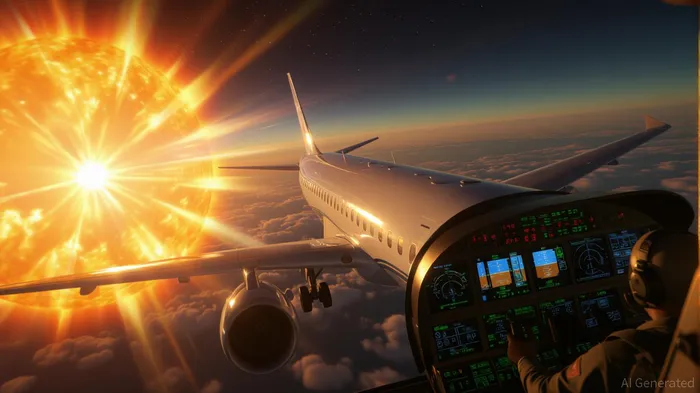
The timing of the directive-during the peak holiday travel season-has exacerbated disruptions. Major carriers like American AirlinesAAL--, Avianca, and Air France have reported flight cancellations and delays, with American Airlines alone needing to address 340 affected aircraft according to carrier reports. The U.S. Federal Aviation Administration (FAA) is expected to follow EASA's lead, further amplifying the ripple effect across global air travel.
Systemic Risks and Supply Chain Strains
The repair crisis intersects with preexisting supply chain vulnerabilities, amplifying its economic and operational impact. Airbus has long struggled with engine shortages and supplier capacity constraints, particularly for the A320neo program. As of July 2025, 60 unfinished airframes-dubbed "gliders"-await engines due to bottlenecks at CFM International and Pratt & Whitney according to industry reports. These challenges, compounded by labor strikes and geopolitical tensions, have already reduced A320neo deliveries by 20% according to supply chain data. The hardware replacement demands for 1,000 older A320 aircraft now threaten to prolong these delays, straining suppliers like Satair and Skywise Predictive Maintenance according to industry analysis.
Moreover, the crisis highlights the aerospace sector's susceptibility to space weather risks. As solar activity peaks during the 11-year solar cycle, the vulnerability of flight control systems to radiation-induced data corruption raises questions about the adequacy of current design standards. This issue, previously overlooked, could prompt regulatory overhauls and increased investment in radiation-hardened components-a costly but necessary adaptation according to technical analysis.
Investor Sentiment and Market Reactions
The crisis has introduced volatility into aerospace stocks, though investor sentiment remains cautiously optimistic. Airbus's shares have dipped in the short term, but analysts argue the company's long-term fundamentals remain intact. The Global Market Forecast 2025–2044 projects a near-doubling of the commercial fleet by 2044, driving demand for maintenance, training, and digital solutions worth $311 billion according to Airbus projections. However, the repair crisis has intensified scrutiny of Airbus's ability to manage systemic risks, particularly as supply chain constraints persist.
Comparisons to historical crises reveal stark contrasts. The 2020 pandemic, which caused $168 billion in airline losses and a 55% revenue drop, was a global operational shutdown with no precedent in the industry according to McKinsey analysis. In contrast, the 2025 crisis is a targeted technical failure with localized operational impacts. Yet, it mirrors the 2008 financial crisis in its exposure of supply chain fragility. While the 2008 crisis triggered broader financial reforms, the 2025 event underscores the need for aerospace firms to prioritize resilience against non-financial shocks, such as space weather and supplier bottlenecks according to industry research.
Regulatory and Operational Implications
Regulators are under pressure to establish global standards for space weather risk mitigation. EASA's emergency directive sets a precedent, but harmonizing requirements across the FAA, ICAO, and other agencies will be critical to avoid fragmented compliance costs. Airlines, meanwhile, are accelerating software updates and hardware replacements, with some adopting predictive maintenance tools to minimize downtime according to Airbus services data. However, the crisis has also exposed gaps in regulatory oversight of software vulnerabilities, prompting calls for stricter certification protocols for flight control systems.
For investors, the regulatory response will shape long-term valuations. Companies that demonstrate agility in addressing space weather risks-such as those investing in radiation-hardened components or AI-driven diagnostics-may outperform peers. Conversely, firms reliant on legacy systems could face prolonged operational and reputational damage.
Long-Term Industry Outlook: Growth Amid Uncertainty
Despite the immediate challenges, Airbus's services market is poised for robust growth. The Global Services Forecast 2025–2044 anticipates a surge in off-wing maintenance, rising from $107 billion to $218 billion by 2044 according to Airbus projections. This growth hinges on resolving supply chain bottlenecks and scaling up production capacity, including Airbus's new final assembly lines in China and the U.S. However, the repair crisis has highlighted the need for greater redundancy in supplier networks and accelerated adoption of nearshoring strategies according to industry analysis.
Investors must also weigh the human capital challenges. The industry faces a shortage of 2.35 million aviation professionals by 2044, including pilots and mechanics according to Reuters analysis. Delays in training programs or labor strikes could further strain operations, particularly during peak travel periods.
Conclusion: Navigating the New Normal
Airbus's repair crisis is a wake-up call for the aerospace sector, exposing vulnerabilities in technology, supply chains, and regulatory frameworks. While the immediate financial impact is manageable for most airlines, the long-term implications-ranging from increased R&D costs to heightened investor scrutiny-demand strategic foresight. For aerospace investors, the key lies in identifying firms that balance innovation with resilience, particularly those addressing space weather risks and supply chain diversification. As the industry transitions from crisis management to long-term adaptation, the ability to navigate these systemic challenges will define the next era of aviation growth.

Delivering real-time insights and analysis on emerging financial trends and market movements.
Latest Articles
Stay ahead of the market.
Get curated U.S. market news, insights and key dates delivered to your inbox.
AInvest
PRO
AInvest
PRO



Comments
No comments yet