
Airbus Glitch and Aviation Sector Volatility: Assessing Risk and Resilience in Aerospace Stocks Amid Operational Disruptions


 Aime Summary
The aviation sector has long been a barometer of global economic health, but in November 2025, it faced an unprecedented challenge: a massive recall of Airbus A320-family aircraft due to a software vulnerability linked to solar radiation. This incident, , regulatory frameworks, and the sector's capacity to adapt to emerging risks. For investors, the question is no longer just about short-term volatility but about the long-term resilience of an industry increasingly reliant on complex technology.
Operational Disruptions and Immediate Financial Fallout
The root cause of the crisis was a software flaw that allowed intense solar radiation to corrupt critical flight-control data, prompting an emergency recall. The European Union Aviation Safety Agency (EASA) mandated grounding until repairs were completed, with only ferry flights permitted. Airlines such as Avianca, American AirlinesAAL--, and Air India faced severe operational disruptions. Avianca, for instance, . Meanwhile, American Airlines , underscoring the logistical challenges of rapid repairs.
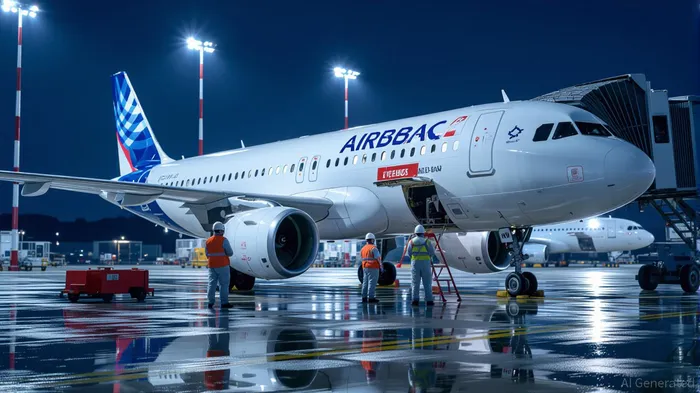
The financial toll on airlines has been significant. While most fixes required only two hours, , prolonging groundings. Analysts estimate , particularly during the critical holiday travel season. For example, , but others, such as those in Europe and the U.S., at major hubs like Heathrow and Gatwick.
Stock Market Reactions and Sector-Wide Contagion
Airbus's stock price initially reflected investor anxiety. On November 28, 2025, , . While the company revised its impact estimates downward-suggesting fewer aircraft required hardware changes-analysts remained cautious. The aerospace sector as a whole experienced contagion effects, with Boeing and Lockheed Martin stocks also showing volatility. Boeing, for instance, faced renewed scrutiny over its own supply chain challenges, .
The recall's timing exacerbated concerns. The aviation industry was already grappling with post-pandemic recovery, labor shortages, and rising fuel costs. This layered vulnerability has led to a reevaluation of risk profiles for aerospace stocks. For example, , signaling broader doubts about operational reliability. Meanwhile, competitors like Boeing and Lockheed Martin saw mixed reactions, .
Resilience and Long-Term Implications
Despite the immediate turbulence, the sector has demonstrated resilience. Airlines such as American Airlines , minimizing long-term disruptions. Analysts note that the rapid response-coordinated with regulators like EASA-highlights the industry's capacity to adapt to crises. Airbus CEO publicly apologized for the inconvenience, emphasizing the company's commitment to safety.
However, the incident underscores a critical vulnerability: the growing reliance on software in aviation systems. As one analyst observed, the recall parallels the Boeing 737 MAX grounding, illustrating how technological complexity can amplify risks. This has prompted calls for stricter regulatory oversight and enhanced cybersecurity protocols. For example, the European Union Aviation Safety Agency is expected to issue updated guidelines on radiation-related vulnerabilities.
Investment Outlook: Balancing Risk and Opportunity
For investors, the key lies in distinguishing between short-term volatility and long-term fundamentals. While the recall has dented investor confidence, Airbus's revised impact estimates and the sector's swift response suggest a path to recovery. Analysts project , reflecting confidence in its strategic positioning. Meanwhile, . The broader aerospace sector, however, faces structural challenges. Increased regulatory scrutiny and potential insurance cost hikes could pressure margins. Investors must also weigh the risk of future disruptions, particularly as climate-related and technological threats evolve. For now, the focus remains on how companies like Airbus and Boeing can innovate to address these vulnerabilities while maintaining operational efficiency.
Conclusion
The Airbus A320 recall of 2025 serves as a stark reminder of the aviation sector's susceptibility to technological and environmental risks. While the immediate financial and operational impacts are significant, the industry's ability to coordinate rapid repairs and maintain public trust offers a glimpse of resilience. For aerospace stocks, the path forward will depend on their capacity to adapt to a rapidly changing landscape-one defined by software complexity, , and the need for robust risk mitigation strategies. Investors who can navigate these challenges with a long-term perspective may find opportunities in a sector poised for innovation and recovery.

Delivering real-time insights and analysis on emerging financial trends and market movements.
Latest Articles
Stay ahead of the market.
Get curated U.S. market news, insights and key dates delivered to your inbox.
AInvest
PRO
AInvest
PRO



Comments
No comments yet