
Airbus's Emergency Maintenance Orders and Aviation Sector Risk Management: Short-Term Operational and Investment Implications of A320 Fleet Disruptions During Peak Travel Periods


 Aime Summary
Operational Disruptions: A Perfect Storm of Timing and Scale
According to a report by , Airbus has mandated urgent software and hardware modifications for approximately 6,000 A320 aircraft-half of the global fleet-following an incident involving JetBlueJBLU-- Flight 1230, which experienced an uncommanded pitch down and emergency landing. The European Union Aviation Safety Agency (EASA) and the Federal Aviation Administration (FAA) have issued emergency directives requiring these fixes. While most modifications can be completed in two hours, around 900 aircraft require hardware changes, prolonging their downtime.
The timing of the directive-coinciding with the U.S. holiday travel season-has exacerbated operational challenges. Airlines such as American Airlines, Delta, Wizz Air, Air India, and Air New Zealand have reported cancellations. For context, Reuters notes that the A320 family accounts for roughly 20% of global narrow-body aircraft, making this recall one of the largest in aviation history. The ripple effects extend beyond flight cancellations: airlines are now racing to reallocate aircraft, manage passenger expectations, and mitigate reputational damage during a period when demand is already strained.
Financial Market Reactions: Volatility and Investor Anxiety
The crisis has sent shockwaves through financial markets. According to , stock prices for airlines with large A320 fleets, including American AirlinesAAL-- and Lufthansa, have experienced sharp declines, reflecting investor concerns over operational capacity and repair costs. The ripple effects have even reached aerospace suppliers: RTX Corporation, a major engine manufacturer, has cut revenue guidance due to increased liability risks and delayed aircraft deliveries.
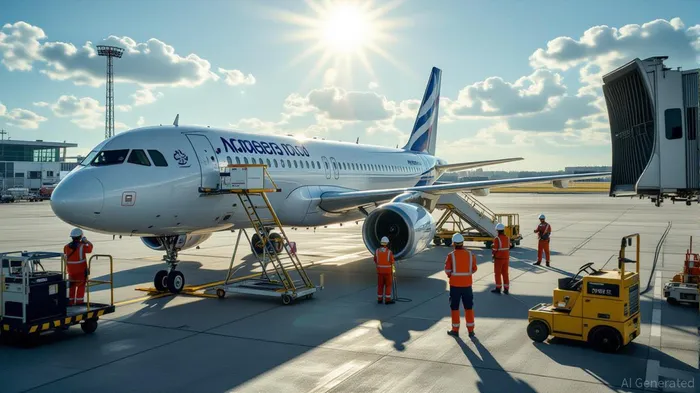
Investor sentiment is further clouded by the potential for prolonged disruptions. According to , the recall occurs amid an industry already grappling with labor shortages and high maintenance demand. For instance, Frontier and United AirlinesUAL-- are still assessing their exposure, while DeltaDAL-- and American Airlines are prioritizing software updates. Analysts warn that the crisis could delay fleet modernization plans and strain cash reserves, particularly for low-cost carriers with thinner profit margins.
Risk Management Challenges: A Test of Resilience
The A320 recall has exposed systemic vulnerabilities in aviation risk management. According to , the issue stems from software systems susceptible to solar radiation-a problem that highlights the sector's reliance on increasingly complex digital infrastructure. While Airbus has proposed temporary fixes, the need for hardware modifications in 900 aircraft underscores the limitations of reactive maintenance strategies.
For stakeholders, the incident raises critical questions about long-term reliability. Reuters notes that the recall has intensified scrutiny of aircraft manufacturers' testing protocols, particularly for software systems exposed to environmental stressors. Airlines are now under pressure to balance safety mandates with operational efficiency, a challenge compounded by the high costs of hardware upgrades and potential regulatory penalties for repeated disruptions.
Implications for Investors: Navigating Uncertainty
The A320 crisis serves as a cautionary tale for investors. Short-term risks include further flight cancellations, rising repair costs, and reputational damage for airlines. However, the long-term outlook depends on how effectively the industry adapts. Airlines that swiftly implement fixes and diversify their fleets may emerge stronger, while those with limited liquidity could face insolvency risks.
For aerospace manufacturers, the incident highlights the need for robust software testing and contingency planning. Investors should monitor Airbus's ability to manage its reputation and the regulatory response from EASA and FAA. Meanwhile, suppliers of alternative aircraft models, such as Boeing's 737 MAX or Embraer's regional jets, could benefit from increased demand as airlines seek to mitigate A320-related risks.
Conclusion
Airbus's emergency maintenance directive for the A320 family is a stark reminder of the interconnected risks in the aviation sector. The operational and financial fallout underscores the importance of proactive risk management and diversified supply chains. For investors, the crisis demands a nuanced approach: hedging against short-term volatility while identifying long-term opportunities in companies demonstrating resilience and innovation. As the industry navigates this turbulence, the ability to adapt to unforeseen technical challenges will be a defining factor in determining which airlines and manufacturers thrive.

Delivering real-time insights and analysis on emerging financial trends and market movements.
Latest Articles
Stay ahead of the market.
Get curated U.S. market news, insights and key dates delivered to your inbox.
AInvest
PRO
AInvest
PRO



Comments
No comments yet