
Ex-Airbus chief: German decision to work with France on fighter jet a ‘mistake’ - FT
Ex-Airbus chief: German decision to work with France on fighter jet a ‘mistake’ - FT
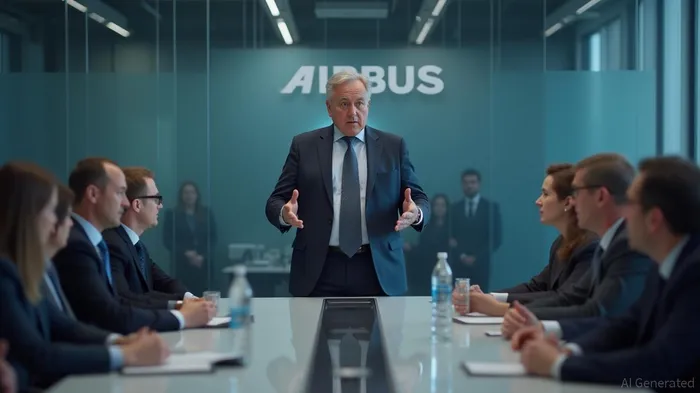
Ex-Airbus CEO Criticizes German-French Fighter Jet Collaboration as Costly and Misaligned with Strategic Needs
Tom Enders, former CEO of Airbus and EADS, has publicly criticized Germany's participation in the Franco-German Future Combat Air System (FCAS) fighter jet program, calling it a "costly prestige project" that risks draining defense budgets without delivering near-term military value according to Enders. In a February 23, 2026, commentary, Enders argued that Germany's focus on developing a manned fighter jet—estimated to cost over €400 billion in development alone—diverts resources from more urgent priorities like uncrewed systems, AI, and scalable production as he noted. He emphasized that operational readiness for such a project would likely not occur until the late 2040s, leaving the Luftwaffe without meaningful upgrades for decades according to Enders.
The FCAS initiative, launched in 2017 as a joint effort between France, Germany, and Spain, has faced persistent disputes over cost-sharing, leadership, and technical requirements. France insists on a carrier-capable, nuclear-armed fighter, while Germany prioritizes NATO interoperability and modular design according to reports. These divergences have fueled tensions between industrial partners Dassault Aviation (France) and Airbus (Germany), with both sides contesting control over core technologies and intellectual property as detailed.
Enders advocates redirecting investment toward autonomous systems, citing recent advancements in drone technology and AI-driven combat platforms. He highlighted Saab-Helsing's autonomous flight tests as evidence of Europe's potential to lead in next-generation capabilities according to Enders. Meanwhile, Airbus CEO Guillaume Faury has proposed a "two-fighter solution" to resolve the deadlock, allowing Germany and France to pursue separate manned programs while retaining collaboration on FCAS's drone and combat cloud components as reported.
German Chancellor Friedrich Merz has echoed skepticism about the NGF subprogram, questioning whether a crewed sixth-generation fighter aligns with Germany's defense needs according to reports. With FCAS's timeline already delayed to 2045 and political unity fraying, the project's future hinges on whether partners can reconcile industrial ambitions with strategic pragmatism as analysis indicates. For now, the debate underscores Europe's broader struggle to balance sovereignty, cost efficiency, and technological evolution in defense procurement.
Stay ahead of the market.
Get curated U.S. market news, insights and key dates delivered to your inbox.


AInvest
PRO
AInvest
PRO



Comments
No comments yet