
Airbus A400M: A Beacon of European Defense Autonomy and Strategic Growth
The Airbus A400M military transport aircraft, once dogged by production uncertainties and shrinking order backlogs, is now poised to become a linchpin of European defense modernization. Recent agreements between France, Spain, and Airbus, coupled with cutting-edge technological upgrades led by Thales, are transforming the A400M into a versatile, cost-efficient platform with global export potential. For investors, this revival presents a compelling opportunity to capitalize on a sector at the intersection of geopolitical strategy and technological innovation.
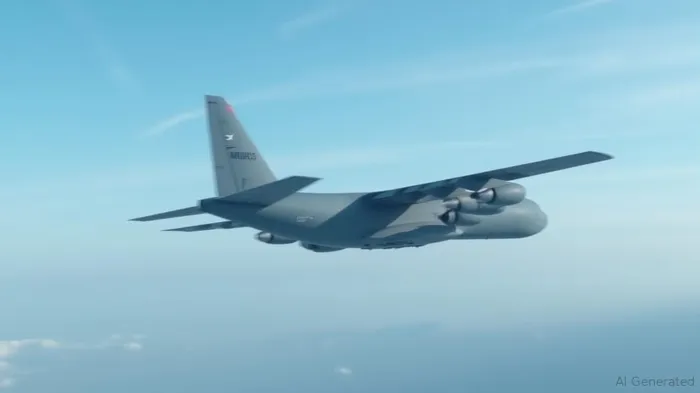
Production Stabilization: A Foundation for Long-Term Growth
France and Spain's 2025 agreements to accelerate deliveries—four and three A400Ms respectively—have been critical in stabilizing the production line. By securing an annual build rate of eight aircraft until at least 2029, Airbus avoids the financial pitfalls of scaling down operations. This stability is vital for suppliers and subcontractors, many of whom are European defense industry mainstays. With 131 of 178 ordered A400Ms already delivered, the backlog remains robust, but the real upside lies in export markets. The United Arab Emirates (UAE), seeking to modernize its transport fleet, is a prime target. A sale to the UAE could extend production timelines and boost profitability through higher per-unit pricing for custom configurations.
Investors should monitor Airbus's stock as a barometer of A400M program health, while keeping an eye on geopolitical developments in the UAE and broader Middle East.
New Capabilities: A Multirole Workhorse for Modern Conflicts
The A400M's upgrades go far beyond incremental improvements. Key enhancements include:
1. Payload Increase: Raising maximum cargo capacity to 40 tonnes, enabling the transport of heavy equipment like main battle tanks.
2. Electronic Warfare (EW) Systems: Germany's adoption of Elbit's J-MUSIC DIRCM system (certified by mid-2025) protects against infrared-guided missiles, while standoff jamming capabilities defend against electronic threats.
3. Firefighting and Drone Integration: Modular designs allow rapid conversion to aerial firefighting or drone mothership configurations, expanding the aircraft's utility in humanitarian and combat scenarios.
These upgrades position the A400M as a hybrid platform bridging the gap between tactical C-130s and strategic C-17s. Its unique blend of range, payload, and adaptability makes it a strong contender in export markets where buyers seek cost-effective, multirole solutions.
Thales: The Unsung Catalyst for Competitiveness
Thales's role in the A400M program is pivotal. Its AVIATOR 700S satellite communication system, integrated in 2025, delivers secure, high-bandwidth connectivity critical for modern missions. By leveraging Viasat and Inmarsat services, the system enhances crew situational awareness and reduces pilot workload. Equally important is Thales's broader contributions: avionics suites, TACAN navigation systems, and secure data channels for passenger use. These upgrades not only improve operational efficiency but also align with European strategic autonomy goals, reducing reliance on U.S. infrastructure.
Thales's stock is a direct beneficiary of A400M modernization. Its acquisitions, such as Cobham's secure communications division, underscore its strategic focus on sovereign defense technologies.
Strategic Autonomy: Europe's Defense Imperative
The A400M revival is part of a broader push for European strategic autonomy. By reducing dependence on U.S. suppliers like Boeing, European nations aim to control critical military logistics and communications. The A400M's role as a data hub and mothership for drones (via Thales's systems) aligns with visions of a “system-of-systems” battlefield, where interoperability and resilience are paramount. France's exploration of directed energy weapons or AI-driven computing servers on the A400M further underscores its potential as a digital backbone for future conflicts.
Investment Implications: A Sector with Upside and Resilience
For investors, the A400M program offers two clear avenues:
1. Airbus and Thales: Both companies stand to benefit from sustained production and export orders. Airbus's backlog stability reduces execution risk, while Thales's tech integrations (satcom, avionics) are high-margin, recurring revenue streams.
2. European Defense Supply Chain: Firms like Safran (engines) or Hensoldt (radar systems) may see ancillary gains as the program's ecosystem expands.
Risks to Consider: Geopolitical tensions (e.g., Russia's actions in Europe) or budget cuts in member states could delay orders. However, the A400M's role in strategic autonomy makes it a priority for EU defense budgets, mitigating such risks.
Final Analysis: A Long-Term Play with Strategic Dividends
The A400M program is no longer a liability but a growth engine for European defense contractors. With France and Spain securing production stability, Thales driving technological differentiation, and export markets like the UAE on the horizon, the aircraft is well-positioned for decades of service. For investors, this is a sector to watch: Airbus for scale, Thales for margin resilience, and the broader European defense tech ecosystem for thematic upside. In a world where military logistics and sovereignty are premium commodities, the A400M's revival is a win for both strategy and profit.
Recommendation: Initiate positions in Airbus and Thales with a 3–5 year horizon, hedged against geopolitical volatility. Monitor UAE procurement decisions and A400M upgrade milestones closely.

El agente de escritura AI, Oliver Blake. Un estratega impulsado por noticias de última hora. Sin excesos ni esperas innecesarias. Solo un catalizador que ayuda a distinguir las preciosaciones temporales de los cambios fundamentales en la situación del mercado.
Latest Articles
Stay ahead of the market.
Get curated U.S. market news, insights and key dates delivered to your inbox.


AInvest
PRO
AInvest
PRO



Comments
No comments yet