
The Airbus A320 Software Crisis: A Wake-Up Call for Aviation Infrastructure Resilience


 Aime Summary
The FAA's Urgent Directive and Operational Fallout
The FAA's Emergency Airworthiness Directive (AD) for Airbus A320-family aircraft, issued in late November 2025, mandates immediate software updates or hardware replacements to address a vulnerability in the Elevator Aileron Computer (ELAC) system. The directive, which supersedes AD 2016-14-03, requires airlines to complete repairs by midnight on November 30. The flaw, linked to uncommanded elevator movements caused by solar radiation-induced data corruption, was identified after a JetBlueJBLU-- flight experienced a sudden pitch-down event in October according to a report.
The operational impact has been severe. American AirlinesAAL-- reported that 209 of its A320-family aircraft required updates, with most expected to be resolved by late November 28. DeltaDAL-- and United AirlinesUAL-- faced smaller but significant disruptions, while JetBlue, a major A320 operator, worked to minimize Thanksgiving travel disruptions. The timing of the crisis-during peak travel season-exacerbated delays and cancellations, with some airlines temporarily grounding fleets for repairs. EASA's parallel directive further underscored the global scale of the issue, requiring replacement of ELAC B L104 units.
Stock Valuation Shifts and Investor Sentiment
The crisis has introduced volatility into aerospace stock valuations. Airbus shares, which had surged 43% year-to-date as of July 2025, faced renewed scrutiny as the recall of 6,000 A320-family aircraft-half of Airbus's global fleet-raised questions about operational reliability and financial resilience according to industry analysis. Competitors like Boeing and Lockheed Martin, already navigating supply chain bottlenecks and production challenges, saw mixed market reactions. While Boeing's shares remained relatively stable, analysts noted that the crisis could amplify investor concerns about the sector's exposure to systemic risks.
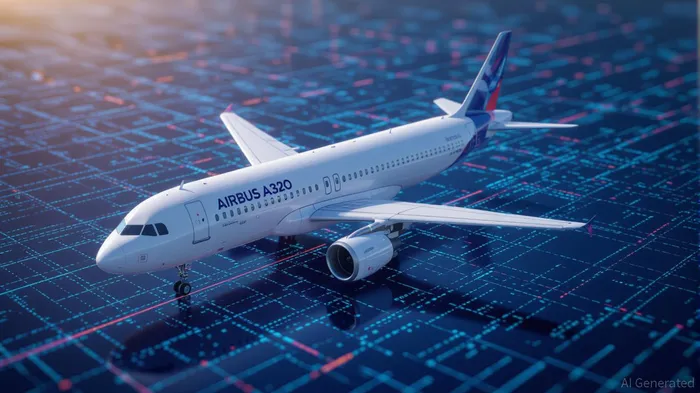
The valuation implications extend beyond Airbus. The crisis has highlighted the aerospace industry's vulnerability to unanticipated technical failures, particularly as airlines face pressure to balance safety mandates with operational efficiency. For instance, American Airlines' disclosure that fewer than 150 A320s would remain unupdated by November 29 underscored the logistical challenges of implementing emergency fixes, which could ripple through investor confidence in the broader sector.
Cybersecurity Risks and Systemic Vulnerabilities
Industry experts have sounded alarms about the broader implications of the A320 crisis for aviation cybersecurity. Kaspersky's 2025 report on digital avionics systems warned that modern aircraft, increasingly reliant on interconnected software and commercial off-the-shelf components, face heightened risks from both natural phenomena (e.g., solar radiation) and cyberattacks. The Airbus incident exemplifies how even non-malicious threats-such as solar flares-can exploit design flaws in avionics systems, potentially leading to catastrophic failures.
The crisis has also reignited debates about the adequacy of cybersecurity protocols in aviation. According to the Aviation ISAC Cyber Risk Survey, the sector must adopt multi-layered defenses, including real-time threat monitoring, identity management, and supply chain risk assessments. The FBI's warnings about groups like Scattered Spider, which exploit third-party vendors to infiltrate airline systems, further emphasize the need for proactive measures.
Conclusion: A Call for Resilience and Reform
The Airbus A320 software crisis serves as a stark reminder of the fragility of modern aviation infrastructure. For investors, the incident underscores the importance of evaluating aerospace companies not just on financial metrics but also on their ability to mitigate systemic risks. Regulators, meanwhile, must ensure that cybersecurity standards evolve alongside technological advancements, particularly as fly-by-wire systems become more prevalent.
As the industry grapples with the fallout, the crisis offers a critical opportunity to reassess preparedness for emerging threats. For airlines, the priority remains clear: balancing compliance with emergency directives while safeguarding operational continuity. For investors, the lesson is equally clear-resilience in aviation infrastructure is no longer optional but a necessity in an era of increasing digital interconnectivity and environmental unpredictability.

Delivering real-time insights and analysis on emerging financial trends and market movements.
Latest Articles
Stay ahead of the market.
Get curated U.S. market news, insights and key dates delivered to your inbox.




Comments
No comments yet