
Airbus A320 Software Crisis and Its Implications for Aerospace and Travel Stocks


 Aime Summary
Operational Risks in Aerospace Supply Chains
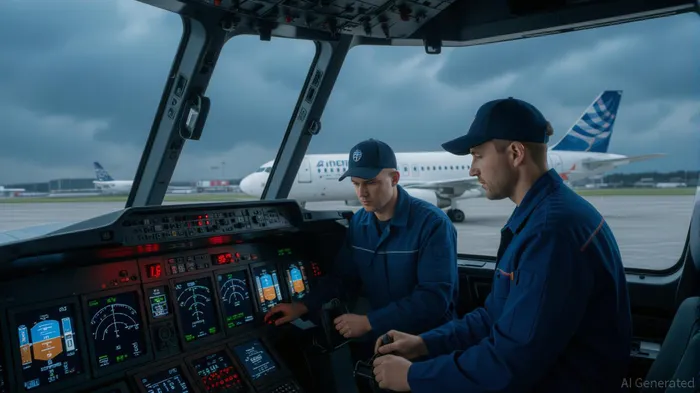 The A320 crisis highlights how interconnected and fragile aviation supply chains have become. Airbus's reliance on a single software system for its A320 family-vulnerable to rare but impactful events like solar radiation-exposes systemic risks. According to a report, the issue originated from a "" in the Elevator and Aileron Computer (ELAC) system, a flaw that required airlines to implement costly and time-consuming fixes. For context, American Airlines alone spent weeks , while older models necessitated hardware replacements, further straining production timelines.
This crisis compounds Airbus's pre-existing supply chain challenges. Post-pandemic, the company has struggled with delays in engine procurement and aerostructure production, forcing it to slash output forecasts and report significant financial losses in 2024. The A320 software issue now adds another layer of complexity, as airlines and suppliers scramble to balance safety mandates with operational continuity. For investors, this signals a sector where even minor technical glitches can cascade into global disruptions, eroding both shareholder value and consumer confidence.
Stock Market Reactions and Aerospace Sector Vulnerabilities
The crisis has already dented Airbus's stock, in the week following the EASA directive. However, the broader aerospace sector has shown mixed resilience. While regional carriers like JetBlueJBLU-- and American AirlinesAAL-- have seen temporary dips due to flight cancellations, larger firms with diversified fleets-such as DeltaDAL-- and United-have mitigated impacts through contingency planning according to CNBC. This divergence underscores a critical investment lesson: firms with agile supply chains and diversified technological portfolios are better positioned to weather such crises.
Moreover, the crisis has amplified concerns about digital vulnerabilities in aviation. As stated by EASA, the incident "exposes the need for robust redundancy in ." For aerospace firms, this means increased R&D spending on radiation-hardened software and hardware-a costly but necessary shift that could pressure profit margins in the short term.
Investment Opportunities in Resilient Infrastructure and Alternative Aviation Tech
While the A320 crisis highlights risks, it also creates openings for investors to capitalize on innovation. The aviation sector's long-term growth trajectory remains intact, with Airbus forecasting demand . However, the crisis accelerates demand for companies specializing in resilient infrastructure and alternative technologies.
1.
Firms providing redundant systems, cybersecurity solutions, and radiation-resistant components are poised to benefit. For example, suppliers like Honeywell and Collins Aerospace, which integrate backup flight control systems, could see increased contracts as airlines retrofit fleets for digital resilience according to industry analysis. Similarly, companies offering AI-driven predictive maintenance tools-such as Lufthansa Technik-are gaining traction by helping airlines preemptively identify software vulnerabilities.
2. Alternative Aviation Technologies
The crisis has also spotlighted the limitations of traditional narrow-body aircraft like the A320. Investors should consider alternative aviation technologies that reduce reliance on centralized software systems. Electric vertical takeoff and landing (eVTOL) firms like Joby Aviation (JOBY) and Archer Aviation (ACHR) are leading the charge. Joby, , , leveraging decentralized, AI-driven flight systems less susceptible to single-point failures. Archer, , is similarly advancing radiation-resistant avionics for its Midnight eVTOL according to market analysis.
3.
The crisis indirectly benefits space-based aviation solutions. Companies like Relativity Space and Axiom Space are pioneering technologies that could diversify air travel's reliance on terrestrial infrastructure. Relativity's 3D-printed rockets and Axiom's commercial space stations represent long-term bets on a future where air travel is less vulnerable to Earth-bound disruptions according to industry forecasts. For broader exposure, the Procure Space ETF (UFO) offers a diversified portfolio of space-focused firms, including satellite communication providers that could enhance aviation's digital resilience according to market research.
Conclusion: Balancing Risk and Innovation
The Airbus A320 software crisis is a wake-up call for the aviation sector. While it exposes operational risks in global supply chains, it also accelerates demand for resilient infrastructure and next-generation technologies. For investors, the key is to avoid overexposure to firms with outdated systems while leaning into companies that prioritize redundancy, cybersecurity, and innovation. As the industry navigates this turbulence, those who adapt will find themselves at the forefront of a transformed aerospace landscape.

Delivering real-time insights and analysis on emerging financial trends and market movements.
Latest Articles
Stay ahead of the market.
Get curated U.S. market news, insights and key dates delivered to your inbox.




Comments
No comments yet