
Airbus A320 Recall Disrupts Global Travel After Glitch Linked to Solar Flares


 Aime Summary
A Solar Flare-Driven Crisis and Its Immediate Fallout
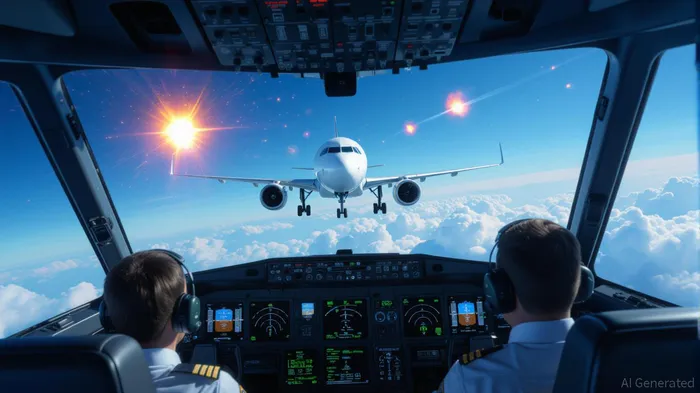
The recall followed an October 30 incident in which a JetBlue A320 experienced an uncommanded pitch-down event, forcing an emergency landing in Florida. According to investigations, intense could corrupt flight-control data, prompting Airbus to issue an emergency directive for software updates or hardware replacements across its A320 fleet. The European Union Aviation Safety Agency (EASA) and the U.S. Federal Aviation Administration (FAA) swiftly mandated corrective actions, grounding aircraft operated by major carriers such as American AirlinesAAL--, DeltaDAL--, IndiGo, and Air India.
The scale of the disruption was staggering. , , while India's IndiGo and Air India . Airlines in Europe and Asia faced similar operational chaos, with Finnair, Air France, and Air New Zealand reporting widespread delays and cancellations. The incident highlighted a critical vulnerability: modern aircraft, reliant on complex software systems, are increasingly susceptible to environmental factors like , which can disrupt electronics and compromise safety.
Geopolitical and Climate Risks Amplify Supply-Chain Vulnerabilities
The A320 recall did not occur in isolation. It coincided with a broader period of supply-chain instability in the aerospace sector, driven by geopolitical tensions and climate-related disruptions. As Solar Cycle 25 peaks, the frequency of -capable of damaging satellites, power grids, and -has risen, compounding existing risks. Meanwhile, aerospace firms are grappling with , including trade restrictions and near-sourcing strategies aimed at reducing dependency on globalized supply chains according to recent reports.
For instance, the recall exacerbated financial strains on airlines already burdened by post-pandemic recovery costs. The International Air Transport Association (IATA) estimated , . These pressures are compounded by the insurance sector, which is now reevaluating risk models to account for , such as GPS outages and power grid failures according to industry analysis.
ESG Strategies and Investor Sentiment: A Tale of Two Giants
The crisis has laid bare divergent ESG and supply-chain strategies among aerospace firms. Airbus, whose A320 recall has strained its reputation, faces scrutiny over its preparedness for environmental risks. While the company has committed to sustainability frameworks like the (SBTi), the recall has exposed gaps in its resilience to non-traditional threats according to Airbus's own statements. In contrast, , including supplier diversification and real-time inventory analytics according to industry reports.
Investor sentiment has reflected these disparities. Airbus's stock (EADSY) plummeted in the wake of the recall, with analysts citing concerns over operational risks and brand reputation. Meanwhile, Boeing's stock (BA) has gained traction, according to financial analysis. The contrast underscores a growing preference for firms that prioritize supply-chain resilience and ESG alignment, particularly in an era of escalating climate and geopolitical uncertainties.
Long-Term Investment Implications
For investors, the A320 recall serves as a cautionary tale about the interplay between technical vulnerabilities and macroeconomic risks. Aerospace firms that fail to address solar flare risks-or to diversify supply chains against geopolitical shocks-may face persistent valuation headwinds. Conversely, companies that integrate advanced risk-mitigation strategies, such as real-time (e.g., NOAA's GOES satellites) and supplier redundancy, are likely to attract capital according to space weather experts.
The insurance sector, too, is adapting. Insurers are now developing specialized coverage for , recognizing that traditional models underestimate the financial impact of such events according to industry analysis. For aerospace firms, this shift signals the need for proactive risk management, including investments in radiation-hardened electronics and agile supply chains.
Conclusion: Resilience as a Competitive Advantage
The Airbus A320 recall is a wake-up call for the aerospace industry. As solar activity intensifies and geopolitical tensions persist, companies must treat environmental and supply-chain risks as existential threats. For investors, the lesson is clear: firms with robust ESG frameworks and resilient supply chains-like Boeing-will outperform those that prioritize short-term gains over long-term preparedness. In an era of uncertainty, resilience is no longer optional-it is a prerequisite for survival.

Delivering real-time insights and analysis on emerging financial trends and market movements.
Latest Articles
Stay ahead of the market.
Get curated U.S. market news, insights and key dates delivered to your inbox.
AInvest
PRO
AInvest
PRO



Comments
No comments yet