
The Airbus A320 Recall and Its Cascading Effects on Aerospace and Aviation Markets


 Aime Summary
A Solar-Driven Crisis: Unmasking Technological Vulnerabilities
The root cause of the recall lies in the Elevator Aileron Computer (ELAC), a fly-by-wire system susceptible to data corruption from intense solar radiation. According to a report by , the issue was identified after JetBlueJBLU-- Flight 1230 experienced an uncommanded nosedive on October 30, 2025, necessitating an emergency landing. This incident revealed a critical flaw: modern aircraft, reliant on digital systems, are increasingly vulnerable to electromagnetic interference from solar activity-a risk long acknowledged in energy and satellite sectors but underaddressed in aviation.
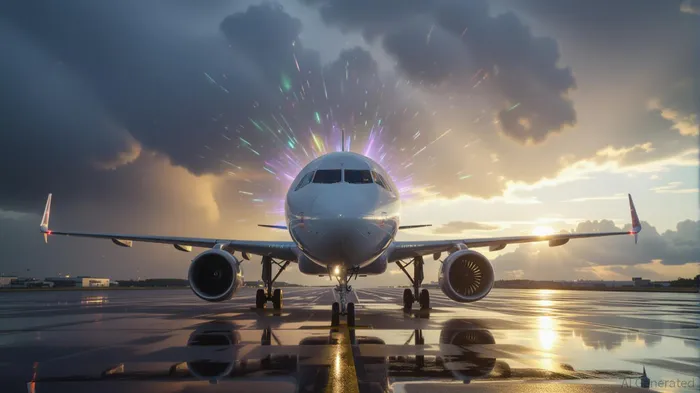 highlighted the fragility of centralized maintenance networks. As stated by , the repair process strained an already overburdened aviation maintenance system, with some planes grounded for weeks. This operational bottleneck underscores a broader challenge: the aerospace industry's reliance on just-in-time logistics and standardized components leaves it ill-prepared for disruptions requiring rapid, large-scale interventions.
Strategic Risk Management in the Post-Solar-Storm Era
The Airbus crisis has amplified calls for a paradigm shift in strategic risk management. Traditional frameworks, which prioritize cost efficiency and incremental innovation, are inadequate in an era where solar storms and other space weather events pose existential threats. emphasizes that supply chain resilience requires "flexibility, foresight, visibility, cooperation, and support" to anticipate and adapt to disruptions. The A320 recall exemplifies the consequences of insufficient foresight: while solar radiation's impact on electronics is well-documented, its integration into aviation risk models appears to have lagged.
Industry experts now advocate for scenario planning that incorporates space weather risks. For instance, warns . Such projections reinforce the need for proactive investments in redundant systems, such as hybrid ground-based and satellite navigation technologies, to mitigate cascading failures.
Supply Chain Resilience: Lessons from the A320 Recall
The recall has also exposed vulnerabilities in aerospace supply chains, particularly in hardware and software standardization. Airbus's emergency directive to revert to older software versions for most aircraft-a temporary fix-reveals the limitations of relying on backward compatibility. Meanwhile, the hardware upgrades required for older models highlight the risks of supplier concentration and lead-time variability, issues previously scrutinized during the BoeingBA-- 787 supply chain crisis(https://www.sciencedirect.com/science/article/pii/S2352484724008813).
In response, Airbus has accelerated efforts to diversify its production footprint. As noted in an Airbus press release, the company has expanded its A320 Family final assembly lines in China and the United States, aiming to increase monthly production to 75 aircraft by 2027. This geographic diversification, coupled with investments in automated manufacturing and in-house capabilities, reflects a broader industry trend toward modular, adaptable supply chains. However, points out, true resilience also requires workforce development and regional MRO (maintenance, repair, and overhaul) capacity to address localized disruptions.
Investment Implications: Navigating the New Normal
For investors, the A320 recall signals a pivotal moment in aerospace and aviation markets. The crisis has accelerated demand for technologies that enhance solar storm preparedness, such as radiation-hardened electronics and real-time space weather monitoring systems. Companies specializing in these areas-such as those developing advanced coatings for satellite and aircraft components-may see increased capital inflows.
Moreover, the incident underscores the importance of supply chain visibility tools, including digital control towers and predictive analytics platforms, which enable real-time tracking of maintenance needs and supplier performance. Airlines and manufacturers that integrate these technologies are likely to outperform peers in post-disruption recovery scenarios.
Finally, the recall has reignited debates about regulatory oversight. The European Union Aviation Safety Agency's (EASA) emergency directive to ground affected aircraft demonstrates the critical role of regulators in enforcing risk-mitigation standards. Investors should monitor policy developments, particularly in regions where space weather preparedness is still nascent.
Conclusion
The Airbus A320 recall is more than a technical hiccup; it is a wake-up call for an industry grappling with the dual challenges of technological complexity and environmental uncertainty. As solar activity peaks in the coming years, the ability of aerospace firms to integrate space weather risks into their strategic frameworks will determine their competitive resilience. For investors, the path forward lies in supporting companies that prioritize adaptability, collaboration, and foresight-qualities that will define the next era of aviation.

Delivering real-time insights and analysis on emerging financial trends and market movements.
Latest Articles
Stay ahead of the market.
Get curated U.S. market news, insights and key dates delivered to your inbox.
AInvest
PRO
AInvest
PRO



Comments
No comments yet