
The Airbus A320 Grounding Crisis and Its Implications for Airline Stocks


 Aime Summary
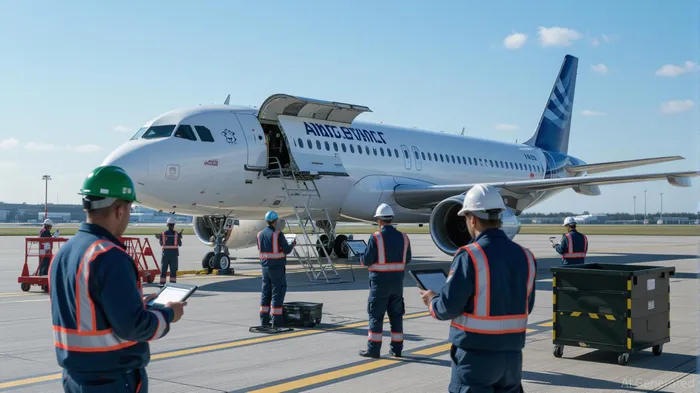
The recent grounding of 6,000 Airbus A320-family aircraft in November 2025 has exposed critical vulnerabilities in the global aviation sector, testing the resilience of airlines and their stocks amid a fragile post-pandemic recovery. The crisis, triggered by a software/hardware flaw linked to solar radiation corrupting flight-control data, has forced airlines to implement urgent fixes while grappling with operational disruptions and investor uncertainty. This analysis examines how operational risk and fleet modernization efforts intersect in shaping airline stock performance, offering insights for investors navigating this turbulent period.
Operational Risk: A Systemic Challenge
The A320 grounding underscores the growing complexity of managing operational risks in an increasingly digitized aviation sector.
According to a report by , Airbus identified that intense solar radiation could corrupt data critical to flight-control systems, prompting an emergency recall of 6,000 aircraft-nearly half of the A320 fleet-worldwide. The European Union Aviation Safety Agency (EASA)
mandated software rollbacks or hardware modifications, with older aircraft requiring more extensive repairs. For airlines like American AirlinesAAL--, which
reported 824 daily impacted passengers, the timing of the crisis-during the peak holiday travel season-compounded operational strain.
This incident mirrors past challenges, such as the 2023–2024 global recall of Pratt & Whitney GTF engines, which similarly disrupted schedules and triggered stock volatility
according to industry analysis. However, the A320 crisis is unique in its scale and technical nature, highlighting the sector's heightened exposure to software-related risks. As Bloomberg analysts note, "The aviation industry's reliance on complex digital systems now demands robust redundancy protocols to mitigate cascading failures"
according to a recent report.
Fleet Modernization: A Double-Edged Sword
Post-pandemic, airlines have prioritized fleet modernization to enhance efficiency and sustainability. Innovations such as fuel-efficient aircraft, Sustainable Aviation Fuel (SAF), and AI-driven maintenance systems have been central to this strategy
according to industry experts. Yet, the A320 grounding reveals a paradox: while modernization reduces certain risks (e.g., fuel costs, emissions), it introduces new vulnerabilities tied to software dependencies and supply chain bottlenecks.
For instance, the crisis has forced airlines to divert resources to urgent repairs, delaying broader modernization projects. American Airlines
accelerated software updates for 340 A320s, but the process-taking two hours per aircraft-disrupted holiday schedules. Similarly, Air India and IndiGo
faced delays in implementing fixes, compounding their operational challenges. These disruptions highlight the tension between short-term crisis management and long-term modernization goals.
Stock Resilience: Investor Sentiment and Strategic Positioning
The grounding's impact on airline stocks has been mixed, reflecting divergent investor perceptions of risk and resilience. In the immediate aftermath, shares of airlines with large A320 fleets-such as Delta Air LinesDAL-- and Wizz Air-fell sharply, with Delta's stock
dropping 8% in a single week. However, analysts argue that airlines with stronger balance sheets and proactive risk management strategies have fared better. DeltaDAL--, for example, retained a "Buy" rating from BofA and Freedom Capital, with a 12-month price target of $73.64, citing its disciplined cost controls and strategic fleet diversification.
The crisis also underscores the importance of diversification in airline portfolios. Carriers with smaller A320 exposures, such as Southwest AirlinesLUV-- (which relies more on BoeingBA-- 737s),
experienced muted stock declines compared to peers. This suggests that investors are increasingly valuing operational flexibility and technological redundancy as key metrics of resilience.
Post-Pandemic Context: A Sector in Transition
The A320 crisis occurs against a backdrop of broader industry challenges. Airlines are still recovering from pandemic-era losses, with global revenue
down 40% compared to 2019 levels. Workforce shortages, particularly in pilot training and air traffic control,
further strain capacity. In this environment, the grounding has amplified concerns about the sector's ability to absorb shocks.
However, the crisis also presents opportunities. Airlines that invest in advanced diagnostics, AI-driven predictive maintenance, and redundant software systems may emerge stronger. For example, Lufthansa's partnership with Siemens to develop AI-based maintenance tools
has positioned it to address similar issues proactively. Such initiatives could enhance investor confidence by demonstrating a commitment to risk mitigation.
Conclusion: Navigating the New Normal
The Airbus A320 grounding crisis is a wake-up call for the aviation sector, exposing the fragility of even the most advanced systems. For investors, the key takeaway is that stock resilience in this era hinges on two factors: the ability to manage operational risks through technological redundancy and the agility to adapt to evolving modernization trends. Airlines that balance short-term crisis response with long-term innovation-while maintaining financial discipline-are likely to outperform peers in the coming years.
As the industry grapples with this challenge, the A320 crisis serves as a case study in the delicate interplay between technological progress and systemic risk. For now, the skies remain turbulent, but the path to recovery lies in embracing the lessons of this crisis.

Stay ahead of the market.
Get curated U.S. market news, insights and key dates delivered to your inbox.
AInvest
PRO
AInvest
PRO



Comments
No comments yet