
Airbus A320 Grounding and Aviation Sector Volatility: Assessing Risk Exposure and Strategic Positioning in Aerospace and Airline Stocks


 Aime Summary
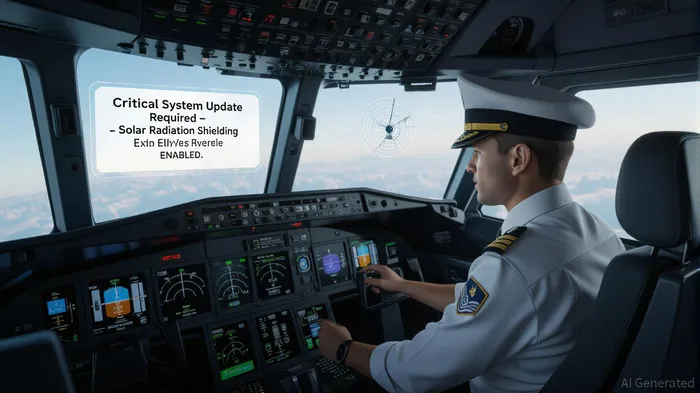
, triggered by a critical software flaw linked to solar radiation-induced data corruption, has sent shockwaves through the aviation sector. This unprecedented recall, mandated by the European Union Aviation Safety Agency (EASA) and enforced via emergency airworthiness directives, has exposed vulnerabilities in both operational and financial frameworks of airlines and aerospace manufacturers. For investors, the incident underscores the need to reassess risk exposure and strategic positioning in a sector already grappling with supply chain bottlenecks, labor shortages, and geopolitical uncertainties.
Operational Disruptions and Financial Implications
The A320 recall has forced airlines to ground fleets or implement costly software and hardware updates, disrupting operations during the peak holiday travel season. American AirlinesAAL--, for instance, , while Avianca faced disruptions to
. These operational hiccups have translated into flight cancellations, delays, and increased maintenance costs. For airlines reliant on the A320 as a workhorse-particularly low-cost carriers-the financial hit is magnified.
According to a Reuters report, the recall has exacerbated existing challenges such as rising fuel costs and labor disputes, compounding pressure on profit margins.
The ripple effects extend beyond individual airlines. The broader aviation sector, already recovering from pandemic-era losses, now faces a potential revenue contraction as passenger confidence wavers.
note that operators are increasingly prioritizing operational flexibility by extending aircraft lifespans and rebalancing fleets toward proven models, a shift that could reshape long-term capital expenditures.
Stock Market Reactions and Analyst Sentiment
Airbus's stock price initially dipped following the recall announcement, but it has since rebounded,
. Despite the grounding, analysts remain cautiously optimistic. A consensus of 15 out of 20 analysts recommend a "Buy" for Airbus Group SE,
according to market data. This optimism is underpinned by factors such as the weak euro, , and the integration of Spirit AeroSystemsSPR--, which is expected to alleviate fuselage production bottlenecks
as reported in industry analysis.
 However, the grounding has introduced short-term volatility. The aerospace sector, represented by ETFs like the iShares Global Aerospace & Defense ETF, has seen mixed performance, with some investors rotating into defensive plays while others bet on long-term recovery. For airlines, the situation is more precarious. While Delta Air LinesDAL-- and United AirlinesUAL-- have reported minimal impacts, carriers like Avianca and Air New Zealand face significant operational headwinds,
raising concerns about liquidity and debt servicing.
Strategic Positioning for Investors
The A320 crisis highlights the importance of diversification and resilience in aviation portfolios. Aerospace manufacturers with robust supply chains and diversified product lines-such as Airbus,
according to industry reports. Conversely, airlines with high exposure to the A320 family and limited fleet flexibility may face prolonged challenges.
Investors should also consider macroeconomic tailwinds. The weak euro and Airbus's hedged contracts provide a financial cushion,
as noted in financial analysis. Additionally, , , reinforces its appeal as a value play
according to market consensus.
For airlines, the crisis underscores the need to invest in redundant systems and proactive maintenance. Those that can swiftly implement fixes-such as American Airlines, which has prioritized software updates-may mitigate long-term reputational damage and operational costs
as detailed in industry coverage.
Conclusion
The Airbus A320 grounding is a stark reminder of the aviation sector's fragility in the face of technological and environmental risks. While the immediate financial and operational fallout is significant, the long-term outlook for aerospace and airline stocks remains nuanced. Investors who focus on companies with strong balance sheets, diversified fleets, and agile supply chains may find opportunities amid the volatility. As the sector navigates this crisis, strategic positioning will be key to capitalizing on recovery and innovation in the years ahead.

Stay ahead of the market.
Get curated U.S. market news, insights and key dates delivered to your inbox.
AInvest
PRO
AInvest
PRO



Comments
No comments yet