
Airbus A320 Global Recall and Operational Risk: Short-Term Volatility and Long-Term Resilience in Aerospace Stocks


 Aime Summary
Short-Term Volatility: Operational Chaos and Market Reactions
The recall, prompted by a JetBlueJBLU-- flight incident on October 30, 2025, revealed an unprecedented operational risk: environmental factors like solar radiation can disrupt critical flight systems. Airlines scrambled to implement software updates or hardware replacements, with 900 older aircraft requiring extended repairs. The timing-during peak travel seasons in the U.S. and Asia-amplified disruptions, forcing carriers like American Airlines to cancel or delay flights.
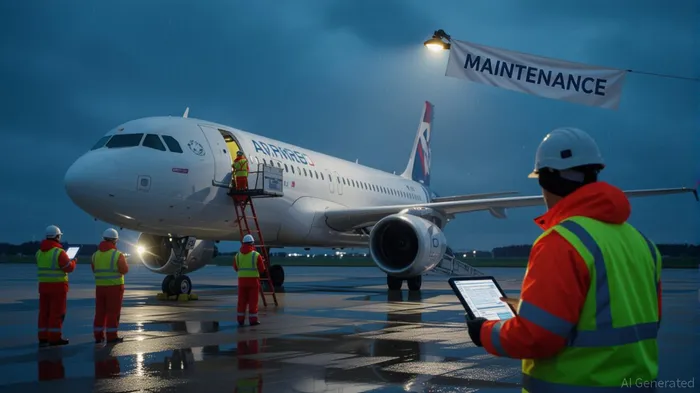
Market reactions were swift. Airbus shares fell sharply in the immediate aftermath, reflecting investor concerns over reputational damage and repair costs. According to a report by Reuters, the grounding strained supply chains, with hardware shortages delaying repairs for some aircraft. Meanwhile, airlines faced revenue losses and reputational risks, as seen in Jetstar and Avianca's suspension of ticket sales for affected periods. The crisis underscored the sector's susceptibility to cascading risks, from solar weather events to regulatory mandates.
Regulatory Responses and Safety System Robustness
The European Union Aviation Safety Agency (EASA) issued an emergency airworthiness directive, mandating urgent fixes. Experts emphasized that the recall was a proactive response to an "isolated issue" rather than a systemic flaw according to analysis. However, the incident exposed gaps in safety systems designed for conventional mechanical failures, not emerging risks like space weather. As stated by a CNBC analysis, the recall "highlights the need for aviation systems to adapt to unexpected environmental threats."
Long-Term Resilience: Supply Chain Adaptations and Digitalization
The aerospace industry has long grappled with supply chain fragility, a challenge exacerbated by the A320 recall. Over the past five years, companies have prioritized regional diversification, automation, and digital twins to enhance agility. For instance, Airbus' Mobile, Alabama, facility expanded operations in 2025 to meet production goals, though the recall now tests its capacity to balance repairs with new builds.
Investor confidence, while shaken in the short term, is supported by long-term resilience strategies. Firms like BoeingBA-- and GE AerospaceGE-- have leveraged AI and predictive maintenance to optimize production and aftermarket services according to industry analysis. A Deloitte report notes that "digital transformation is reshaping aerospace resilience, with AI-driven logistics and agentic AI in defense applications gaining traction." These innovations, coupled with sustainability initiatives-such as biodegradable cabin materials-position the sector to recover.
Investor Behavior and Historical Recovery Patterns
Historical data suggests aerospace stocks can rebound post-crisis, albeit with delays. Following the 2020 pandemic, Boeing restored investor trust through capital raises and production rate adjustments. Similarly, Howmet Aerospace benefited from increased widebody production. While the A320 recall poses short-term headwinds, the sector's dual-engine growth model-combining original equipment and aftermarket demand-offers a buffer according to industry analysis.
However, challenges persist. Tier 2 and Tier 3 suppliers face margin pressures, and geopolitical risks complicate supply chain stability according to McKinsey analysis. Investors must weigh these factors against the industry's track record of adaptation. As one expert notes, "aviation always returns stronger," driven by pent-up demand and technological innovation.
Conclusion: Navigating the Volatility-Resilience Balance
The Airbus A320 recall underscores the sector's vulnerability to operational risks but also its capacity for rapid response. While short-term volatility is inevitable, long-term resilience hinges on digitalization, supply chain diversification, and proactive risk management. For investors, the key lies in distinguishing between transient setbacks and structural strengths. As the industry addresses solar radiation vulnerabilities and accelerates sustainability goals, aerospace stocks may yet regain their upward trajectory-provided companies continue to embed resilience by design according to industry analysis.

Delivering real-time insights and analysis on emerging financial trends and market movements.
Latest Articles
Stay ahead of the market.
Get curated U.S. market news, insights and key dates delivered to your inbox.
AInvest
PRO
AInvest
PRO



Comments
No comments yet