
Airbus A320 Global Recall and Its Impact on Aerospace and Aviation Sectors


 Aime Summary
The Airbus A320 global recall of 2025, triggered by a critical software flaw linked to solar radiation-induced data corruption, has sent shockwaves through the aerospace and aviation industries. This unprecedented recall-covering 6,000 aircraft, or nearly half the global A320 fleet-has exposed vulnerabilities in supply chain resilience and amplified stock price volatility for airlines and aerospace firms. As regulators, airlines, and manufacturers scramble to mitigate operational and financial fallout, investors must assess both short-term disruptions and long-term strategic adjustments.
Root Causes and Regulatory Response
The recall was precipitated by an October 2025 incident involving a JetBlueJBLU-- flight, where intense solar radiation corrupted the Elevator and Aileron Computer, causing an uncommanded pitch-down and emergency landing. The European Union Aviation Safety Agency (EASA) and the U.S. Federal Aviation Administration (FAA) swiftly issued emergency directives, mandating software rollbacks or hardware replacements to prevent similar events. According to a report by Reuters, the European Union Aviation Safety Agency emphasized that affected aircraft could only operate passengers post-repairs, though "ferry flights" without passengers were permitted to reach maintenance facilities.
Supply Chain Resilience: Challenges and Adaptations
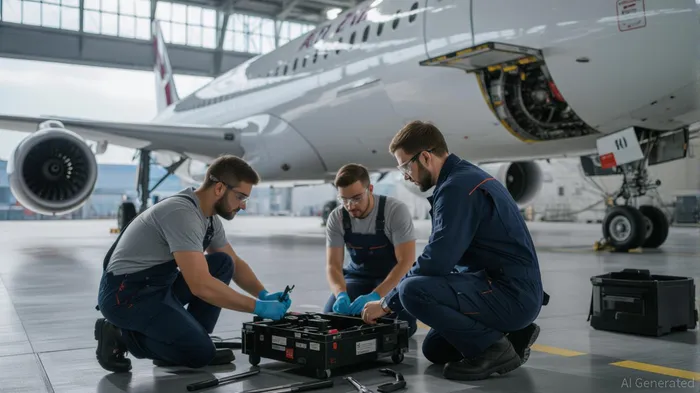 The recall has strained supply chains, particularly for airlines requiring hardware replacements. While most repairs involve a three-hour software update, approximately 900 older A320 models necessitate hardware changes, prolonging downtime. Airlines like American AirlinesAAL--, which operates 340 affected aircraft, have prioritized rapid software updates to minimize disruptions. However, carriers such as Avianca, with over 70% of its fleet impacted, have suspended ticket sales until December 8, underscoring the logistical challenges of scaling repairs during peak travel periods.
Airbus and suppliers have deployed contingency measures, including expediting parts distribution and leveraging existing maintenance hubs. For instance, Gatwick Airport has coordinated with airlines to accommodate repairs for 80 aircraft. Yet, the recall highlights systemic fragility in aerospace supply chains, where pre-existing maintenance backlogs and labor shortages compound delays.
Stock Market Volatility: Airlines and Aerospace Firms
The recall has triggered significant stock price fluctuations. Airbus shares (EADSY) fell in response to safety concerns and operational disruptions, while American Airlines' stock dropped by -3.33% on November 17, 2025. Delta Air Lines reported minimal disruptions, stabilizing investor sentiment. Conversely, airlines like Avianca and IndiGo face prolonged uncertainty, with IndiGo issuing advisories about potential schedule changes.
Boeing, Airbus' primary competitor, has seen a relative market advantage. Improved productivity and a growing order book have positioned Boeing to regain momentum amid Airbus' struggles. Analysts note that the recall could accelerate industry consolidation, with airlines favoring manufacturers demonstrating robust supply chain resilience.
Investor Implications and Strategic Outlook
For investors, the A320 recall underscores the importance of evaluating both operational agility and financial preparedness. Airlines with diversified fleets or strong maintenance partnerships-such as DeltaDAL-- and United, which reported limited exposure-are better positioned to weather disruptions. Conversely, carriers reliant on older A320 models may face prolonged costs and reputational risks.
Aerospace firms must also address systemic vulnerabilities. The incident highlights the growing exposure to software-integrity risks and space-weather phenomena in modern aircraft. Companies investing in redundant systems and real-time monitoring technologies may gain a competitive edge.
Conclusion
The Airbus A320 recall of 2025 is a watershed moment for the aerospace and aviation sectors. While immediate operational and financial challenges persist, the crisis also presents an opportunity for industry-wide innovation in supply chain resilience and software reliability. Investors should monitor airlines' repair timelines, regulatory updates, and competitors' strategic responses to gauge long-term market dynamics. In an era of increasing technological complexity, adaptability will remain the key to navigating turbulence.

Delivering real-time insights and analysis on emerging financial trends and market movements.
Latest Articles
Stay ahead of the market.
Get curated U.S. market news, insights and key dates delivered to your inbox.
AInvest
PRO
AInvest
PRO



Comments
No comments yet