
Airbus A320 Global Recall and Aviation Sector Impact: Assessing the Short-Term Volatility and Long-Term Resilience in Aerospace and Travel Stocks


 Aime Summary
Short-Term Volatility: Operational Disruptions and Investor Concerns
The recall has created acute operational challenges for airlines. American AirlinesAAL--, , , with most repairs expected to be completed within two days. Delta Air LinesDAL--, meanwhile, according to updates. However, the situation is more severe for carriers like Avianca, , . Such disruptions, occurring during the peak holiday travel season, risk widespread cancellations and eroded customer trust.
For investors, the recall has amplified concerns about the reliability of modern aircraft systems. Airbus's attribution of the issue to solar radiation-a factor previously considered less critical-has raised questions about the robustness of software-driven flight controls. This has coincided with a broader industry slowdown, as highlighted by the International Air Transport Association's (IATA) revised 2025 traffic and profit forecasts, which reflect "headwinds" from economic uncertainty and rising fuel costs. The stock market has responded cautiously, with aerospace and travel indices showing heightened volatility as airlines and manufacturers navigate repair timelines and reputational risks. 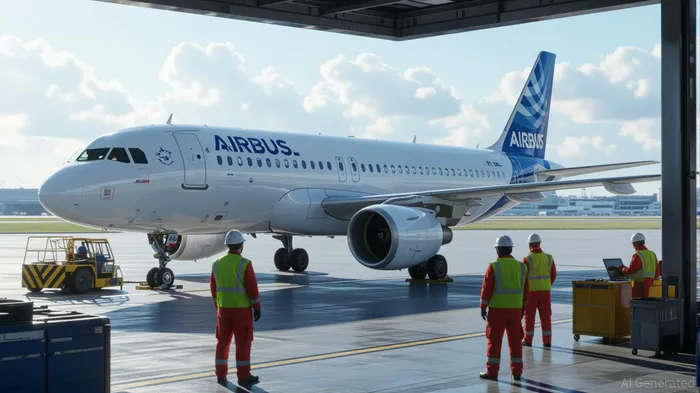
Long-Term Resilience: Structural Demand and Sector Adaptation
Despite the immediate turbulence, the aerospace sector's long-term fundamentals remain robust. Airbus's Global Market Forecast projects sustained demand , driven by economic and demographic growth in Asia and the Middle East. This demand is underpinned by a global fleet utilization rate that has rebounded to pre-pandemic levels, with airlines prioritizing capacity expansion to meet rising passenger numbers.
The recall itself may accelerate innovation in aircraft design and supply chain resilience. Airbus has emphasized its commitment to safety, collaborating with regulators to implement emergency airworthiness directives. While the recall highlights vulnerabilities in software systems, it also underscores the industry's capacity for rapid problem-solving. For instance, , minimizing long-term grounding risks. , .
Moreover, the sector is demonstrating improved supply chain readiness compared to 2024. report notes that aerospace companies are increasingly confident in meeting production targets, despite lingering challenges such as personnel shortages and raw material constraints. This resilience is further bolstered by the integration of AI and agentic AI, Deloitte predicts will scale from pilot projects to core operations in 2026, enhancing decision-making, logistics, and maintenance efficiency.
Strategic Implications for Investors
For investors, the Airbus recall serves as a reminder of the sector's dual nature: short-term risks coexist with long-term growth potential. While the immediate operational and reputational costs for Airbus and airlines are significant, the recall is unlikely to derail the broader recovery of air travel. Airlines with diversified fleets and strong balance sheets-such as British Airways, which reported only three affected aircraft-are better positioned to weather the disruption.
Looking ahead, the sector's resilience hinges on its ability to address systemic vulnerabilities. For example, the U.S. aerospace supply chain's reliance on single-source suppliers for defense programs like the F-35 fighter jet remains a critical risk. Investors should monitor how companies like Airbus and Boeing navigate these challenges through diversification and workforce development.
In the context of the A320 recall, the key takeaway is that while short-term volatility is inevitable, the underlying drivers of demand-urbanization, globalization, and technological progress-remain intact. As Airbus projects 820 commercial aircraft deliveries , the sector's long-term trajectory appears resilient, provided companies continue to innovate and adapt.
Conclusion
The Airbus A320 recall is a stark reminder of the complexities inherent in modern aviation. However, it also highlights the sector's capacity to respond to crises through collaboration, technological agility, and regulatory oversight. For investors, the recall underscores the importance of balancing short-term risks with long-term structural trends. While the immediate operational and reputational costs are non-trivial, the aerospace and travel sectors remain anchored by robust demand and a commitment to innovation. As the industry navigates this challenge, the focus will shift from crisis management to leveraging lessons learned to strengthen future resilience.

Delivering real-time insights and analysis on emerging financial trends and market movements.
Latest Articles
Stay ahead of the market.
Get curated U.S. market news, insights and key dates delivered to your inbox.
AInvest
PRO
AInvest
PRO



Comments
No comments yet