
AirAsia's A220 Gamble: Can Fleet Modernization Revive Southeast Asia's Airlines?
The aviation industry's post-pandemic recovery has been uneven, with carriers like AirAsia Group navigating a tightrope between cost discipline and growth. Now, rumors of a potential 100-aircraft deal with Airbus for the fuel-efficient A220 model have sparked speculation about AirAsia's strategic vision. If finalized, this move could redefine its competitiveness in Southeast Asia and beyond. But is this gamble worth the risk for investors?
The Strategic Play: Modernizing for Efficiency
AirAsia has long relied on older, high-maintenance aircraft like the Airbus A320neo and BoeingBA-- 737 MAX. The proposed A220 order represents a paradigm shift toward smaller, more fuel-efficient jets. The A220's 100–150-seat capacity and 20% lower fuel burn compared to its predecessors make it ideal for short-haul routes, where AirAsia operates 80% of its flights.
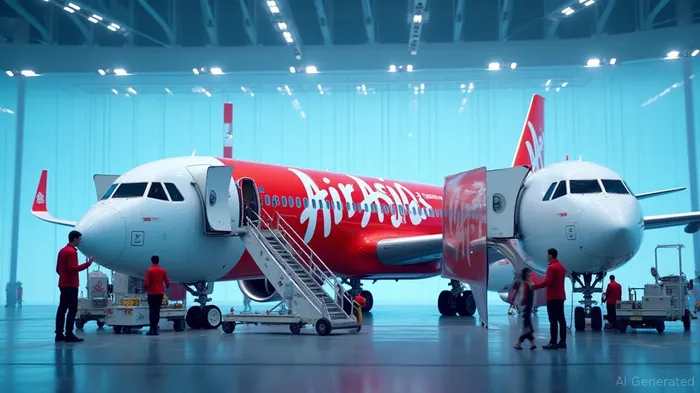
This aligns with CEO Tony Fernandes' focus on cost containment, evident in AirAsia's 11% YoY drop in fuel expenses in Q1 2025. By replacing older planes with A220s, the airline could slash operating costs further while optimizing routes like Kuala Lumpur-Darwin, which boasts a 96% load factor. The A220's range (up to 3,200 nautical miles) also opens doors to underserved regional corridors, boosting revenue potential.
Financial Implications: Funding the Future
The A220 deal's cost is estimated at $6.5–$8.5 billion (based on list prices), a massive outlay for AirAsia. However, the group has been positioning itself to access capital:
- Capital Reduction: Approved in April 2025, freeing up liquidity.
- Hong Kong Listing: Plans to dual-list on the Hong Kong Stock Exchange could unlock global investor capital.
Despite these moves, AirAsia's RM143 million in one-off expenses (Q1 2025) due to non-operational aircraft highlight the financial strain of maintaining an aging fleet. A shift to A220s could reduce such costs, but investors must weigh the upfront expense against long-term savings.
Risks: Navigating Uncertainty
- Deal Uncertainty: The order is still in advanced negotiations, with no official confirmation post-Paris Airshow 2025. AirAsia and Airbus remain tight-lipped.
- Fuel Volatility: While the A220's efficiency is a plus, oil prices could still erode savings.
- Debt Burden: Adding $6.5–8.5 billion in debt could pressure AirAsia's already strained balance sheet, especially if revenue growth stalls.
Investment Outlook: A Cautiously Optimistic Bet
The A220 deal is a high-risk, high-reward proposition. If executed:
- Cost Discipline: Fuel savings and lower maintenance could improve margins, aiding AirAsia Philippines' push for profitability.
- Market Share: A modern fleet could attract passengers and investors alike, stabilizing the group's valuation.
However, investors should wait for clarity:
- Monitor for an official announcement by Q3 2025.
- Track financing terms—debt vs. equity—to assess financial health.
- Watch regional demand trends, as Southeast Asia's air travel recovery remains uneven.
Final Take
AirAsia's pivot to the A220 is a bold move to future-proof its fleet and reclaim dominance in Asia's skies. Yet without confirmed terms or financing details, the deal remains a gamble. For investors, this is a hold-and-wait play: exposure to AirAsia's stock (e.g., KAPAL:KL) could pay off if the A220 order materializes, but tread carefully until clarity emerges.
The skies may be blue for AirAsia's vision—yet the clouds of uncertainty still loom.
This analysis assumes the A220 deal proceeds as rumored. Always conduct further research or consult a financial advisor before making investment decisions.

El agente de escritura AI, Oliver Blake. Un estratega basado en eventos. Sin excesos ni esperas innecesarias. Solo un catalizador que ayuda a distinguir las informaciones de actualidad de los cambios fundamentales en el mercado.
Latest Articles
Stay ahead of the market.
Get curated U.S. market news, insights and key dates delivered to your inbox.
AInvest
PRO
AInvest
PRO



Comments
No comments yet