
Air New Zealand Cuts Flights As Fuel Costs Double
 Aime Summary
The aviation sector is reeling from a perfect storm of geopolitical instability and supply chain fragility, with Air New Zealand (ASX:AIZ) at the forefront of the crisis. The carrier's decision to slash capacity and hike fares marks a desperate attempt to navigate a financial environment where fuel costs have surged beyond manageable levels. With the Strait of Hormuz effectively closed, the economic logic underpinning traditional long-haul routes to Europe and the Middle East has collapsed, forcing immediate operational adjustments. Investors are watching closely as the airline's ability to maintain profitability hinges on the stabilization of global energy markets and the resolution of aircraft availability issues.
Why Did Air New Zealand Reduce Flights In May And June 2026?
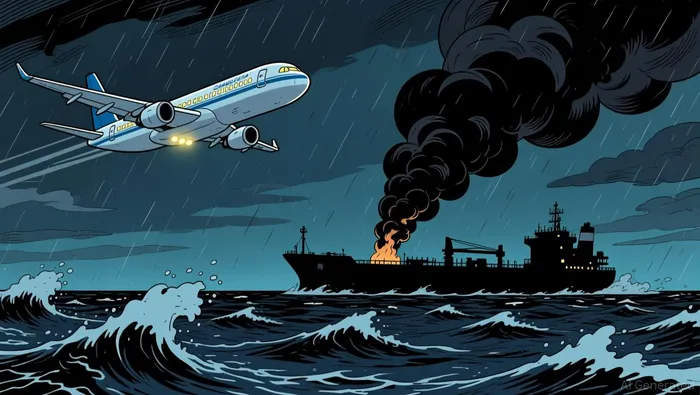
Air New Zealand announced a significant reduction in flight schedules for May and June 2026, directly citing the doubling of jet fuel costs as the primary catalyst. The airline confirmed that its fuel bill has more than doubled, driven by the Iran conflict and the subsequent closure of the Strait of Hormuz, a critical chokepoint that handles nearly 20% of global oil supply. This geopolitical event has triggered a cascade of operational challenges, forcing the carrier to cancel approximately 1,100 flights and affect around 44,000 passengers. The suspension of FY2026 earnings guidance in March 2026 further underscores the severity of the situation, as management deemed forecasting impossible in the face of such extreme volatility.
The airline is not merely reacting to price spikes but is also addressing physical constraints on fuel availability. The closure of the Strait has severed the primary pipeline connecting Europe to New Zealand via Middle Eastern hubs like Dubai and Doha. Consequently, Air New Zealand must reroute flights through Singapore or North America, adding 8–14 hours to journey times and incurring significantly higher fuel consumption. To mitigate these economic shocks, the carrier is combining lower-demand services where possible and activating targeted fare increases, with long-haul fares rising by NZ$90 per ticket. These measures are designed to protect key trunk routes while managing the liquidity risks associated with the current operating environment.
How Do Soaring Fuel Costs Impact Air New Zealand Financials?
The financial implications of the fuel price surge are profound, with jet fuel costs now representing a dominant portion of the airline's operating expenses. Fuel typically accounts for 20-25% of total operating costs for Air New Zealand, making the company highly exposed to energy market volatility. The benchmark European jet fuel price has hit an all-time high of $1,838 per tonne, a stark contrast to the $831 per tonne recorded before the conflict began. This dramatic increase has pushed the airline into a $59 million pre-tax loss for the first half of FY2026, a figure exacerbated by capacity reductions caused by Pratt & Whitney engine failures.
The impact extends beyond immediate losses to structural challenges in revenue generation. While the airline has raised fares, the reduced capacity means fewer seats are available to generate revenue, creating a difficult balancing act. The company's diversification into engineering maintenance, travel insurance, and accommodation services, which previously generated 20-25% of total revenue, provides some resilience but is insufficient to offset the scale of the fuel shock. Furthermore, the inability to easily hedge against such rapid price spikes has left the airline vulnerable to the immediate financial consequences of the Iran conflict. The bottom line is that until fuel markets stabilize, profitability remains uncertain, and the company's strategic focus must shift to cost management and network optimization.
What Are The Broader Implications For Global Aviation And Tourism?
The crisis at Air New Zealand is symptomatic of a wider industry-wide struggle, with major carriers globally implementing emergency measures to manage rising costs. Korean Air has entered emergency management mode, while United Airlines and SAS have cut flights, and Cathay Pacific is raising fuel surcharges. The closure of the Strait of Hormuz has disrupted the primary pipeline for Gulf oil exports, affecting 50% of Europe's jet fuel imports and creating a supply risk that extends beyond simple price increases to actual physical constraints. This has led to a 77% cancellation rate for UK and European bookings, with 28% of cancelled bookings transferring to competing markets like Australia.
For New Zealand's tourism sector, the dual challenge of skyrocketing fuel costs and reduced air connectivity poses a significant threat to medium-term growth. The surge in aviation fuel prices has directly impacted the cost structure for carriers serving the region, leading to higher fares and reduced flight frequencies. Key destinations like Auckland and Queenstown are particularly sensitive to these connectivity changes, as the availability of flights dictates tourist volume. The industry is currently navigating these short-term headwinds while attempting to maintain long-term growth trajectories, but the structural vulnerability of New Zealand's distance remains a critical risk factor.
The aviation industry faces a future where geopolitical instability could become a permanent feature of the operating landscape. Without a resolution to the conflict in the Middle East, fuel supply disruptions could become widespread by May, forcing further operational cutbacks globally. The strategic pivot towards digital transformation and revenue optimization, spearheaded by new CEO Nikhil Ravishankar, may offer some long-term benefits, but near-term profitability remains heavily dependent on external market conditions. Investors and industry stakeholders must monitor the situation closely as the sector grapples with the economic reality of a world where the cheapest and most efficient routes are no longer viable.

Stay ahead of the market.
Get curated U.S. market news, insights and key dates delivered to your inbox.


AInvest
PRO
AInvest
PRO



Comments
No comments yet