
Air Quality Deterioration in Dhaka and Its Economic Impact


 Aime Summary
The Escalating Pollution Crisis
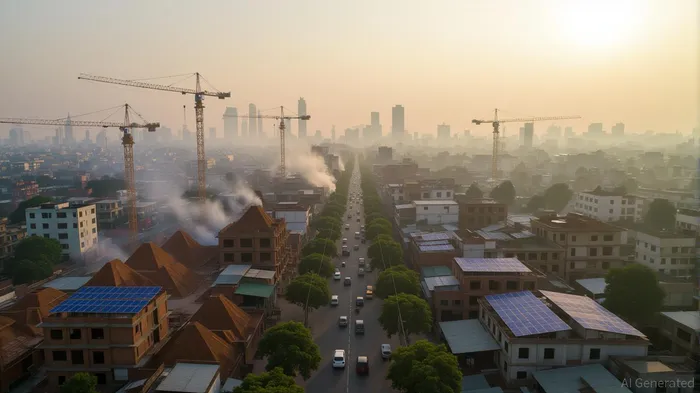
Dhaka's Air Quality Index (AQI) frequently reaches "unhealthy" levels, particularly during the dry season (October to March), when brick kiln emissions, construction dust, and vehicle exhaust combine to create a toxic mix, as reported by a The Daily Star report. A 2025 study revealed that pollution levels are four times higher in the dry season compared to the wet season, with industrial zones and transportation corridors bearing the brunt, according to a Nature study. Despite measures like banning non-environment-friendly brick kilns in Savar upazila and phasing out two-stroke vehicles, enforcement remains inconsistent, and practices like open waste burning persist, as noted by The Daily Star.
The human and economic toll is staggering. A 2025 report estimates that air pollution-related healthcare costs and lost productivity in Bangladesh amounted to 11 billion USD annually, or 4.4–4.8% of GDP, according to a public health study. Conditions like respiratory diseases, cardiovascular ailments, and even early-onset Alzheimer's linked to particulate matter exposure, as detailed in that study, are driving up medical expenditures and reducing workforce efficiency. Over 262 million sick leave days are attributed to pollution-related illnesses annually, as noted in that study, a figure that underscores the urgency of intervention.
Policy Responses and Green Infrastructure Investments
Governments and international partners are beginning to respond. In 2024, the National Air Quality Management Plan (NAQMP) 2024–2030 was launched, aiming to curb emissions through stricter regulations and cleaner energy adoption, according to a public health study. Concurrently, the Government of Bangladesh and the United Nations Development Programme (UNDP) initiated the Low Carbon Urban Development (LCUD) project, a five-year, GEF-funded program to reduce greenhouse gas emissions via energy efficiency, renewable energy, and waste-to-energy solutions, as described in a TBS news report. This initiative, led by the Sustainable and Renewable Energy Development Authority (SREDA), targets Dhaka and Chattogram as pilot cities for replicable climate-resilient models, as noted in that TBS report.
Infrastructure investments are also accelerating. The European Investment Bank (EIB) has allocated €160 million in additional funding for two critical water supply projects: the Dhaka Environmentally Sustainable Water Supply project and the Saidabad Raw Water Conveyor project, as reported in an EIB press release. These projects aim to provide clean drinking water to 10 million residents by 2028, reducing reliance on contaminated sources and mitigating health risks. The Rajdhani Commission's GIS-Based Detailed Area Plan (DAP) Online Platform further enhances urban governance by integrating spatial data for zoning and environmental monitoring, as noted in the TBS report, aligning with Sustainable Development Goals (SDGs) like SDG 11.3 (inclusive cities) and SDG 16.10 (open governance).
Opportunities in Environmental Tech and Sustainable Development
The crisis has catalyzed demand for environmental technologies. Air filtration systems, urban greenery projects, and smart monitoring tools are gaining traction as solutions to mitigate pollution's impact, according to the public health study. For investors, this opens avenues in sectors like renewable energy, waste management, and public health innovation. The LCUD project's focus on energy efficiency and waste-to-energy systems, for instance, could attract private capital seeking returns in emerging markets, as noted in the TBS report.
Moreover, the economic case for intervention is compelling. The NAQMP estimates that transitioning to cleaner energy and improving air quality could reduce healthcare costs by billions annually, as noted in the public health study. Similarly, the EIB-backed water projects exemplify how infrastructure investments can yield both social and financial returns, particularly in densely populated, climate-vulnerable cities like Dhaka, as described in the EIB press release.
Conclusion
Dhaka's air quality crisis is a microcosm of the challenges facing rapidly urbanizing regions in emerging markets. While the health and economic costs are dire, the city's policy responses and infrastructure investments signal a path forward. For investors, the convergence of environmental regulation, green technology, and sustainable urban development presents a unique opportunity to address a global problem while capitalizing on high-impact, scalable solutions.

Delivering real-time insights and analysis on emerging financial trends and market movements.
Latest Articles
Stay ahead of the market.
Get curated U.S. market news, insights and key dates delivered to your inbox.






Comments
No comments yet