
Air Quality Crisis in Dhaka: A Catalyst for ESG Investment Opportunities in Clean Tech and Sustainable Infrastructure


 Aime Summary
The Health and Economic Toll of Air Pollution
Dhaka's pollution problem is not isolated. As the most polluted country globally in 2023, Bangladesh faces a dual burden of respiratory and cardiovascular diseases, with children particularly vulnerable to cognitive and developmental impairments, as the Energy and Clean Air Coalition report notes. The World Bank's 2024 report further highlights the compounding effects of heat stress, which led to 250 million lost workdays in 2024-costing the economy $1.78 billion, as noted in the Bangladesh Faces Health and Economic Risks from Rising .... These figures are not just statistics; they represent a systemic failure to balance urbanization with environmental stewardship.
The economic implications are equally dire. A 2019 study estimated that air pollution-related productivity losses cost Bangladesh 11 billion USD-equivalent to 4.4–4.8% of GDP, as noted in the Energy and Clean Air Coalition report. This loss is compounded by rising healthcare expenditures, with out-of-pocket payments for specialized care and med-tech solutions becoming a financial burden for many households, according to the Healthcare - Bangladesh Investment Summit 2025 - BIDA. For investors, these challenges signal a market ripe for disruption.
ESG Investment Opportunities in Clean Tech and Sustainable Infrastructure
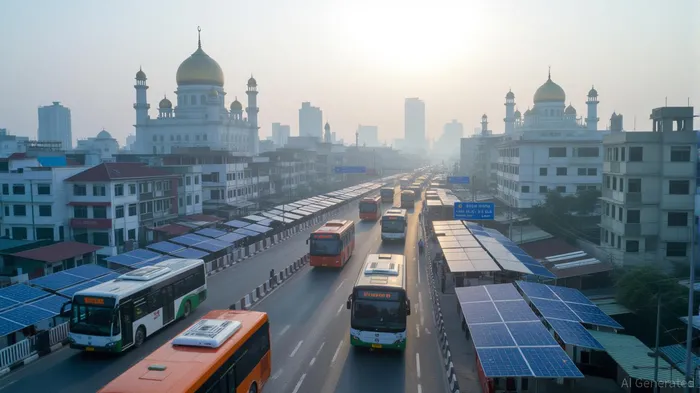
The World Bank's $640 million Bangladesh Clean Air Project, as detailed in the World Bank Helps Bangladesh Improve Energy Security and Air Quality report, exemplifies how ESG-aligned initiatives can tackle these issues. The project includes 400 zero-emission electric buses, a continuous emissions monitoring program for industries, and expanded air quality monitoring networks. Such infrastructure not only reduces PM2.5 emissions but also aligns with global ESG standards, offering investors a tangible way to support environmental and social outcomes.
Similarly, the Energy Sector Security Enhancement Project, covered in the same World Bank report, aims to improve gas supply reliability, reducing reliance on costly imported fuels and promoting cleaner energy. These projects are part of a broader trend: Bangladesh's government and international partners are increasingly prioritizing green finance. For instance, the $900 million World Bank agreement in December 2024, as detailed in the Bangladesh Receives $900 Million World Bank Financing... press release, funds climate-resilient urban infrastructure, including roads and community centers, while the IFC supports domestic green bond development, as noted in the IFC supports Bangladesh Bank to promote domestic green....
Healthcare Innovation and the ESG Imperative
The healthcare sector in Bangladesh presents another compelling ESG investment avenue. With a $19.4 billion market and 100% FDI allowance, according to the BIDA report, opportunities abound in tertiary care, pharmaceuticals, and digital health. The ESG Institute Bootcamp in July 2025, as covered in the ESG Institute Bootcamp report, highlighted the sector's potential to integrate sustainability, from reducing hospital waste to leveraging AI for disease prediction. For investors, this means supporting companies that address both health inequities and environmental risks.
Proactive ESG Strategies for 2026
To capitalize on these opportunities, investors should prioritize three areas:
1. Clean Technology: Target firms developing electric vehicle infrastructure, renewable energy solutions, and air quality monitoring systems. The World Bank's electric bus initiative, as described in the World Bank Helps Bangladesh Improve Energy Security and Air Quality report, is a case study in scalable impact.
2. Green Bonds and Sustainable Infrastructure: Allocate capital to projects like Bangladesh's Second Green and Climate Resilient Development Credit, as detailed in the Bangladesh Receives $900 Million World Bank Financing... report, which funds energy efficiency and climate-resilient urban planning.
3. Healthcare Innovation: Invest in companies leveraging AI and telemedicine to address pollution-related health issues, particularly in underserved urban populations, as the ESG Institute Bootcamp report suggests.
Conclusion
Dhaka's air quality crisis is a stark reminder of the interconnectedness of environmental, health, and economic systems. While the human and financial costs are immense, they also highlight the urgency of ESG-aligned investments. By channeling capital into clean technology, sustainable infrastructure, and healthcare innovation, investors can mitigate environmental risks while generating long-term value. As Bangladesh's government and global partners scale up green initiatives, 2026 offers a pivotal moment to align profit with planetary and public health imperatives.

Delivering real-time insights and analysis on emerging financial trends and market movements.
Latest Articles
Stay ahead of the market.
Get curated U.S. market news, insights and key dates delivered to your inbox.


AInvest
PRO
AInvest
PRO



Comments
No comments yet