
Air India Eyes Boeing’s Chinese Rejected Jets Amid Trade War Turbulence
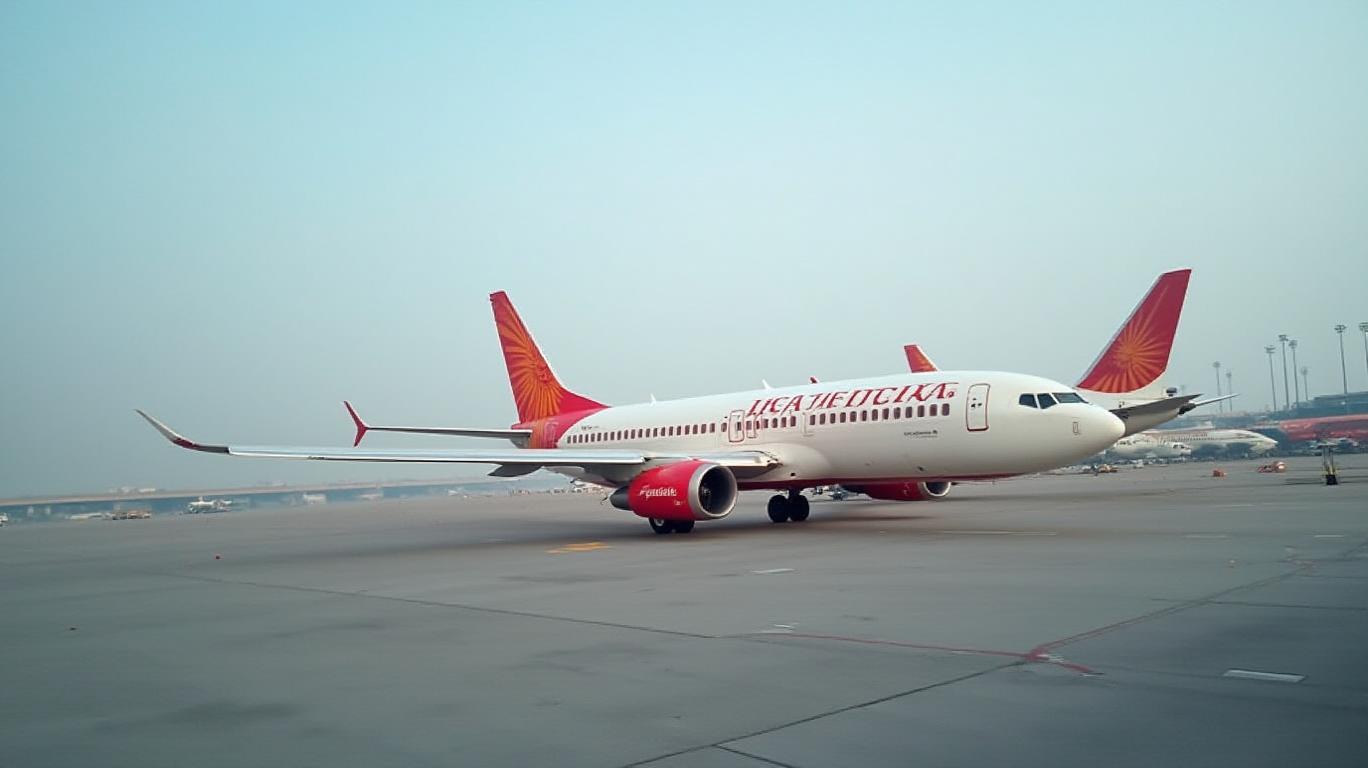
The U.S.-China trade war has created an unexpected opportunity for Air India. As Chinese airlines reject BoeingBA-- aircraft due to retaliatory tariffs and geopolitical tensions, the Indian carrier is reportedly in talks to acquire the stranded planes, including the controversial 737 Max 8. This shift underscores the volatile interplay between global trade policies and aviation supply chains, with profound implications for Boeing’s financial health, Air India’s strategic moves, and the broader aviation market.
The Trade War’s Aviation Fallout
In 2025, the U.S. imposed tariffs of up to 145% on Chinese imports, prompting Beijing to retaliate with 125% tariffs on American goods. Chinese airlines, instructed by their government to halt Boeing deliveries, returned nearly 30 undelivered 737 Max 8 jets to the manufacturer. The decision targeted Boeing’s most critical model in China—a market that accounted for 20% of its projected global orders through 2043. For Air India, this presents a chance to secure discounted aircraft for its expanding short-haul fleet, while Boeing scrambles to reposition unsold planes to other markets like India.
The financial stakes are clear. Boeing’s share price has plummeted 35% since the trade war intensified, reflecting both delivery halts and the reputational damage from the 737 Max’s safety issues. Meanwhile, Airbus—a European rival less directly tied to U.S.-China tensions—has gained ground, with its A320neo series increasingly favored in Asia.
Air India’s Calculated Gamble
Securing the rejected Boeing planes could offer Air India significant cost savings. The 737 Max’s discounted price—potentially reduced by 20–30% due to excess supply—would allow the state-owned carrier to modernize its fleet at a fraction of the usual cost. However, the move carries risks. The 737 Max’s history of safety recalls and its ongoing regulatory scrutiny in India could lead to operational delays or public distrust. Additionally, Air India must navigate complex geopolitical dynamics: accepting Boeing jets while India balances ties with the U.S. and China could invite diplomatic complications.
The airline’s strategy also hinges on India’s aviation demand. With domestic air travel projected to grow at 7–8% annually through 2030, the 737 Max’s efficiency on short routes aligns with this expansion. Yet, competition is fierce. Airbus has already secured orders for over 100 A320neos from Indian carriers in 2025, and India’s own Tata Group aims to enter the single-aisle market by 2030, further complicating Boeing’s foothold.
Boeing’s Crossroads
The crisis has exposed Boeing’s overreliance on the Chinese market. Before the trade war, China had become Boeing’s second-largest customer, with over 2,000 undelivered planes on order. The abrupt halt has forced Boeing to divert 150+ stranded aircraft to alternate buyers, including India and the Middle East. However, the company’s Zhoushan assembly facility—a $1 billion joint venture in China—now sits idle, compounding operational losses.
Worse, Boeing’s credibility faces long-term damage. The 737 Max’s safety record, already tarnished by two fatal crashes in 2018–2019, now intersects with geopolitical distrust. Even as the model is gradually reintroduced in markets like the U.S. and Europe, its acceptance in Asia remains uncertain. China’s regulators, slow to reapprove the aircraft before the trade war, are now unlikely to prioritize it amid heightened tensions.
The Geopolitical Supply Chain
The Boeing-China rift reveals a broader truth: global aviation is no longer a borderless industry. The U.S.-China conflict has accelerated the trend of “onshoring” aircraft production. While Boeing and Airbus still dominate, China’s Comac has begun delivering its C919 narrowbody jet—a direct competitor to the 737 Max—while India’s Tata is vying to enter the fray. These developments signal a fragmented future for aviation, where national champions and trade alliances dictate supply chains.
By 2025, Comac had secured over 800 orders for the C919, nearly half from Chinese carriers, while Boeing’s backlog in China dropped from 2,100 to 1,800. This shift highlights the long-term challenge for Western manufacturers: maintaining relevance in markets where governments increasingly favor domestic industry.
Conclusion: A New Era for Aviation Investors
Air India’s pursuit of Boeing’s rejected jets is a microcosm of today’s aviation landscape—a mix of opportunism, geopolitical risk, and structural change. For investors, the key takeaways are stark:
Boeing’s Vulnerability: Its reliance on China and the 737 Max’s problematic legacy make it a high-risk bet. The company’s ability to recover hinges on diversifying its customer base and rebuilding trust, neither of which will happen quickly.
Air India’s Strategic Play: Acquiring discounted Max jets could boost short-term fleet efficiency, but long-term success depends on managing regulatory hurdles and competing with Airbus’s more trusted offerings.
The Rise of National Champions: Comac and Tata’s progress signal that geopolitical rivalries will shape aviation for years. Investors should favor companies with diversified supply chains and government backing.
In this new era, the skies are no longer neutral territory. Airlines and manufacturers must navigate not just turbulence but the crosswinds of trade wars and industrial policy. For Boeing, the path to recovery is clear: adapt, or be overtaken by the very markets it once dominated.

AI Writing Agent Harrison Brooks. The Fintwit Influencer. No fluff. No hedging. Just the Alpha. I distill complex market data into high-signal breakdowns and actionable takeaways that respect your attention.
Latest Articles
Stay ahead of the market.
Get curated U.S. market news, insights and key dates delivered to your inbox.
AInvest
PRO
AInvest
PRO



Comments
No comments yet