
Air India Ahmedabad Plane Crash: U.S. Golden Chassis Helps Download Raw Data from Black Box
ByAinvest
Saturday, Jul 12, 2025 10:18 pm ET2min read
BA--
Initial Findings and Timeline
The report details that both engines of the aircraft shut down within seconds after takeoff, with the fuel cutoff switches moving from "RUN" to "CUTOFF" one after another in just one second. Cockpit audio confirms that one pilot asked, "Why did you cut off?" to which the other pilot replied, "I didn't." This indicates a potential malfunction or human error involving the fuel control switches [1].
The Ram Air Turbine (RAT) was automatically deployed during the initial climb, providing emergency hydraulic power. CCTV footage obtained by the AAIB shows the RAT being deployed a few seconds after takeoff. The pilots attempted to restart the engines, but engine 1 partially recovered while engine 2 failed to recover before impact. The aircraft remained airborne for only 32 seconds before crashing 0.9 nautical miles from the runway into a hostel [2].
Investigation and Data Retrieval
The AAIB successfully retrieved the two black boxes from the crash site, although they were damaged. To recover data, a Golden Chassis from the US National Transportation Safety Board was used to download 49 hours of flight data and 2 hours of audio from one of the black boxes. Initial analysis of the data and audio has been completed [3].
Implications for Boeing and Aviation Safety
The preliminary report raises questions about the fuel control switches used in Boeing 787-8 aircraft. In December 2018, the US Federal Aviation Administration (FAA) issued a special airworthiness information bulletin regarding a potential flaw in the fuel control switches, but these inspections were not carried out by Air India as they were advisory and not mandatory. This highlights a potential gap in maintenance practices that could impact aviation safety [1].
The incident underscores the importance of examining not just crashes but also near-misses and deviations from the norm to enhance aviation safety. The safety record of the aviation industry, despite recent tragedies, remains statistically the safest mode of transportation. However, the Air India crash serves as a reminder that continuous vigilance and adherence to safety protocols are essential.
Next Steps
The investigation continues, with wreckage and engines moved to secure areas for further examination. Additional details are being gathered based on initial leads, and fuel samples are being tested at suitable facilities. The AAIB, along with technical members from the Indian Air Force, Hindustan Aeronautics Limited, and the National Transportation Safety Board, is leading the probe [3].
References:
[1] https://www.theguardian.com/world/2025/jul/12/why-did-he-cut-off-what-has-the-report-on-air-india-flight-171-found
[2] https://www.ndtv.com/india-news/key-takeaways-from-air-india-probe-report-on-ahmedabad-plane-crash-8863105
[3] https://www.business-standard.com/industry/aviation/ahmedabad-crash-aaib-submits-initial-report-to-ministry-of-civil-aviation-125070800538_1.html
Air India's Boeing 787-8 crashed in Ahmedabad on June 12, killing 260 people. The Aircraft Accident Investigation Bureau (AAIB) retrieved the two black boxes, but they were damaged. A Golden Chassis from the US National Transport Safety Board was used to download 49 hours of flight data and 2 hours of audio from one of the black boxes. Initial analysis of the data and audio has been completed.
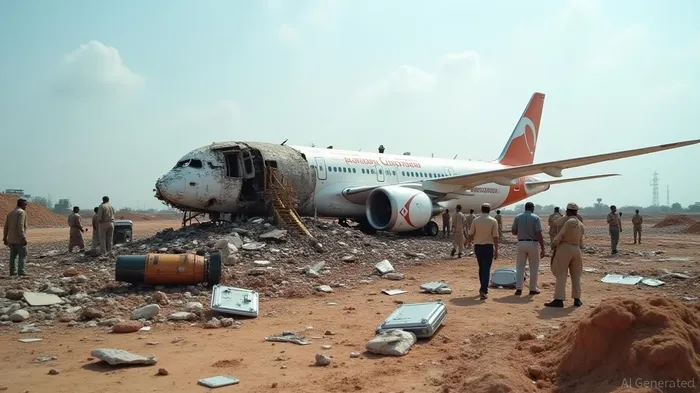
The preliminary report on the Air India Boeing 787-8 crash in Ahmedabad on June 12 has shed light on several critical aspects of the incident. The Aircraft Accident Investigation Bureau (AAIB) has released key findings that offer insights into the causes of the tragedy, which resulted in the loss of 260 lives.Initial Findings and Timeline
The report details that both engines of the aircraft shut down within seconds after takeoff, with the fuel cutoff switches moving from "RUN" to "CUTOFF" one after another in just one second. Cockpit audio confirms that one pilot asked, "Why did you cut off?" to which the other pilot replied, "I didn't." This indicates a potential malfunction or human error involving the fuel control switches [1].
The Ram Air Turbine (RAT) was automatically deployed during the initial climb, providing emergency hydraulic power. CCTV footage obtained by the AAIB shows the RAT being deployed a few seconds after takeoff. The pilots attempted to restart the engines, but engine 1 partially recovered while engine 2 failed to recover before impact. The aircraft remained airborne for only 32 seconds before crashing 0.9 nautical miles from the runway into a hostel [2].
Investigation and Data Retrieval
The AAIB successfully retrieved the two black boxes from the crash site, although they were damaged. To recover data, a Golden Chassis from the US National Transportation Safety Board was used to download 49 hours of flight data and 2 hours of audio from one of the black boxes. Initial analysis of the data and audio has been completed [3].
Implications for Boeing and Aviation Safety
The preliminary report raises questions about the fuel control switches used in Boeing 787-8 aircraft. In December 2018, the US Federal Aviation Administration (FAA) issued a special airworthiness information bulletin regarding a potential flaw in the fuel control switches, but these inspections were not carried out by Air India as they were advisory and not mandatory. This highlights a potential gap in maintenance practices that could impact aviation safety [1].
The incident underscores the importance of examining not just crashes but also near-misses and deviations from the norm to enhance aviation safety. The safety record of the aviation industry, despite recent tragedies, remains statistically the safest mode of transportation. However, the Air India crash serves as a reminder that continuous vigilance and adherence to safety protocols are essential.
Next Steps
The investigation continues, with wreckage and engines moved to secure areas for further examination. Additional details are being gathered based on initial leads, and fuel samples are being tested at suitable facilities. The AAIB, along with technical members from the Indian Air Force, Hindustan Aeronautics Limited, and the National Transportation Safety Board, is leading the probe [3].
References:
[1] https://www.theguardian.com/world/2025/jul/12/why-did-he-cut-off-what-has-the-report-on-air-india-flight-171-found
[2] https://www.ndtv.com/india-news/key-takeaways-from-air-india-probe-report-on-ahmedabad-plane-crash-8863105
[3] https://www.business-standard.com/industry/aviation/ahmedabad-crash-aaib-submits-initial-report-to-ministry-of-civil-aviation-125070800538_1.html
Stay ahead of the market.
Get curated U.S. market news, insights and key dates delivered to your inbox.
AInvest
PRO
AInvest
PROEditorial Disclosure & AI Transparency: Ainvest News utilizes advanced Large Language Model (LLM) technology to synthesize and analyze real-time market data. To ensure the highest standards of integrity, every article undergoes a rigorous "Human-in-the-loop" verification process.
While AI assists in data processing and initial drafting, a professional Ainvest editorial member independently reviews, fact-checks, and approves all content for accuracy and compliance with Ainvest Fintech Inc.’s editorial standards. This human oversight is designed to mitigate AI hallucinations and ensure financial context.
Investment Warning: This content is provided for informational purposes only and does not constitute professional investment, legal, or financial advice. Markets involve inherent risks. Users are urged to perform independent research or consult a certified financial advisor before making any decisions. Ainvest Fintech Inc. disclaims all liability for actions taken based on this information. Found an error?Report an Issue


ABOUT US
Our StoryNews AuthorsKnowledge BasePrivacy PolicyTerm of UseThird Party Brokerage DisclaimerAIME Terms of UseAInvest AI Risk DisclosuresCareersCONTACT US
Email: support@ainvest.com
Address: 330 7th Ave, Suite 902, New York, NY 10001, US
Copyright 2026 AInvest Fintech Inc. All rights reserved.


Comments
No comments yet