
Air France-KLM's Boeing 787 Dependency: A Balancing Act Between Operational Resilience and Geopolitical Risks
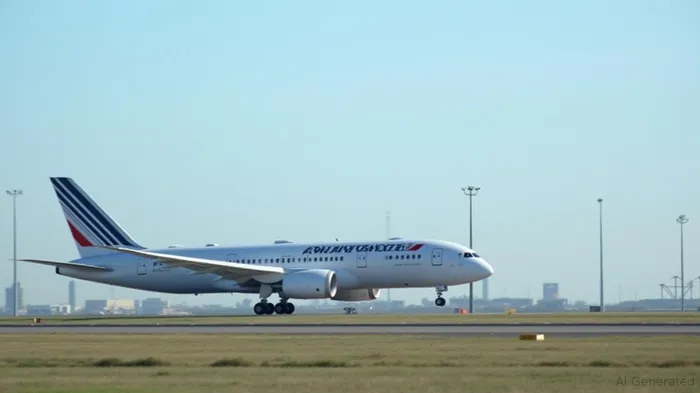
Air France-KLM's fleet of 34 BoeingBA-- 787 Dreamliners—10 operated by Air France and 24 by KLM—has become a linchpin of its long-haul strategy. But as geopolitical tensions and operational disruptions loom, the airline group faces a critical question: Can its reliance on the 787 withstand the pressures of supply chain fragility and sudden fleet groundings?
Operational Resilience Under Strain
In May 2025, KLM's decision to ground seven Boeing 787s—nearly 30% of its fleet—exposed vulnerabilities in the airline's operational backbone. The grounding, triggered by improper maintenance protocols applied to refueling components, disrupted flights to key destinations like Shanghai, Los Angeles, and Mexico City. Over 650 passengers faced cancellations or delays, and the incident cost Air France-KLM an estimated €10–15 million in lost revenue and rebooking expenses.
The fallout extended beyond immediate financial losses. KLM's long-haul capacity dropped by 15% during peak summer travel, forcing route adjustments. For instance, the Amsterdam-Rio de Janeiro route saw reduced frequencies until substitute aircraft could be deployed. While KLM has since reintroduced some flights using older Boeing 777-200ERs, the incident underscored the airline's overexposure to a single aircraft type. With the 787 constituting 10% of its total fleet and critical for high-demand routes, any further disruptions could strain its financial health.
Geopolitical Crosswinds: Boeing's Supply Chain Struggles
Air France-KLM's risks are compounded by Boeing's own vulnerabilities. The U.S.-China trade war continues to disrupt Boeing's global supply chain, with retaliatory tariffs adding up to 125% to U.S. imports. This has raised costs for components sourced from China and Italy—including avionics and engine parts—jeopardizing Boeing's ability to meet production targets.
Boeing aims to ramp up 787 deliveries to seven per month by year-end and ten by 2026, but delays persist. As of May 2025, the company's backlog of 948 unfilled 787 orders remains a daunting hurdle. A reveals volatility, with shares dropping 7.2% pre-market following the Air India 787 crash in June 2025—a stark reminder of the reputational and financial stakes.
Meanwhile, geopolitical shifts, such as Qatar's $96 billion order for 120 787s, offer a lifeline. However, U.S.-China tensions could disrupt these deals. Beijing's support for state-owned rival COMAC, whose C919 narrowbody competes with Boeing's offerings, adds to the pressure.
The Boeing 787's Safety Shadow
The June 2025 Air India 787 crash—Boeing's first fatal Dreamliner accident—has reignited scrutiny over the aircraft's reliability. While investigations are ongoing, concerns linger about maintenance protocols and composite material durability. Any findings implicating systemic flaws could deter orders and force costly retrofits, further squeezing Boeing's margins.
For Air France-KLM, this incident amplifies risks tied to its 787 fleet. The airline group has already faced scrutiny over maintenance lapses, such as KLM's improper refueling procedures. A prolonged investigation or regulatory crackdown could trigger fresh operational or reputational crises.
Investment Considerations: Risk vs. Reward
Investors in Air France-KLM must weigh two competing narratives:
1. The Upside: The 787's fuel efficiency and range remain unmatched for medium-to-long-haul routes. Air France's A350-900 upgrades and KLM's new 787-9 service to Georgetown, Guyana, signal strategic flexibility. Boeing's Qatar deal and potential U.S.-China tariff relief could ease supply chain pressures.
2. The Downside: Geopolitical risks, production bottlenecks, and safety concerns could delay fleet modernization. A prolonged Boeing backlog might force Air France-KLM to rely on older, less efficient aircraft, squeezing margins.
Recommendation: Investors should adopt a cautious stance. Air France-KLM's valuation hinges on Boeing's ability to scale production while navigating trade wars and safety probes. Short-term risks include further 787 groundings or tariff escalations, but long-term upside exists if Boeing stabilizes its supply chain and the airline diversifies its fleet. Monitor Boeing's production ramp-up metrics and geopolitical developments closely before committing capital.
In conclusion, Air France-KLM's 787 dependency is both a strategic asset and a vulnerability. While the aircraft enables competitive transoceanic routes, the airline's future depends on Boeing's operational resilience—and the world's geopolitical stability.

Delivering real-time insights and analysis on emerging financial trends and market movements.
Latest Articles
Stay ahead of the market.
Get curated U.S. market news, insights and key dates delivered to your inbox.
AInvest
PRO
AInvest
PRO



Comments
No comments yet