
Air France's A350 Fleet Expansion to Chicago: A Strategic Play for Transatlantic Dominance
The aviation sector's post-pandemic resurgence has intensified competition for transatlantic market share, with Air France positioning itself at the forefront through its Airbus A350 fleet expansion to Chicago. This strategic move not only underscores the airline's commitment to premium transatlantic routes but also highlights its ambition to solidify its position against U.S. giants DeltaDAL-- and United. Let's dissect how Air France's A350 fleet could be a linchpin for long-term success—and why investors should pay attention.
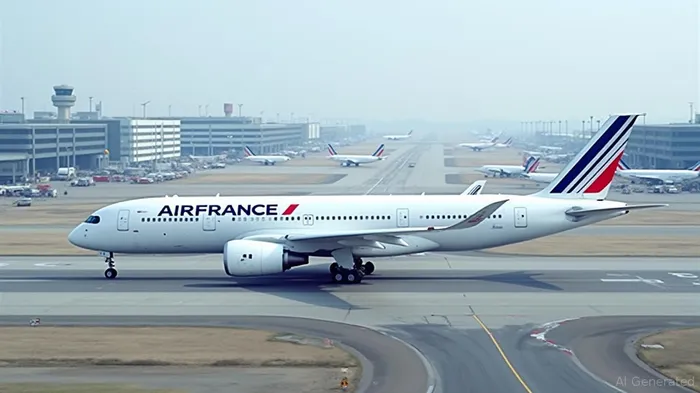
The A350's Dual Edge: Fuel Efficiency and Passenger Appeal
The A350-900, Air France's workhorse for transatlantic routes, is engineered to deliver on two critical fronts: cost efficiency and passenger comfort. With a 324-seat configuration (34 business, 24 premium economy, and 266 economy), it offers a competitive cabin layout that caters to both corporate travelers and leisure passengers. Its advanced aerodynamics and fuel-efficient Rolls-Royce engines reduce operating costs by up to 25% compared to older wide-body aircraft like the BoeingBA-- 777, a key advantage in a sector where fuel volatility remains a risk.
Air France's seven weekly A350 flights to Chicago exemplify this strategy. The route, part of a broader North American network expansion, positions the airline to capture growing demand for transatlantic travel. Post-pandemic data shows strong recovery in business travel and leisure tourism, with Chicago—a gateway to the U.S. Midwest—serving as a critical hub for both.
Navigating Competitive Pressures: Delta and United's Moves
Air France faces formidable rivals in the transatlantic space. Delta, leveraging its robust financial discipline and premium route focus, has maintained strong margins by prioritizing high-yield international services. Its Pacific route expansion and strategic partnerships (e.g., with Air France-KLM on India-U.S. routes) threaten to dilute European carriers' dominance. United, meanwhile, has aggressively expanded into non-traditional markets, using its Chicago hub to challenge European airlines' traditional routes.
However, Air France's premium offerings—such as its La Première suites (3.5m² of space) and premium economy upgrades—differentiate it in a crowded market. The A350's spacious cabins and quieter cabin design also align with post-pandemic traveler preferences for comfort and health-conscious travel, giving Air France an edge over competitors relying on older fleets.
Risks Lurking in the Skies
Despite its strengths, Air France is not immune to risks. The June 2025 incident involving Flight AF136—where a denied landing clearance forced a return to Paris—highlights operational vulnerabilities. While the airline's quick rebooking of passengers mitigated reputational damage, such disruptions underscore the unpredictability of transatlantic operations.
Regulatory hurdles also loom large. Schiphol Airport's 40% tariff hike and U.S. import tariffs threaten profitability, while rising labor costs and union negotiations add financial strain. Furthermore, Air France's net debt of €6.9 billion (as of Q1 2025) remains a liability compared to Delta's deleveraged balance sheet.
Investment Thesis: A Long-Term Play on Premium Transatlantic Assets
For investors, Air France's A350 expansion represents a compelling long-term opportunity. The airline's modern fleet and premium strategy position it to capitalize on rising transatlantic demand, projected to grow by 5.8% in 2025 (IATA estimates). Its partnership with Delta, Virgin Atlantic, and IndiGo—a move to diversify into emerging markets—also mitigates reliance on volatile transatlantic routes.
However, short-term volatility is inevitable. Geopolitical tensions, fuel price swings, and operational hiccups like the Chicago incident could pressure stock performance. Investors should consider a strategic, multi-year holding period for Air France, particularly if they believe in the sustained recovery of premium travel.
Final Take
Air France's A350 expansion to Chicago is more than a route update—it's a bold statement of intent to reclaim transatlantic dominance. While risks like regulatory headwinds and U.S. competition persist, the airline's premium focus and fleet modernization make it a key player in a sector ripe for consolidation. For investors willing to weather near-term turbulence, Air France's transatlantic assets could offer attractive returns as global travel demand continues its post-pandemic climb.
Investment Grade: Buy with a 3–5 year horizon. Monitor fuel costs, regulatory developments, and transatlantic load factors closely.

Stay ahead of the market.
Get curated U.S. market news, insights and key dates delivered to your inbox.
AInvest
PRO
AInvest
PRO



Comments
No comments yet