
Air Canada Flight Attendant Strike and Its Impact on Airline Stocks: Navigating Volatility in a Post-Pandemic Recovery
 Aime Summary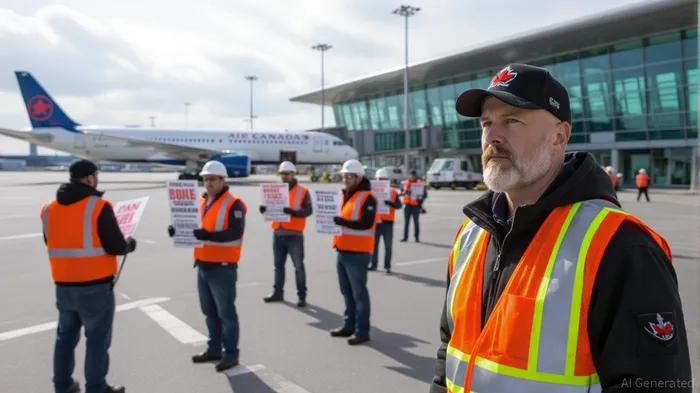
The Air Canada flight attendant strike, which began on August 16, 2025, has become a focal point for investors scrutinizing the airline sector's post-pandemic fragility. With over 10,000 flight attendants represented by the Canadian Union of Public Employees (CUPE) walking off the job, the strike has grounded Air Canada's entire fleet, canceled 600+ flights in its first 48 hours, and disrupted 130,000 daily passengers. The financial toll is staggering: CEO Michael Rousseau estimates daily losses in the hundreds of millions, while the Business Council of Canada warns of compounding economic risks amid U.S. trade war pressures. For investors, the crisis underscores the precarious balance between labor costs, operational resilience, and market confidence in a sector still recovering from pandemic-era volatility.
Revenue Disruption and Consumer Confidence
The strike has exposed the airline's vulnerability to labor disputes in a high-margin, high-demand environment. Air Canada's decision to cancel all flights—except regional Air Canada Express services—has left passengers stranded, forced to rebook at premium prices, or abandon travel plans altogether. The airline's stock has already fallen 14.25% in the past month, mirroring broader sector jitters. reveals a sharp decline coinciding with strike announcements, reflecting investor fears of prolonged operational chaos.
Consumer confidence, a critical driver of post-pandemic demand, is also at risk. A 2025 Abacus Data poll shows 88% of Canadians support compensating flight attendants for ground work, yet the airline's refusal to meet CUPE's demands has eroded trust. This mirrors U.S. trends, where SouthwestLUV-- and American AirlinesAAL-- face similar wage disputes among flight attendants. The ripple effect is clear: when airlines fail to align with public sentiment on fair labor practices, they risk both reputational damage and financial instability.
Comparative Labor Disruptions and Sector Volatility
The Air Canada strike is not an isolated event. Global airlines have faced a wave of labor unrest in 2025, from Ryanair's baggage handler strikes in Spain to Finnair's ground worker walkouts. These incidents have collectively pushed non-fuel unit costs up 1.3% industry-wide, with Spirit Airlines and Frontier Airlines—already burdened by high debt—bearing the brunt. highlights the widening gap between carriers with strong labor relations (e.g., DeltaDAL--, United) and those with contentious negotiations.
European airlines, however, have shown greater resilience. Air France-KLM and Lufthansa reported stronger-than-expected Q2 2025 results, leveraging cost discipline and transatlantic demand. This contrast underscores the importance of proactive labor management. For instance, Alaska Airlines' 2024 pilot contract—a 30% pay raise over four years—has averted strikes and improved retention, offering a blueprint for North American carriers.
Strategic Insights for Investors
For investors, the Air Canada strike serves as a cautionary tale about the risks of poor labor relations in a sector where margins are razor-thin and demand is volatile. Here are three key strategies to consider:
Prioritize Airlines with Strong Labor Relations and Financial Flexibility
Carriers like Delta Air LinesDAL-- and United AirlinesUAL--, with $1.5 billion in cash reserves and a history of collaborative negotiations, are better positioned to weather disruptions. illustrates their financial resilience. Conversely, Spirit and Frontier—burdened by debt and unresolved labor disputes—remain high-risk bets.Hedge Against Sector-Wide Volatility
Labor disputes often trigger broad market swings. For example, Southwest Airlines' SWAPA negotiations could lead to a 10–15% stock movement if a strike materializes. Investors should consider hedging with options on airline ETFs (e.g., IAI) or ESG-focused funds that prioritize labor stability.Monitor Macroeconomic and Labor Indicators
The interplay between labor costs, inflation, and geopolitical risks (e.g., U.S. trade wars) will shape the sector's trajectory. Airlines that integrate fair compensation into their business models—like Alaska Airlines—may gain a competitive edge, while those clinging to outdated labor practices risk eroding profitability.
Conclusion
The Air Canada strike is a microcosm of the broader challenges facing the airline industry: rising labor costs, inflationary pressures, and the need for operational agility. While the sector's post-pandemic recovery has been robust, labor disputes threaten to undermine gains. For investors, the path forward lies in balancing caution with strategic foresight—favoring airlines with strong labor relations, diversified revenue streams, and financial flexibility. In a fragmented industry, adaptability and foresight will be the keys to navigating turbulence and securing long-term value.

Stay ahead of the market.
Get curated U.S. market news, insights and key dates delivered to your inbox.
AInvest
PRO
AInvest
PRO



Comments
No comments yet