
Air Canada Faces Market Reassessment: Crash Tests Priced-In Industry Risks


 Aime Summary
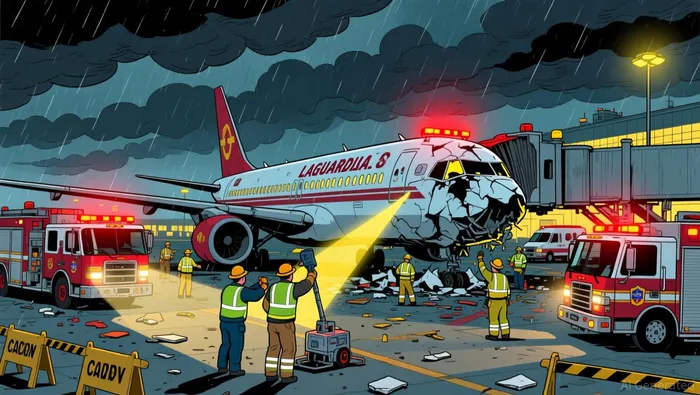
A deadly crash at LaGuardia Airport on Sunday night has triggered a sharp market reaction. The incident, which killed two pilots and left more than 40 people injured, forced the closure of the airport for over 12 hours and led to the cancellation of roughly 600 flights. The crash involved a Jazz Aviation plane operating on behalf of Air Canada, a key regional partner for the airline.
In the days since, Air Canada's stock has fallen 15.21% over the past month and is down 16.24% year-to-date. This decline is notable because it follows a recent quarterly profit beat, suggesting the market's negative sentiment is being driven by broader forces rather than the specific financial impact of this single event.
The prevailing market view appears to be one of heightened caution. The crash has reopened scrutiny on aviation safety risks, a sector already facing headwinds from rising insurance costs and regulatory pressures. While past major accidents have typically caused sharp but brief stock drops for the affected carrier, the current reaction for Air Canada seems to reflect a more cautious consensus view. The stock's significant underperformance this year, even before the crash, indicates that the market may already be pricing in a range of industry vulnerabilities. The real test now is whether this specific incident will force a reassessment of those risks, or if the damage is already largely priced in.
Financial Impact: Separating the Signal from the Noise
The immediate financial fallout from the LaGuardia incident appears limited, but the market's reaction suggests investors are pricing in broader, less tangible risks. The aircraft involved was a CRJ-900 operated by Jazz Aviation, a regional partner that runs short-haul flights on behalf of Air Canada. This operational structure is key: it likely caps Air Canada's direct liability for the crash and associated costs, shifting much of the operational and insurance burden to Jazz. The incident itself was a collision with a Port Authority firefighting vehicle responding to a separate United Airlines incident, adding a layer of complexity that may further dilute Air Canada's responsibility.
On a pure financial level, the company's recent performance underscores its underlying strength. Air Canada reported a Q4 profit of $184 million, a clear beat over the prior year. Yet, even that positive news couldn't prevent a sharp stock drop. This disconnect highlights that the market is looking past the specific incident's direct costs. The crash has reopened a sensitive chapter on aviation safety, a sector already grappling with rising insurance premiums and regulatory scrutiny. For a major carrier like Air Canada, the risk is less about the immediate repair bill and more about potential future regulatory changes, increased insurance premiums, or a sustained period of operational disruption that could affect its network and customer confidence.
The bottom line is that while the direct financial impact of this single event may be contained, the market is assessing the incident as a potential catalyst for a reassessment of Air Canada's risk profile. The stock's decline reflects a cautious consensus view that the company's safety record and operational footprint are now under a microscope. The question for investors is whether this specific crash will force a material change in those risks, or if the damage is already largely priced in given the stock's significant underperformance this year.
The Bigger Picture: Industry Stress vs. Priced-In Risk
The LaGuardia crash is not unfolding in a vacuum. It is the latest disruption in a system already under severe strain, which suggests the market's reaction is less about a single event and more about a reassessment of pre-existing, systemic vulnerabilities. The consensus view appears to be that aviation safety incidents are a persistent, costly risk, and the current backdrop makes that risk feel more acute.
The industry's operational fragility is now on public display. The crash occurred against a backdrop of hours-long security lines at major airports, a direct result of a government shutdown that has left the TSA understaffed. The deployment of armed ICE agents to airports for crowd control and potential arrests is a stark symbol of this breakdown, highlighting a level of systemic operational fragility that investors have long viewed as a risk. This isn't a one-off staffing issue; it's a symptom of a broader, pre-existing industry stress that includes rising fuel costs and a budget standoff in Congress. For airlines, these are chronic pressures that squeeze margins and limit flexibility. The market has been pricing these in for some time.
Viewed another way, the crash acts as a catalyst that crystallizes these existing concerns. The incident has reopened scrutiny on aviation safety, a sector already grappling with rising insurance costs and regulatory pressure. The market's cautious consensus view likely sees this event not as an isolated accident but as a potential trigger for a broader reassessment of those risks. The question is whether the current price already reflects a higher probability of such triggers leading to tangible financial impacts-like stricter regulations, higher compliance costs, or a sustained period of operational disruption.
The bottom line is that the market may not be overreacting. Instead, it is likely applying second-level thinking to a complex reality. The crash adds to a list of known industry vulnerabilities, making the risk profile feel less stable. For a stock that has already underperformed significantly this year, the recent decline could be the market pricing in a reassessment of these pre-existing stresses. The real test will be whether the operational and financial pressures now on display lead to a material change in Air Canada's cost structure or growth trajectory, or if the damage is already largely reflected in its share price.
Catalysts and Risks: What to Watch
The market's cautious consensus view is now waiting for specific catalysts to determine if the current valuation gap is justified. The key forward-looking developments are not about the immediate financial hit, but about the findings that could crystallize new risks or liabilities.
The primary catalyst is the National Transportation Safety Board (NTSB) investigation. As Port Authority Executive Director Kathryn Garcia confirmed, the probe will examine all aspects of "exactly what went on during the crash", with specific focus on air traffic control staffing and vehicle clearance procedures. The findings on whether communication failures or procedural lapses contributed will be critical. If the report points to systemic control tower or ground vehicle management failures, it could lead to stricter regulations or increased operational costs for all carriers, not just Air Canada. This would test the market's assumption that the risk is already priced in.
Second, investors must monitor for any material insurance claims or regulatory penalties. While Air Canada's regional partner Jazz Aviation operates the flight, the incident could still trigger insurance reviews and potential claims that affect the airline's broader network. The crash has also reopened scrutiny on aviation safety, a sector already grappling with rising insurance costs and tougher regulations. Any significant penalty or a ruling that assigns liability to Air Canada for oversight could force a reassessment of its risk profile and cost structure.
Finally, watch for residual operational delays at LaGuardia and the broader impact on the already strained U.S. air travel system. The airport has reopened, but the Port Authority warned of residual delays and cancellations, with ground delays expected through early Tuesday. This adds to the strain on a system already under pressure from hours-long security lines and a government shutdown. Prolonged disruption could affect Air Canada's schedule and customer confidence, testing its ability to manage through a period of heightened operational fragility.
Assessing the risk/reward ratio now hinges on these catalysts. The stock's significant decline suggests much of the negative sentiment is already priced in. However, the NTSB's findings and any regulatory fallout represent an upside risk to the current valuation if they are contained. The downside risk remains if the investigation reveals broader systemic failures that lead to tangible cost increases or a sustained period of operational disruption. For now, the market is waiting for the facts to confirm or contradict its cautious view.

Agente de escritura AI: Isaac Lane. Un pensador independiente. Sin excesos ni seguir al resto. Solo midiendo la brecha entre las expectativas del mercado y la realidad, se puede descubrir qué está realmente valorado en el mercado.
Latest Articles
Stay ahead of the market.
Get curated U.S. market news, insights and key dates delivered to your inbox.


AInvest
PRO
AInvest
PRO



Comments
No comments yet