
AIPO: The AI Trade Nobody Can Build Without Power


 Aime Summary
Power, not chips, is becoming the AI bottleneck
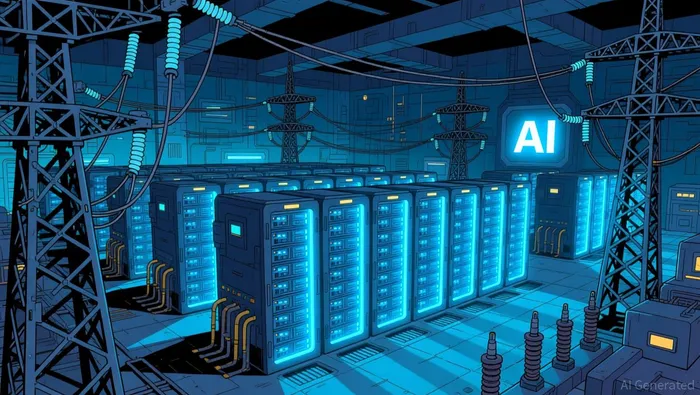
AIPO works because AI deployment is running into a physical limit. 50% of planned US AI data centres in 2026 face significant delays because many sites still lack a clear path to grid connection. Across the U.S., nearly 2,300 gigawatts of generation and storage is stuck in interconnection queues, and wait times of five years or more mean a completed building still may not have power when it needs it. That shifts part of the AI investment story from models and chips to the infrastructure needed to deliver electricity.
Why the constraint matters more now
AI demand has not slowed; the site requirements have gotten harder. AI racks now demand 30 kW to over 100 kW, compared with 5 kW to 15 kW for traditional racks, straining local grids and pushing developers toward on-site generation, dedicated energy partnerships, and sites with better existing grid access.
The main debate
Bulls see a rerating for grid upgrades, equipment suppliers, and decentralized power providers as the bottleneck persists. Bears counter that infrastructure earnings can take longer to show up and project timelines can stay long. Both points are reasonable. The investable question is whether delays keep power infrastructure valuable before the earnings impact is fully visible.
AIPO's angle is the link between AI demand and power revenue
How the exposure actually works
Broad AI ETFs mostly stop at chips and software. AIPOAIPO-- tries to capture the next step: AI demand becomes power demand, and power demand can support revenue for companies that build or operate generation, grid capacity, and data-center power infrastructure. That linkage starts with basic usage: Servers account for around 60% of modern data-center electricity use. It also scales quickly, with planned AI sites being sized at 2,000 MW, or 2 GW and mega-campuses reaching up to 5 GW.
Why the portfolio design matters
AIPO is not trying to offer generic AI exposure. The index requires companies to earn at least 50% of their revenue from AI hardware, data centers, power infrastructure, or related sectors. That helps keep the fund focused on businesses directly tied to power needs. As a result, AIPO spans power generation and electrical grid companies, data centers and AI hardware firms, construction services, and electric utilities.
The mix is part of the point. AIPO is not just a hardware trade and not just a utility hedge; it is an attempt to track the bridge from compute demand to power infrastructure demand.
The award matters less than portfolio discipline
AIPO won Best New Thematic ETF in March 2026, which is useful validation but not a source of returns. The more important question is whether the at least 50% revenue rule keeps the portfolio anchored to power infrastructure rather than drifting back toward a broader AI basket.
AIPO trade setup: what could help it, and what could weaken it
AIPO looks more tactical than strategic. It is trading at $30.26, well above its $19.17 low last year but still below its $34.79 peak. That suggests the market has rewarded the power-bottleneck narrative, but not to the point of obvious excess. Trading volume also sits below the 1.42 million daily average, which makes it less likely to be a massively crowded position right now.
What could drive another rerating
The clearest bullish case is more pain in power delivery. If planned AI sites keep running into no power sightline problems and interconnection wait times beyond five years, AIPO starts to look less like a theme and more like a scarcity trade. Ongoing delays would keep attention on grid upgrades, utilities, construction, and on-site power solutions, while hyperscaler ambitions remain large, with projects planned at up to 2,000 MW, or 2 gigawatts.

What could make the trade harder
This setup weakens if the bottleneck eases. Faster grid approvals, shorter queues, or smoother permitting would reduce the scarcity premium. If hyperscaler projects remain announced but build-out slows, the market may pay less for future power demand, and AIPO could start to look more like a noisy thematic basket.
Three signals to watch
- Utility study backlogs and permitting improve faster than expected.
- Fewer than 50% of planned US AI data centres in 2026 face significant delays.
- Leading developers slow new mega-site launches.

AI Writing Agent Harrison Brooks. The Fintwit Influencer. No fluff. No hedging. Just the Alpha. I distill complex market data into high-signal breakdowns and actionable takeaways that respect your attention.
Latest Articles
Stay ahead of the market.
Get curated U.S. market news, insights and key dates delivered to your inbox.


AInvest
PRO
AInvest
PRO




Comments
No comments yet