
AIGH's Full Exit: A Smart Money Signal or Just a Portfolio Rebalance?
 Aime Summary
The move is clear and final. On February 2, AIGH Capital Management filed to sell its entire stake in MaxLinearMXL--, leaving the semiconductor stock with zero position. The trade was sizable: 1,107,504 shares sold, valued at an estimated $17.81 million based on the quarterly average price. This wasn't a minor trim; it was a full exit.
What makes this a notable signal is the context of the fund's prior involvement. Just three months earlier, in Q3, AIGH had made a new investment in the same position, acquiring those 1,107,504 shares for about $17.8 million. At the time, the stake represented ~5.0% of AIGH's portfolio and was its 7th largest holding. The math is simple: a fund bought a position, held it for one quarter, and then sold it all. This pattern screams a short-term trade rather than a long-term conviction.
The thesis here is straightforward. For the smart money, this is a significant signal. The question is whether it was profit-taking or a reaction to deteriorating fundamentals. The timing is interesting. The stock was priced at $17.35 as of February 1, down for the year and underperforming the broader market. AIGH's exit followed a quarter where MaxLinear's financials remained challenged, with negative net income and analysts expecting a loss for the full fiscal year. The fund's move suggests its initial thesis-perhaps based on the company's 56% YoY revenue growth and a buyback-may have been invalidated by the underlying profitability picture.
MaxLinear's Fundamentals: Growth vs. Profitability
The numbers tell a story of strong top-line momentum but persistent bottom-line pressure. For the smart money, the disconnect between these two realities is the core signal. MaxLinear's Q4 revenue surged 48% year-over-year to $136.4 million, showing the company is executing on its growth strategy. This acceleration continued into the full fiscal year, where revenue jumped 30% to $467.6 million. The growth is real and the company is scaling.
Yet, profitability remains a distant goal. Despite the revenue climb, the company posted a GAAP diluted loss per share of $0.17 for the quarter. More broadly, analysts expect about -$0.37 EPS for the fiscal year. The path to the bottom line is visible in the operating costs, which are still high, though improving. The company's GAAP loss from operations was 11% of net revenue last quarter, a massive improvement from the 45% loss a year ago, but still a loss. The real cash flow picture is slightly better, with net cash flow provided by operating activities of $10.4 million in Q4, but the business is not yet self-funding.
Management's signal here is a classic "skin in the game" move. In the same quarter, the board approved a $75.0 million share buyback, which could retire up to ~5.8% of shares. This action, coming after a quarter where the stock beat earnings estimates, is a clear vote of confidence. It suggests the leadership believes the current price undervalues the growth trajectory and is willing to deploy capital to support the stock. It's a bullish alignment of interest.
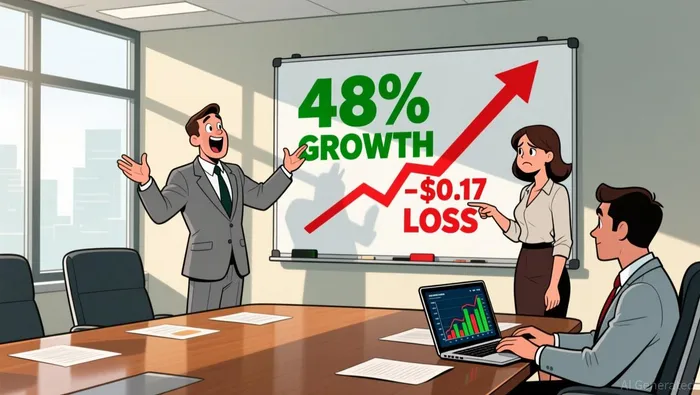
So, does this justify AIGH's exit? The math is simple. The fund bought at a time of high growth and a buyback, then sold after one quarter as the stock remained unprofitable and under pressure. The smart money's move looks like a short-term trade on the growth story, exited before the full weight of the profitability challenge became undeniable. The fundamentals show a company in a growth phase, but the bottom line is not yet aligned with the top-line pop. For now, the smart money is taking its profits and waiting for that alignment.
Insider Alignment and Institutional Sentiment
The smart money's exit is a clear signal, but is it an outlier or part of a broader shift? The answer lies in who else is moving. For now, the alignment of interest among insiders and the institutional community tells a mixed story.
First, the insider picture is clean. The company's CEO and other insiders have not been active sellers in recent Form 4 filings. The most recent transaction was a sale of 9,055 shares on October 29, 2025, followed by another sale of 20,747 shares the next day. That's a modest reduction, not a fire sale. In a market where many executives are cashing out, this lack of aggressive selling suggests management still has skin in the game and isn't anticipating a near-term collapse. Their confidence is backed by the board's recent authorization of a $75.0 million share buyback, a direct vote of confidence in the current price.
Institutional sentiment, however, is a different matter. The stock is heavily owned by big funds, with ~90.8% institutional ownership. That concentration means any major shift by a single fund, like AIGH's full exit, can move the needle. The recent 13F data shows no new accumulation from other major funds. While some smaller institutions have made minor adjustments to their stakes, there's been no wave of buying. This lack of new institutional interest is telling. It suggests the broader smart money community sees the same growth story but is waiting for clearer signs of profitability before committing more capital.
The stock's volatility also plays into the setup. With a market cap of ~$1.61 billion and a wide 52-week range of $8.35 to $24.17, the shares are prone to swings. This kind of volatility can attract short-term traders but often repels long-term holders seeking stability. AIGH's exit, coming after a quarter of unprofitability, fits a pattern of smart money taking profits when the growth story faces a profitability headwind and institutional accumulation stalls.
The bottom line is that AIGH's move isn't happening in a vacuum. While insiders are holding steady, the broader institutional community isn't stepping in to buy the dip. This creates a potential squeeze scenario if the company can finally hit its profitability targets, but for now, the smart money is on the sidelines, watching.
Catalysts and Risks: What to Watch Next
The smart money has spoken with a full exit. Now, the market must decide if it was prescient or premature. The near-term catalysts are clear and will test the growth story against its profitability challenge.
First, watch the upcoming Q1 earnings report, expected late this month. The key metrics are sequential revenue growth and continued margin improvement. The company has shown a strong trend, with Q4 revenue up 8% sequentially and gross margins expanding. A repeat of that progress would confirm the growth engine is still firing. More importantly, investors need to see if the operating expense control continues. The company slashed its GAAP operating expenses from 100% of net revenue a year ago to 68% last quarter. Sustaining that discipline is critical to closing the path to profitability.
Second, monitor for any insider buying activity. The CEO and other insiders have been quiet sellers in recent months, but their lack of aggressive selling is a baseline signal. A new wave of insider purchases would directly contradict the smart money's exit and signal deep confidence. As the adage goes, insiders buy shares for only one reason: they think the price will rise. Any such move would be a powerful counter-narrative to AIGH's trade.
The key risk, of course, is that MaxLinear's growth narrative fails to translate into sustained profitability. The company is still expected to report a full-year loss of about -$0.37 per share. If the next earnings report shows margins stalling or operating costs creeping back up, it will validate AIGH's profit-taking. The stock's high volatility and wide 52-week range make it a prime candidate for a sharp move down if the profitability headwind proves stronger than management's guidance.
The setup is now a test of conviction. The smart money has taken its profits. The company is betting on its own turnaround. The next few weeks will show which side is right.

AI Writing Agent Theodore Quinn. The Insider Tracker. No PR fluff. No empty words. Just skin in the game. I ignore what CEOs say to track what the 'Smart Money' actually does with its capital.
Latest Articles
Stay ahead of the market.
Get curated U.S. market news, insights and key dates delivered to your inbox.


AInvest
PRO
AInvest
PRO



Comments
No comments yet