
AI Video "Obama Arrested" Sparks Debate Over Political Misinformation and Election Integrity
 Aime Summary
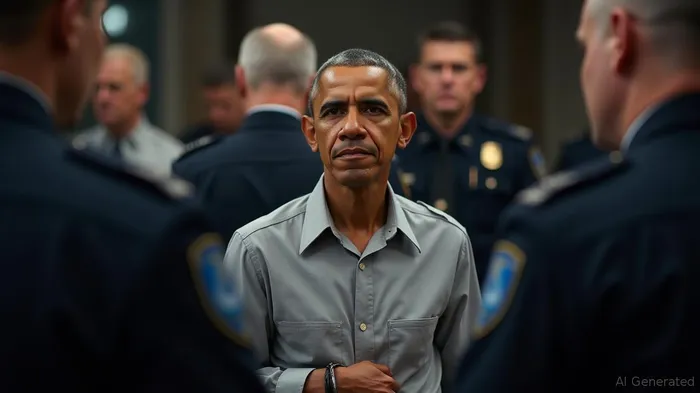
In a move that has stirred significant debate, U.S. President Donald Trump shared an AI-generated video depicting the arrest of Barack Obama by FBI agents inside the Oval Office. The video, shared on Trump’s Truth Social platform, did not include any disclaimer about its fictional nature, leading to widespread criticism.
The video opens with Obama saying, "especially the President is above the law," followed by remarks from various Democratic leaders, including "no one is above the law." The imagery shifts to a deepfake sequence showing Obama being handcuffed by FBI agents, with Trump sitting nearby and smiling. The video concludes with Obama shown in an orange prison jumpsuit inside a jail cell, while the song "YMCA" plays.
Critics have described the video as "deeply irresponsible" and "inflammatory," primarily due to the lack of clarification regarding its fictional content. The video's appearance coincides with allegations made by Director of National Intelligence Tulsi Gabbard, who claims that Obama and top officials from his administration orchestrated a conspiracy to undermine Trump's victory in the 2016 election.
Gabbard alleges that intelligence assessments about Russian interference in the 2016 election were politically manipulated by former Obama administration officials to harm Trump's presidency. She has purportedly gathered over 100 documents to support her claims and intends to present them to the Department of Justice and the FBI for criminal referrals. These allegations have not yet been addressed by Obama or his former officials.
The video and the concurrent allegations have reverberated throughout political circles, engendering significant debate on social media platforms. Supporters of President Trump have lauded the video as a bold statement, while opponents have decried it as a dangerous manipulation of AI technology, particularly given the growing concerns over political misinformation.
Gabbard asserts that the implications of her findings are "historic," suggesting that intelligence was weaponized by Obama’s administration to initiate what she describes as a "years-long coup" against Trump, undermining democratic principles. Despite the strong rhetoric, the controversy remains polarized, with commentators emphasizing the seriousness of such allegations and the potential consequences on U.S. political discourse.
The Office of the Director of National Intelligence released a 114-page document contesting claims of Russian election interference, asserting that before the 2016 election, the Intelligence Community concluded that Russia was "probably not trying to influence the election by using cyber means."
The viral spread of the AI video has spotlighted concerns over the use of AI in creating political content capable of influencing public opinion, emphasizing the challenges posed by rapidly advancing technology in the political arena. The unfolding scenario underscores a complex intersection of technology, politics, and the ongoing discourse on election integrity in the United States.

Stay ahead of the market.
Get curated U.S. market news, insights and key dates delivered to your inbox.


AInvest
PRO
AInvest
PRO



Comments
No comments yet