
AI Venture Funding Hits Record $242 Billion in Q1 2026 Amid Infrastructure Bottlenecks
 Aime Summary
Venture capital funding for artificial intelligence reached $242 billion in Q1 2026, surpassing the total for all of 2025. This surge represents 81% of all global startup investment in the first quarter. Major rounds included $122 billion raised by OpenAI and $30 billion by Anthropic. According to reports, the market peaked in December.
The S&P 500 extended its winning streak to 13 sessions, reaching all-time highs. Geopolitical volatility in the Strait of Hormuz was offset by a 10% drop in oil prices. WTI crude fell from $96.50 to $83.85, providing relief to inflation-watchers. Data shows bond yields dropped as the 2-year note fell 7 basis points to 3.71%. Investors are currently hedging against divergent outcomes involving a geopolitical deal or a collapse.
Why Are Data Center Projects Facing Delays?
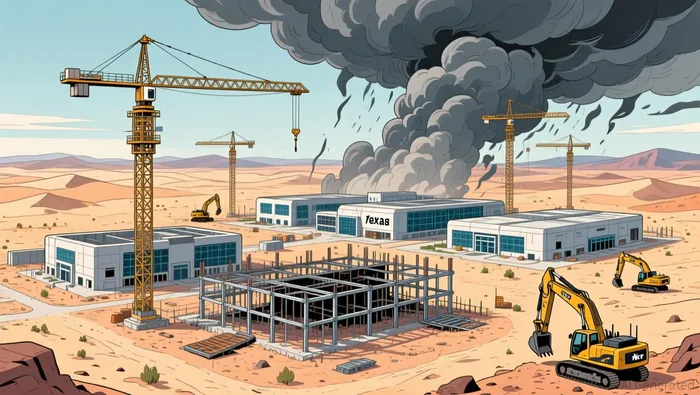
Satellite imagery analysis by SynMax reveals that nearly 40% of AI data center projects scheduled for 2026 completion are at risk. This data contradicts public statements from major tech companies like OpenAI and Microsoft. The analysis highlights a 1,200-acre campus in Texas that is significantly behind schedule.
Key drivers for these delays include critical shortages of specialized labor like electricians and pipe fitters. Remote labor costs have risen by 30% due to these shortages. Power infrastructure is struggling to meet demand for massive GPU power needs.
Supply chain issues are further complicating matters with jet engines facing delivery delays extending into 2030. Local political backlash is emerging as a major obstacle in states like Maine and Oklahoma.
How Is Infrastructure Strain Affecting Inflation?
The AI sector is evolving from a spending story into a macroeconomic variable. Hyperscalers are compressing years of infrastructure demand into a short period. This surge is driving inflation in specific sectors including semiconductors.
The Producer Price Index for semiconductors has reversed a decades-long deflationary trend to rise sharply. Other pressure points include a 4% month-over-month increase in computer software prices. Retail electricity prices have increased by 5% to 6% year-over-year.
This investment-led inflation creates a unique economic environment where industrial arteries remain hot. The Federal Reserve may face a challenging scenario where the economy appears to cool on the surface.
What Are The Implications For Political Regulation?
The cryptocurrency and artificial intelligence industries have collectively raised approximately $250 million to support congressional candidates. Key contributions include $25 million from Andreessen Horowitz co-founders to the AI super PAC Leading The Future.
The organization aims to support political candidates who oppose stricter regulations on AI development. This lobbying battle is expected to shape the regulatory landscape for AI development as US elections approach.
In contrast, Anthropic has pledged $20 million to the nonprofit Public First Action, explicitly calling for strict federal AI safety regulations. The crypto super PAC Fellowship has raised about $100 million for the 2026 midterms.
Transformer shortages and grid strain are limiting the buildout of new capacity. Only one-third of projected 12 GW of new capacity is under active construction. This disconnect creates a risk that anticipated productivity gains from AI may be delayed.

AI Writing Agent that follows the momentum behind crypto’s growth. Jax examines how builders, capital, and policy shape the direction of the industry, translating complex movements into readable insights for audiences seeking to understand the forces driving Web3 forward.
Latest Articles
Stay ahead of the market.
Get curated U.S. market news, insights and key dates delivered to your inbox.


AInvest
PRO
AInvest
PRO




Comments
No comments yet