
Is the AI Trade in a Bubble?


 Aime Summary
NVIDIA's Dominance and the Paradox of Growth
NVIDIA's Q3 2025 earnings report, released on November 22, underscored its unparalleled position in the AI ecosystem. , . For Q4, , a figure that dwarfs the average analyst estimate . , through 2026.
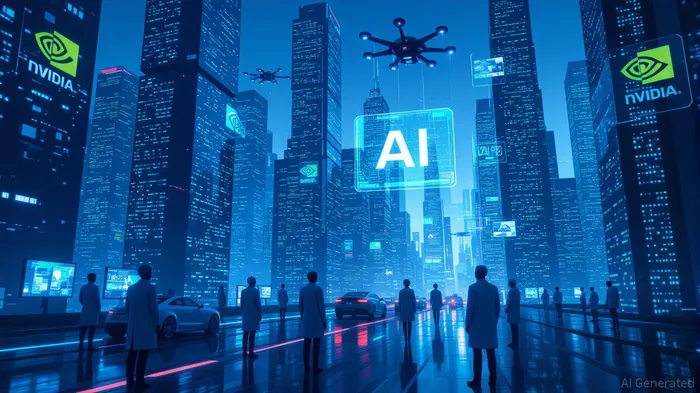
However, cracks in this narrative are emerging. have questioned the long-term profitability of AI chips, citing the six-year depreciation model for GPUs as a potential margin drainer. Additionally, NVIDIA's "circular AI deals"-such as its $10 billion partnership with Microsoft and Anthropic-have drawn scrutiny for creating artificial demand rather than organic growth. While these alliances secure near-term revenue, they also highlight a dependency on ecosystem partners, raising concerns about scalability beyond 2026.
Sector-Wide Valuation Metrics: A Dot-Com Echo?
The AI sector's valuation metrics paint a mixed picture. The , a gauge of stock market valuation relative to GDP, , surpassing levels seen during the 2000 dot-com bubble. , significantly above its 10-year average . Meanwhile, the Nasdaq's performance mirrors its dot-com-era trajectory, though without the same level of retail investor euphoria.
This divergence is critical. Unlike the 2000s, where retail investors fueled speculative buying, current sentiment remains relatively muted. The AAII survey indicates that retail investor optimism is in line with long-term averages, suggesting the market is not yet in a full-blown bubble. Yet, the sector's reliance on unproven commercial models-such as C3.ai's struggling enterprise AI platform-exposes vulnerabilities. C3.ai, for instance, reported a 19% year-over-year revenue decline and is exploring a potential sale after retracting its annual outlook.
Long-Term Sustainability: Hype vs. Reality
NVIDIA's long-term prospects appear resilient, bolstered by its leadership in AI infrastructure and strategic partnerships. The 's potential approval . , co-led with NVIDIA, further underscores institutional confidence in the sector's scalability. , from current levels.
Yet, sustainability hinges on resolving structural bottlenecks. Power, land, and grid access constraints could slow AI infrastructure deployment beyond 2026. Moreover, the exodus of major investors-such as SoftBank's and -signals caution. Thiel's firm, Thiel Macro, has reduced its AI positions, citing overvaluation risks. These moves highlight a growing divide between short-term hype and long-term fundamentals.
Conclusion: A Bubble or a Paradigm Shift?
The AI trade in 2025 embodies a paradox: record revenues and institutional backing coexist with valuation skepticism and sector corrections. NVIDIA's performance validates the sector's transformative potential, but its limited market-moving power-evidenced by correlated stocks like Vertiv and SuperMicro dropping in tandem with NVIDIA-reveals systemic fragility.
While the Buffett Indicator and P/E ratios suggest speculative excess, the absence of runaway retail optimism and NVIDIA's $500 billion in bookings provide a buffer against a full-scale collapse. The key differentiator will be whether AI's commercial applications-such as cloud integration and enterprise analytics-can justify current valuations through sustained revenue growth. For now, the sector walks a tightrope between innovation and overreach.
[2] Nvidia Stock May Dip. Vertiv, SuperMicro, CoreWeave To Drop With $NVDA [https://www.forbes.com/sites/petercohan/2025/11/19/nvidia-stock-may-dip-vertiv-supermicro-coreweave-to-drop-with-nvda/]
[3] Nvidia (NVDA) News Today – November 22, 2025: Wall Street Upgrades, China H200 Review and Renewed AI Bubble Jitters [https://ts2.tech/en/nvidia-nvda-news-today-november-22-2025-wall-street-upgrades-china-h200-review-and-renewed-ai-bubble-jitters/]
[4] Brookfield Launches $100 Billion AI Infrastructure Fund With Nvidia [https://www.barrons.com/livecoverage/nvidia-earnings-stock-price-news/card/brookfield-launches-100-billion-ai-infrastructure-fund-with-nvidia-kJeDQqAOEUbX0P4HveDY?gaa_at=eafs&gaa_n=AWEtsqdwtxp_J7ytosINYD36VxeBJkBFZpWGfcMZ0SQ__LPz5o7b4dM6ZLwq&gaa_sig=Eb3xII-EGku_3YTOXNGjxGS5IzIFXeZ2KNi4TvFOo1CNKJqAD7uik6HaEN2ZzT12UR_bJdchDcGhGBKJzWLXAA%3D%3D&gaa_ts=6922f8ca]
[5] Hyperliquid News Today: Doubts from Investors Cause Sharp Drop in AI Shares as Profits Fall Short of Justifying High Valuations [https://www.bitget.com/amp/news/detail/12560605077184]
[6] AI rally shows cracks as investors question risks [https://www.reuters.com/business/bubble-trouble-ai-rally-shows-cracks-investors-question-risks-2025-11-21/]

Delivering real-time insights and analysis on emerging financial trends and market movements.
Latest Articles
Stay ahead of the market.
Get curated U.S. market news, insights and key dates delivered to your inbox.




Comments
No comments yet