
AI Token Volatility and Investor Caution: Lessons from the ChainOpera Crash and Pathways to Resilience


 Aime Summary
The ChainOpera Collapse: A Case Study in Systemic Risk
The COAI token's implosion was fueled by a toxic mix of structural weaknesses. A highly centralized ownership structure, with the top 10 holders controlling 88% of the supply, created liquidity imbalances and enabled coordinated trading among 60 wallets, raising manipulation concerns. Compounding this, COAI's reliance on unaudited AI algorithms and speculative features-such as AI Terminal agents-left it vulnerable to technical failures and governance lapses according to reports. 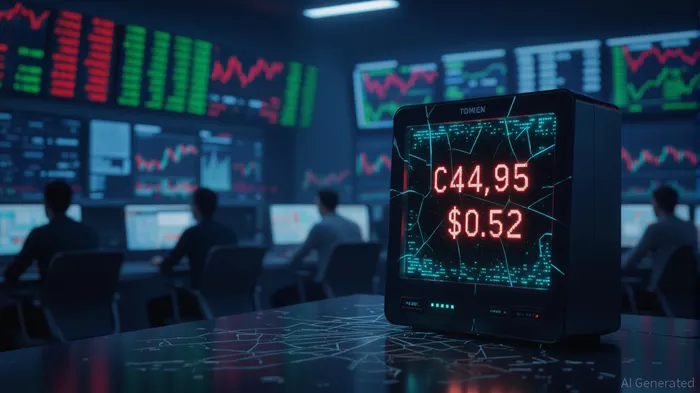 Regulatory uncertainty, particularly under the U.S. CLARITY Act, further exacerbated volatility by creating a fragmented legal environment.
Technical indicators during the crash revealed conflicting signals: while the Relative Strength Index (RSI) hinted at potential recovery, the Money Flow Index and declining momentum confirmed bearish trends according to technical analysis. This volatility triggered a rapid shift in capital toward memeMEME-- coins and established AI stocks like Microsoft and Nvidia, highlighting the speculative nature of AI-based crypto assets.
Lessons for Investors: Transparency, Utility, and Compliance
The COAI collapse has prompted a reevaluation of risk management in AI-driven crypto projects. Post-2025, successful projects are adopting strategies to mitigate systemic risks:
1. Decentralized Governance: Projects like the Artificial Superintelligence Alliance (ASI)-formed by the merger of SingularityNET, Fetch.ai, and OceanOCEAN-- Protocol-prioritize open-source models and community-driven governance. ASI's transparent tokenomics and real-world applications in healthcare and logistics have driven its market cap to $9.2 billion according to market data.
2. Regulatory Alignment: The U.S. 2025 AI Action Plan and frameworks like the NIST AI Risk Management Framework (AI RMF) and ISO/IEC 42001 are becoming benchmarks for compliance according to industry analysis. Projects integrating these standards, such as Fetch.ai (FET), demonstrate resilience by aligning with evolving regulatory expectations.
3. Utility-Driven Tokenomics: Unlike COAI's speculative focus, projects like Ocean Protocol (OCEAN) address real-world data bottlenecks in AI training through tokenized data markets, attracting 500,000+ nodes globally.
Investor Sentiment and Market Shifts
Post-ChainOpera, investor sentiment has shifted toward caution. A 2025 institutional assessment revealed that 61% of organizations view smart contract flaws as a major threat, a concern COAI's lack of auditing amplified. Meanwhile, on-chain liquidity for BitcoinBTC-- plummeted by $7.94 billion between October 27 and November 2, 2025, as panic selling intensified. However, this period also saw a growing interest in sustainable models, such as proof-of-stake mechanisms, which reduce environmental impact and enhance accessibility.
Regulatory Evolution and Future Opportunities
The U.S. government's 2025 AI Action Plan and Senator Ted Cruz's SANDBOX Act signal a regulatory shift toward innovation with oversight. These frameworks emphasize eliminating ideological bias in AI systems and streamlining deployment across sectors. For investors, this creates opportunities in projects that proactively integrate compliance tools like Chainalysis Reactor and Elliptic Lens.
Conclusion: Navigating the New Normal
The ChainOpera crash is a cautionary tale, but it also illuminates pathways to resilience. Investors must prioritize projects with decentralized governance, auditable AI systems, and regulatory alignment. The rise of ASI, Fetch.ai, and Ocean ProtocolOCEAN-- demonstrates that AI-driven crypto can deliver real-world value when anchored to transparency and utility. As markets consolidate, the future of AI crypto will likely belong to projects that balance innovation with accountability-a lesson ChainOpera's collapse made painfully clear.

Blending traditional trading wisdom with cutting-edge cryptocurrency insights.
Latest Articles
Stay ahead of the market.
Get curated U.S. market news, insights and key dates delivered to your inbox.






Comments
No comments yet