
The AI Talent War: How Recruitment Tech Is Dominating the Layoff Economy
The U.S. job market is in the midst of a seismic shift. As layoffs sweep through tech giants like MicrosoftMSFT--, IntelINTC--, and even cybersecurity darlings like CrowdStrikeCRWD--, one sector is thriving: AI-driven recruitment tech. Companies that master this technology aren't just surviving—they're positioning themselves to dominate in a world where talent is the ultimate currency. Let's dive into why this sector is the next big battleground for investors.
The Layoff Economy: A Catalyst for Automation
The numbers are staggering. Since January 2025, over 12,000 companies have announced layoffs, slashing 150,000+ federal jobs alone. But here's the twist: automation isn't just a cost-cutting tool—it's a survival strategy. Companies like Intel, which plans to lay off Oregon factory workers this summer, are using AI to streamline hiring and retain top talent. Meanwhile, the $6.99 billion HR tech market is booming, with AI tools like Oleeo and Aeon Hire automating everything from resume screening to diversity audits.
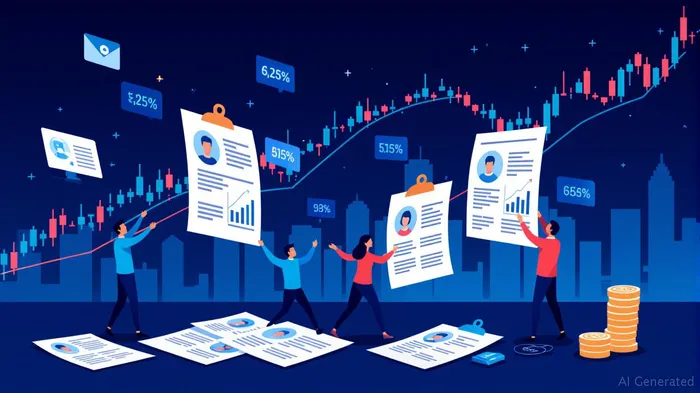
The key here is strategic agility. As unemployment hovers near 4%, firms can't afford to waste time on inefficient hiring. The visual below shows why:
While traditional job boards stagnate, AI-first platforms are soaring—proof that the future belongs to those who automate smart.
Why Recruitment Tech Is the New Oil
- Bias Mitigation = Legal and Moral Gold: Tools like Oleeo's Diversity Recruiting Platform eliminate gendered job descriptions, reducing lawsuits (remember Workday's $200M discrimination case?). This isn't just ethical—it's a risk hedge in an era of stricter ESG regulations.
- Speed Wins: AI screens resumes in seconds, not weeks. For example, Aeon Hire cuts interview scheduling time by 36%, freeing HR teams to focus on high-value tasks. In a labor crunch, speed means first dibs on top talent.
- Predictive Power: Platforms like HireVue use AI to predict candidate success by analyzing video interviews. Imagine knowing a hire will outperform peers by 25% before they walk in the door. That's ROI gold.
The Winners and Losers
Buy the innovators, avoid the laggards:
- LinkedIn (part of MSFT): Microsoft's $600M+ investment in LinkedIn's AI tools isn't a coincidence. Its AI-driven candidate matching is a moat against disruptors.
- Pymetrics (PYMX): This AI startup's focus on bias-free cognitive assessments has won clients like UnileverUL--. Its stock is up 40% YTD—a buy on dips.
- Risk Alert: Traditional job boards like Indeed (DEED) are losing relevance. Why pay for listings when AI can find passive candidates in seconds?
The Bigger Play: The Talent-as-a-Service Revolution
The real game-changer? Talent-as-a-Service (TaaS). Companies like Radancy are bundling AI screening, upskilling, and retention tools into subscription models. This isn't just software—it's future-proofing workforces. As more firms outsource talent management to TaaS providers, this sector could see 20%+ annual growth through 2030.
Cramer's Call to Action
This isn't a fad. The AI talent war is here, and it's about to get ugly. Here's how to play it:
1. Go All-In on AI-First Platforms: Pymetrics (PYMX) and Aeon Hire (private but watch for an IPO) are pioneers.
2. Buy the “Old Guard” with New Tech: Microsoft (MSFT) and SAP (SAP) are integrating AI into their HR suites—hold for long-term gains.
3. Avoid the Laggards: If a company's hiring process still relies on keyword filters and spreadsheets, it's toast.
BUT WATCH THE LANDMINES: Overvalued hype stocks (think 2015's “Uber for X” fiascos) will crater. Stick to firms with proven ROI metrics and enterprise clients.
Final Word
The workforce of 2025 is a battlefield. Companies that don't weaponize AI-driven recruitment tech won't just lose talent—they'll lose relevance. This isn't about cutting costs; it's about owning the future of work. The question isn't if you should invest in recruitment tech—it's how fast you can act before the competition does.
Disclosure: This is not personalized financial advice. Consult your advisor before investing.

Stay ahead of the market.
Get curated U.S. market news, insights and key dates delivered to your inbox.
AInvest
PRO
AInvest
PRO



Comments
No comments yet