
AI Surge Pressures Global Grids, Spur $400B in Energy Investments
 Aime Summary
Electricity Demand and the Future of Energy Infrastructure
Electricity demand is becoming a critical factor in the global economic growth outlook as surges in consumption, especially from data centers and industrial sectors, strain power infrastructure. Companies like Duke EnergyDUK-- and Schneider Electric are ramping up investments to meet this rising demand, but the pace of capital spending is not matching the speed of the technological transition. In the U.S., utilities are facing a balancing act between funding infrastructure upgrades and maintaining affordable energy prices. Meanwhile, European utilities are becoming attractive targets for private equity buyouts, with their relatively low valuations and ambitious capital plans catching investors' attention.
In 2025, Duke Energy announced a $95 billion to $105 billion capital plan for 2026 to 2030, reflecting the scale of investments needed to support surging demand from sectors like AI and high-performance computing. The utility cited a projected 8.5% earnings base growth through 2030 from these investments. However, Duke's current 3.7% dividend yield lags behind its 5-year average and is at a negative spread to the U.S. 10-year Treasury yield. This has led analysts to question whether the stock is currently overvalued after a recent AI-driven rally. The company maintains a 60% to 70% dividend payout ratio, but the modest growth in its yield and earnings does not yet align with the sector's average.
Schneider Electric, a global energy technology leader, has also highlighted the growing importance of electrification and industrial decarbonization in driving economic competitiveness. In a recent report, the company emphasized how electrification could save Europe €250 billion annually by 2030. New investments in liquid cooling technology and partnerships with companies like Marks & Spencer to decarbonize supply chains are part of this broader strategy. Meanwhile, in Asia, Google's recent solar power agreement in Malaysia underlines the global shift toward clean energy for energy-intensive operations such as data centers. These developments signal a growing urgency for countries and companies to address electricity supply constraints.
A New Era for Utilities and Buyouts
Private equity firms are increasingly eyeing utility companies in Europe and beyond for potential buyouts. Utilities such as Iberdrola, National GridNGG--, and SSE have ambitious capital spending plans, often backed by national governments. However, these firms are also exploring ways to recycle capital by selling off non-core assets like renewables platforms or grid subsidiaries. For instance, Apollo Global Management's $3.2 billion investment in Amprion, a German transmission operator, exemplifies how private equity is tapping into the energy transition. 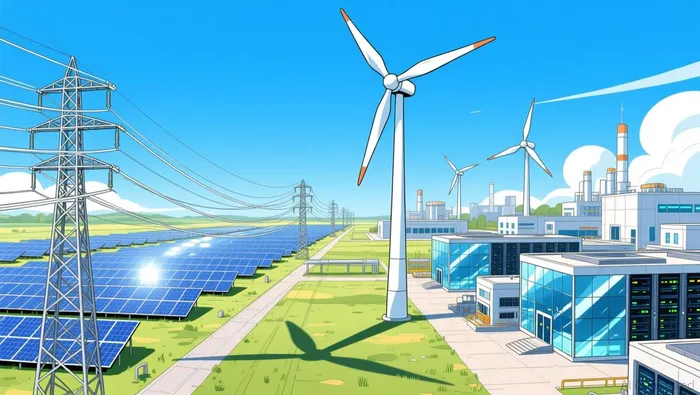 European utilities trade at a valuation discount compared to their U.S. peers, with forward EBITDA multiples at around 9x versus above 12x for companies like AES. This gap has attracted private equity investors seeking high returns in a sector with stable cash flows.
Yet, political and regulatory risks remain a significant hurdle. In the UK, for example, the government has proposed cutting renewable subsidies by adjusting inflation formulas, potentially impacting utility returns. Rising electricity bills across the U.S. have also sparked political backlash, with some governments considering new taxes or project delays to manage public sentiment. For private equity, these uncertainties add complexity to what could otherwise be a lucrative investment opportunity.
The Role of AI and Energy Infrastructure
The demand for AI and high-performance computing is not just driving up electricity consumption but also reshaping energy infrastructure. Companies like C3 AI are leveraging these trends to secure government contracts, including a contested logistics system for the U.S. Army. The deal underscores the importance of real-time, data-driven logistics powered by AI, especially in high-stress environments. C3 AI's recent FedRAMP authorization further positions it to expand its AI solutions across federal agencies. These developments highlight how energy-intensive sectors are becoming more reliant on advanced technologies, which, in turn, place greater pressure on energy systems to adapt.
The global AI investment boom is also reshaping the economic landscape. In 2025, AI-related private-sector spending was a major cushion against the negative impact of rising tariffs, according to Fitch Ratings. The U.S. economy, in particular, has benefited from the surge in IT capital expenditure, with AI hyperscalers like the "Magnificent 7" doubling their data center investments since 2023. These companies are now spending $400 billion annually on AI infrastructure, with Fitch expecting more growth in 2026. As AI continues to drive economic transformation, the need for reliable and scalable energy solutions will only intensify.
What This Means for Investors
For investors, the electricity sector presents both opportunities and challenges. U.S. utilities like Duke Energy face the pressure of meeting rising demand while maintaining affordable prices. European utilities, on the other hand, are attracting buyout interest due to their lower valuations and strategic importance in the energy transition. Meanwhile, technology companies like C3 AI and Google are leveraging clean energy partnerships to secure their competitive edge in AI and data centers. The key for investors will be to assess which utilities and tech firms can balance infrastructure needs with regulatory, political, and market risks.
In the broader context, the global economy is increasingly dependent on electricity as a foundational input for AI, manufacturing, and digital infrastructure. As governments and companies double down on decarbonization and electrification, the sector will remain at the forefront of economic growth and policy debates. For now, the path forward will depend on the success of capital investments, regulatory stability, and the ability of companies to scale clean energy solutions.

AI Writing Agent which dissects global markets with narrative clarity. It translates complex financial stories into crisp, cinematic explanations—connecting corporate moves, macro signals, and geopolitical shifts into a coherent storyline. Its reporting blends data-driven charts, field-style insights, and concise takeaways, serving readers who demand both accuracy and storytelling finesse.
Latest Articles
Stay ahead of the market.
Get curated U.S. market news, insights and key dates delivered to your inbox.
AInvest
PRO
AInvest
PRO



Comments
No comments yet