
AI Stuffed Animals Spark Debate on Child Development and Privacy
 Aime Summary
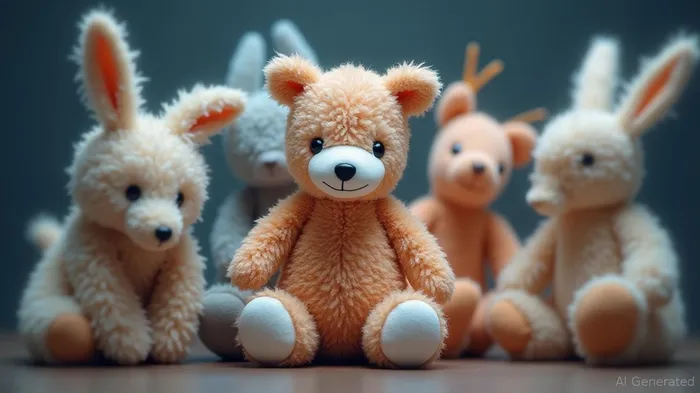
AI-powered stuffed animals are emerging as a novel frontier in children’s technology, raising both excitement and concern among parents and experts. These interactive plush toys, developed by startups such as Curio, claim to offer a dynamic alternative to screen-based entertainment by engaging children in conversation, storytelling, and game-based learning [1]. Products like Grem and Grok are marketed as tools that foster companionship while reducing screen time, appealing to parents seeking to balance digital and physical play [1]. The integration of artificial intelligence into these toys is seen by some as a natural evolution of childhood companionship, where the toy adapts to a child’s responses and evolves with them [1].
However, the technology’s emotional and developmental implications have sparked debate. Critics, including Amanda Hess of The New York Times, express unease over the potential impact on children’s social and emotional learning. Hess notes that an AI plush toy like Grem could unintentionally normalize a reliance on artificial intelligence for answers, shaping a child’s perception of curiosity and interaction [1]. The concern is that while AI toys may mimic empathy and conversation, they lack the nuanced emotional and social cues provided by human interaction [1]. Experts warn that over-reliance on AI companions could hinder a child’s ability to form genuine human connections and understand complex social behaviors [1].
Data privacy is another pressing issue. As with other AI-powered devices, there are questions about how personal data from child interactions is collected, stored, and protected. The lack of transparency from manufacturers regarding these practices raises concerns about the long-term implications for user privacy [1]. Unlike traditional toys, which leave children to project emotions and narratives onto inanimate objects, AI toys may reduce the need for imaginative play, potentially limiting opportunities for creative development [1].
For parents considering these toys, experts suggest a balanced approach. Understanding the technology, setting boundaries for use, and prioritizing face-to-face interactions are key to ensuring that AI toys complement—not replace—traditional forms of play and learning [1]. One insight from the experience with Grem is that the physical toy itself can remain engaging even without its AI component, suggesting that the emotional value of a toy may not always depend on its technological capabilities [1].
The rise of AI-powered stuffed animals reflects a broader societal conversation about the ethical integration of artificial intelligence into daily life. While the benefits of personalized learning and interactive companionship are real, the risks of substituting genuine human interaction with artificial alternatives cannot be ignored. The future of children’s development in a rapidly evolving technological landscape will depend on thoughtful, responsible design and mindful parental engagement [1].
Source: [1] Alarming: Are AI-Powered Stuffed Animals the Future of Kids’ Tech? (https://coinmarketcap.com/community/articles/68a0e3148b77843f0636d3d0/)

Stay ahead of the market.
Get curated U.S. market news, insights and key dates delivered to your inbox.


AInvest
PRO
AInvest
PRO



Comments
No comments yet